
Your Custom Text Here
OSSO

I arrived mid-morning on Monday to Osso Carnicería, strapped down with my backpacks and sweating profusely. I had gone from the extreme cold of Denmark to extreme humidity of Peru, and I was starting to question if I’d packed correctly.
As I entered the shop, Renzo Girabaldi stood next to the counter chatting with some patrons. God, I was nervous. I mean, this was the guy I had wanted to work with for over three years. He and Dario Cecchini were my idols and the key reasons I became a butcher. And here he was, standing before me and offering the opportunity to apprentice with him for a few months.

A peak into one of the dry aging containers in the carnicería.
I didn't need to be anxious - Renzo was very welcoming. After he finished his conversation, we ventured upstairs to the roof where his office was located. After conversing a bit, Renzo laid out his suggested two-month plan.
- an intro week on the cutting table in the butcher shop
- two weeks in production, making hamburgers, chorizos, and other value-added products.
- a week ghosting Osso’s CFO Alejandro, analyzing logistics.
- two weeks of working at the adjoining Osso Restuarante
- two weeks working at Dondoh, a new restaurant collaboration of Renzo's.
When it came to accommodations, nothing had been planned prior to my arrival. Renzo and Alejandro went to work on a place for me to crash. In the meantime, I’d have to sleep at the butcher shop - not the first time that had happened.
Renzo had to jet - literally. He had less than 48 hours in Lima before he departed for a culinary gig in Moscow for 11 days. I’m thinking I’m at the right spot.
I went to the front counter, knife bundle in hand. The rest of the afternoon, I’m jumped in where I could help, mostly removing fat from pig skin. Renzo is a nose to tail man as well - he believes in saving every single little bit of fat. The hard fat is sent into hamburger production. The soft fat, the one that is usually thrown away or declared “too much work to remove” by some, is converted into Manteca de Cerdo, or Pork Lard. Renzo uses it all.

When dealing with dry aged meat, you have to trim off the outside surfaces - mostly dried meat and mold - in order to see the beauty hiding within.
My first week was spent in the shop, working around the large wooden cutting table. I was under the direction of César and Jose, Renzo's two main butchers. Every morning we started by setting the case - I took note of all the cuts, trying frantically to remember all the names in Spanish. My usual tasks were cleaning tenderloins, skirt steaks, and chorizo displays. Once the shop case was merchandised, we begin breaking down carcasses to fulfill the restaurants’ needs as well as wholesale orders.

José reminds me of some of those super quick butchers you see on YouTube: he can cut a mile a minute because he has done it a million times. He has been kind enough to share some his cutting "secretos" with me. José has taken a liking to my set of F. Dick knives. My large flat honing steel is now the preferred one at the table, and my boning knife stays busy, even when I'm on lunch break.

One of my morning tasks at Osso has been to restocking the sausage treys. Every shop displays their meat a little differently so I've tried to learn quickly - I still am having difficulties deciphering between the eight different sausages.
The guys at the cutting table realized I knew my cuts and that I knew a decent amount of Spanish. They wanted to learn English. By the end of my third day, my nickname had become “teacher.”
Or Jack "Sparrot." Not Sparrow.

Massive ribeyes headed to the restaurant.
I've enjoyed breaking out my Spanish again, but damn, I didn't remember it being this difficult! It doesn't help that my brain has a little Danish, French, or Italian rolling around in there.
I am fascinated by the setup at Osso, especially all the dry aging facilities. Cèsar demoed the famous sake-infused dry-aged ribeye on the DonDoh menu. After cleaning up the strip loin, he wrapped the entire hunk of meat in dried kelp leaves, then tied it up using medical netting. Cèsar carefully saturated the netting with just the right amount of sake before storing it in the dry-aging cooler.

César working the medical netting over the kelp-covered strip loin.
My second week was supposed to have been in production, making massive amounts hamburgers and chorizos. José and César pulled me up to the shop every morning - maybe they enjoyed my insanely sharp knives, or I was actually helping out.
I hope it was both!

Osso, just like the many European butchers I've met, deals with a bunch of quality pork meat. To supply super markets with artisanal chorizos, you need to have a lot of it!

This company has an incredible brand and top notch packaging!
Sidenotes:
Save the Gringo 1:
After a trio of nights in the butcher shop, Renzo and Alejandro fixed me up with my own pad - a small single room in La Molina, roughly a thirty-minute walk from the shop. I walked for the first week, but the humidity and the insanely cheap cab fare finally won me over. I'm very appreciative of the room. They didn't have to help out some gringo stranger from Texas, but they did.
Save Gringo 2:
It was about this same time I noticed an alarming number of bug bites on my arms and legs. For weeks, I had heard about "chinchas" or bed bugs down in South America - that was my first thought! I mentioned it to Renzo, and 15 minutes later, a company employee whisked me away to a public health clinic down the street to get treated (turns out it was an allergic reaction to a mosquito bite). Again, Gringo in trouble and Renzo saves the day - incredibly generous.

The Carnicería crew getting together for a group picture after my first week in La Molina.

I don't know what it is about staff meals, but I love them. Perhaps its the regathering of the troops to break bread together - the bond of a shared meal. At the Reata, I loved the tacos that the guys served up after the doors closed for the night. Fleishers staff meals in Red Hook were always spectacular thanks to Jason V. Here, a pan-fried potato stuffed with boiled eggs and minced chorizo meat. As with every staff meal here, there is rice and some sort of flavorful and fresh juice.
Pass the Cheese, Please.

Caciodecavallo from David Asher's work shop. The story of this cheese begins in the Apennine mountains where cheesemakers took their herds to the green pastures way up in the mountains. The green grass produced amazing milk but the cheesemakers couldn't carry milk all the way down the mountain - they made cheese instead! Caciodecavallo was tradtionally preserved this way so cheesemakers could throw it over a horse's back to get it down the mountain.
My first cheese revelation took place in Gascony. It was the chèrve, goat cheese, made by Marie, Dominique’s neighbor.
Hey now, I’ve had good cheese in America. My favorite spot is Antonelli’s cheese shop in Austin. What I’d give to stand in there for hours sampling cheeses!
My latest cheese experience has me hooked. Don’t worry; I’m not setting down the knife for cheese cloth. But still, I’m hooked.
On a two day leave from the Folkets Madhus kitchen in November, I attended a natural cheese making class in Copenhagen lead by David Asher. Originally from Canada, David started out with a goat farm where he made incredible raw milk cheeses. Unfortunately, raw milk cheese can't be sold in Canada - his running joke was that he was invited to every party and he had the best Christmas presents. He ended up writing his manifesto for cheese making, made the tough decision to sell his farm, and hit the road to spread the word about natural cheese.

The class I joined was filled with local dairy farmers, all trying to find another way to preserve and sell their precious milk. Asher's cheese isn't the "natural" cheese that you find in the grocery store. He doesn't use freeze dried fungal spores or mesophilic starter cultures - the BS that is in just about every grocery store cheese. He uses natural cultures, clabber, and kefir, along with good, fresh milk from pasture-raised animals - the same ingredients that cheese has been made with for thousands of years.

Valençay cheese that was coated with ash just after formation. A few months of fungal growth makes a really cool contrast!
* Clabber is raw milk that is left to ferment at room temperature for a day. Ask your grandmother - I bet she knows about clabber. Kefir, a cauliflower looking seed, is another natural fermentation agent. Kefir seed is added to milk and left to ferment at room temperature. These cultures are then added to milk during the cheesemaking process.
Over the two day session, David walked the class through butter production, mozzarella stretching, and the crafting of a wheel of alpine cheese. Surprisingly, there are many parallels between charcuterie and cheese - salt is used in the same fashion (and in the same measurements) to draw moisture out and preserve the cheese.

San Marcellin, another goat cheese, showing incredible signs of fungal activity.
The class was quite the awakening - I also learned that Cheddar cheese should be white, not the distinct bright orange color. Let me explain further: Grass contains carotene. When cows eat grass, their milk has a rich, creamy color. When you make cheddar cheese from a cow raised on grain, the eventual cheese lacks carotene and thus will turn out rather dull and unappealing. Around the time of the advent of industrial farming, cheese makers began adding ground annatto seeds to disguise their inferior cheddars. Add a little annatto powder, and you get that creamy white cheddar color back - add a little too much, and the cheddar turns a bright orange color. Sadly, this trend caught on, and the orange coloring has become part of cheddar's identity.
Do you know why Europe has incredible cheese and the stuff you find in America is just... blah? In Europe, the best milk is designated for cheesemaking; the inferior milk is sent to bottling plant. In America, our good milk winds up in the milk carton, and our inferior milk is made into cheese.
This class certainly sparked my interest. I have produced a few batches of cheese since then with fluctuating results. I'm very excited to see how my latest batch turns out - the ricotta was amazing, and the mozzarella didn't last long, but I have four wheels of cheddar and a jar of feta still in the fridge. If you have any interest in cheesemaking, I highly recommend his book The Art of Natural Cheesemaking

Cochon555 Houston
We carried the full Swabian Hall on our shoulders into Hughes Manor where the pop-up butcher shop would take place. The Houston Cochon555 crowd had just finished the chefs' competition where Manabu Horiuchi from Kata Robata took home the "W" for his six-course presentation highlighting Chubby Dog Farm's Mangalista Red Wattle Cross.
For those of you not familiar with Cochon555, this is a movement to preserve and promote heritage breeds of pork and family farming by hosting culinary events and chef competitions in the major cities across the US.

Preparing for the demo - all knives got a new edge and the cleaver made an appearance.

Time to cut!
The pig was gently set down on the two joined Boos cutting tables which gave way to an eruption of iPhone cameras flashing and clicking - I’m sure not many of the onlookers had ever seen a full pig carcass before. To be honest, I’d never seen a pig carcass like this either so the first few cuts were a bit foreign to me. Most of the time, carcasses are split symmetrically down the backbone – making transport, storage, and butchery easier. To truly show the crowd of food enthusiasts what butchery is all about, I started with a complete eviscerated (minus the insides) pig carcass. I would also be without the use of a band saw – an extraordinarily precise tool when cutting through bones. In its place, a 27-inch bone saw would have to work through the bones manually. As a backup, I brought my vintage cleaver as well.
Brady Lowe, the founder of Cochon555, started the demo by telling a bit about the Piggy Bank, the focal point of all the fundraising that weekend. Piggy Bank has one simple goal in mind - helping family farmers. The organization is a dedicated to current or prospective farmers to help them get a kickstart: breeding stock, business plans, and other valuable business information - anything a pig farmer needs to get going.

After a quick summary of my travels, I handed the mic back over to Brady and started cutting.
Brady offered me the mic, I gave my short elevator pitch, and then dove in. Splitting a whole carcass manually wasn’t as difficult as I thought it would be – I took off the hind legs first, split them, then did the same with the shoulders. The loin gave me a bit of trouble – it was long, and my saw blade only gave me about three to four inches to move.
Let me stop here to tell you about Houston's climate. If you haven't been there in the summertime, believe me when I say the heat and humidity are unbearable. Just before I took the stage, Houston received a summer shower followed by intense sunshine. The humidity ramped up and was so thick; I could have cut it with my cleaver. I was soaked in sweat. My shirt was sticking to my body, and little sweat beads covered my face. I had to step away several times to wipe my brow and get a swig of water.
But, back to my story... I was relieved the carcass breakdown was behind me, but quickly realized I would need a lot more help to break the primals down into shop cuts in the allotted time. Luckily, good friends, Catherine and Tito Manterola were waiting and jumped right in to help. Over the next hour, we cut, wrapped, and tagged the entire Swabian Hall for retail sale. Everything was on display: bones for stock, ears for dog treats, skin for soups - even the brains were snapped up for a saute.

A big thanks to Catherine and Tito Manterola for setting up to the butcher's block and getting dirty with me. I couldn't have done it without y'all!

A bottom round roast just before being wrapped up and taken home.
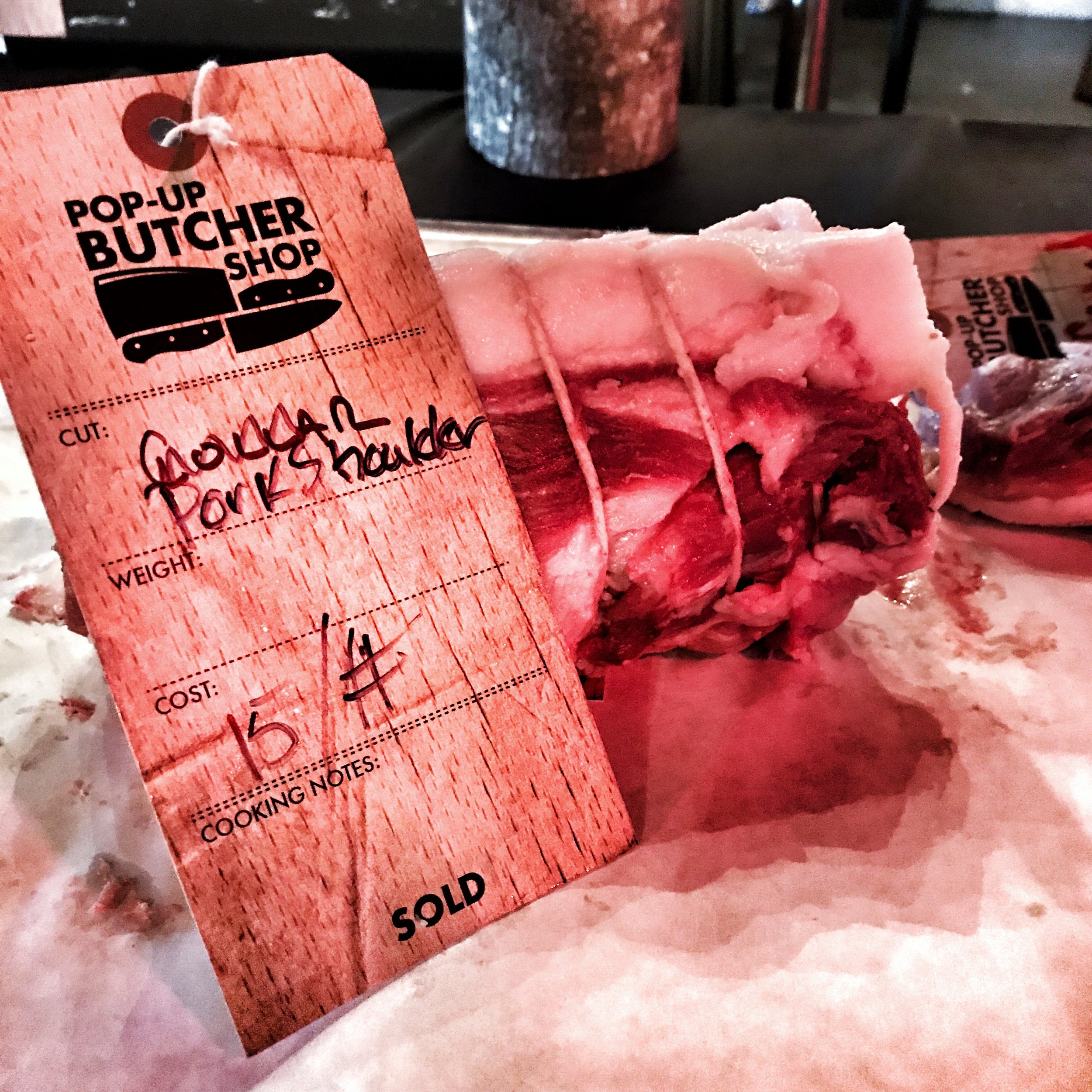
A sold pork coppa.
I’m honored to have been apart of this year’s Cochon555 Houston. Brady and his amazing staff created an enjoyable gastronomic gathering. A special shoutout to:
Allegra - who personally helped coordinate the pop-up butcher shop. She was on her A game, and everything ran flawlessly.
Calvin and Karyn Medders - owners of Chubby Dog Farm, a Mangalista-heritage cross pork farm in Grapeland, Texas. I always enjoy the opportunity to talk to producers and learn so much from their stories and their passion for providing excellent quality food.
Jeff Weinstock - owner of Cake & Bacon, a small wholesale bakehouse and butchery commissary that delivers no-less-than-perfect breads, pastries, pies, charcuterie, sausage, pasture-raised products to restaurants and retailers throughout Houston. His display was covered in a wide variety of cured meats - the spiced coppa being my favorite.
Geoffrey and Renee Barry - of The Barry Farm in Needville, Texas who raise heritage Red Wattle. It was my pleasure to have met another passionate farmer here in South Texas.
Catherine - my publicist, my partner in crime for any culinary adventure, and the ultimate networker. She knows everybody and if she doesn't she will before the day is done!
Morgan Weber - A BIG shout out to Morgan Webber of Agricole Hospitality who got me hooked up with this sweet gig. I also had the chance to check out one of his Houston establishments, Coltivare, and it was an absolute blast. If you live in Houston and haven't eaten here, you need to rethink your life.
Charcuterie Masters 2017
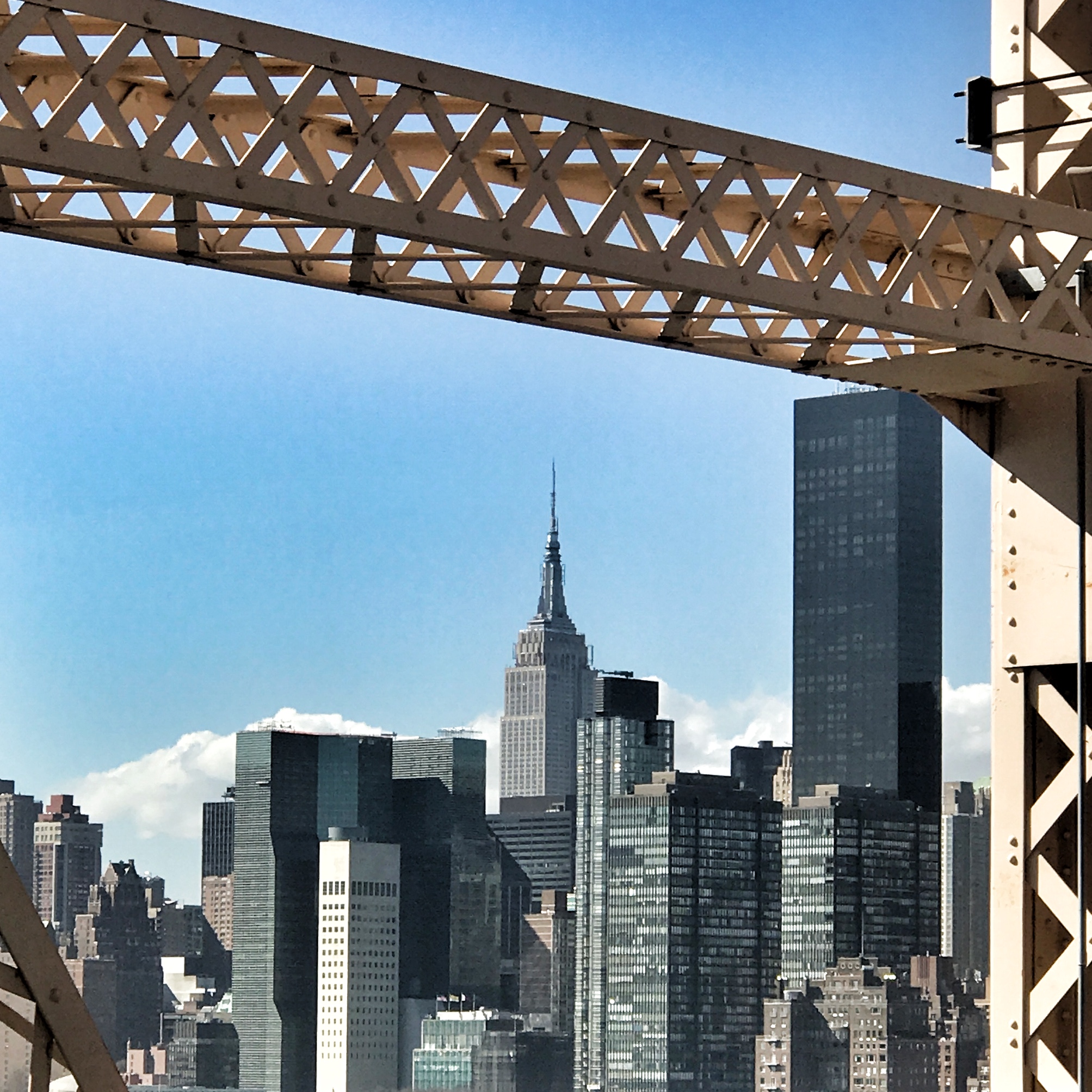
View of the Empire State Building on my cab ride in.
DAY 1:
In late February, I ventured back to the tri-state area for Charcuterie Masters 2017 and a chance to rub elbows with the finest purveyors of cured meat in America. As I rambled through the city I once called home for a couple of months, my mind was caught in a stampede of good memories - apprenticing with Fleishers Craft butchery, Yankee games on crisp autumn nights, and all the good food...
Yeah, I kinda missed it.
Since I was back in the Big City, I decided to check out what the trendsetters were laying down in terms of charcuterie. Bar Boulud was heavily recommended – so it was Bar Boulud for lunch.
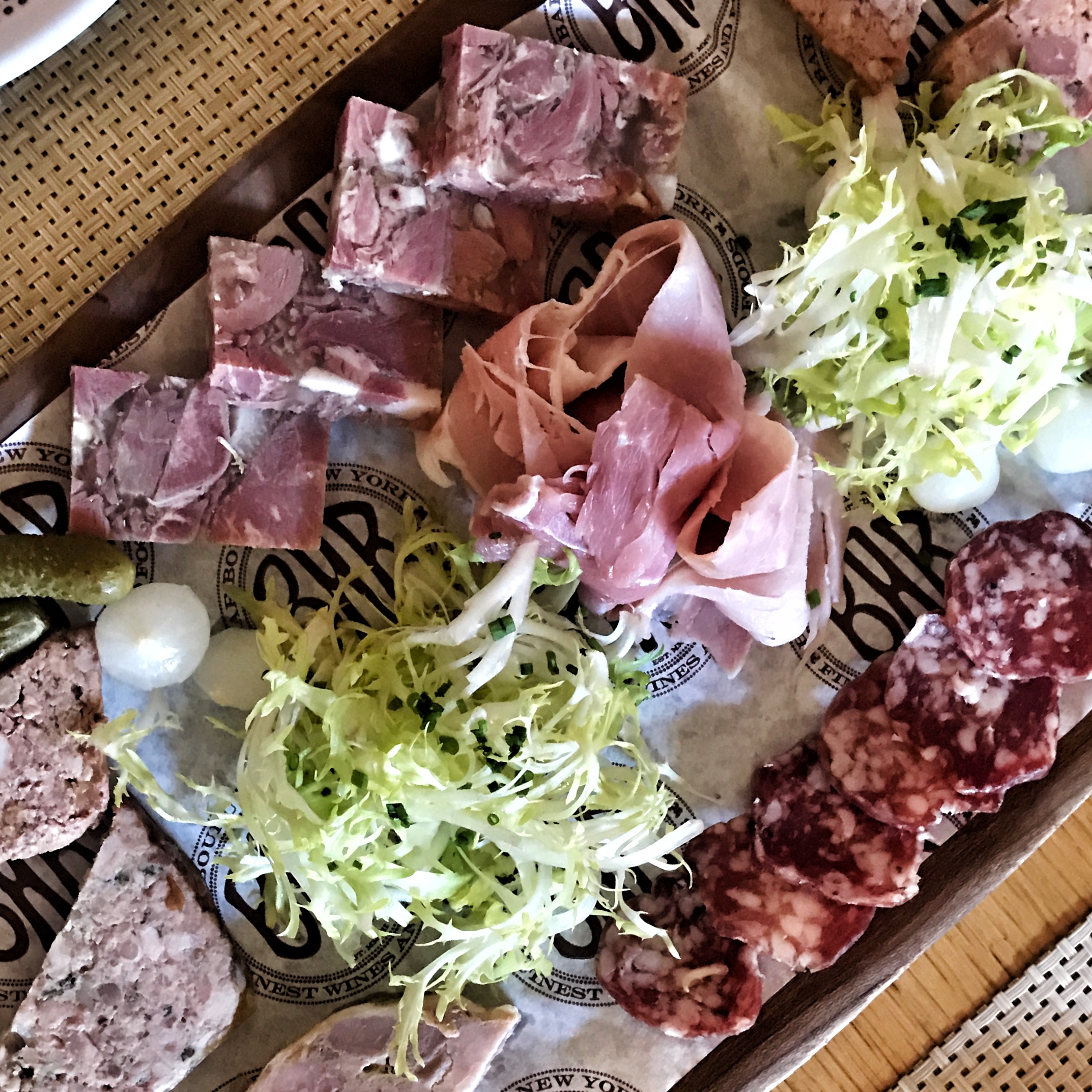
The charcuterie board at Bar Boulud - pâtés on pâtés on pâtés
It didn’t take long for me to order.
In a few minutes, I had a glass of one of their red wines, a massive board of pâtés, and a colorful assortment of condiments. The Pâté Grand-Père was simply fantastic – it probably had something to do with the foie gras and truffles inside. The rest of the pates and terrines were interesting, but didn’t compare to the Pâté Grand-Père. Surprisingly, only one other form of charcuterie made the board, a French Saucisse seche.
It was a nice change in cuisine.

Chelsea Market - one of my favorite spots in Manhattan.
I wandered around Manhattan the rest of the afternoon, exploring places like White Gold Butchers and Chelsea Market. I was killing time until my dinner reservations at Agern.

I had to go check out White & Gold Butchers and see what all the buzz was about. It's all true.
Agern is a season-driven restaurant developed by Chef Claus Meyer, who, for the last thirty years has been reinstating quality and unlocking the potential of the Danish food culture. It was an incredible meal that transplanted me back to my Nordic adventures in Copenhagen.

The opening course at Agern - oyster on ice.

A combination of fresh fish and preserved vegetables in broth.
The next morning I dedicated to the NYC Fermentation Festival held at the Brooklyn Expo Center. I made my way down the rows, tasting craft brews, kombucha, and kimchi. Brooklyn Brine, one of my favorite pickle companies was in attendance along with Six Point Brewery - one of the best damn craft beers out there. I also ran into the Ends Meat booth, owned by friend John Ratliff. John wasn’t there that day, but a lot of his cured meat was and as always, it was top notch.

Brooklyn Brine has the best pickles out there!
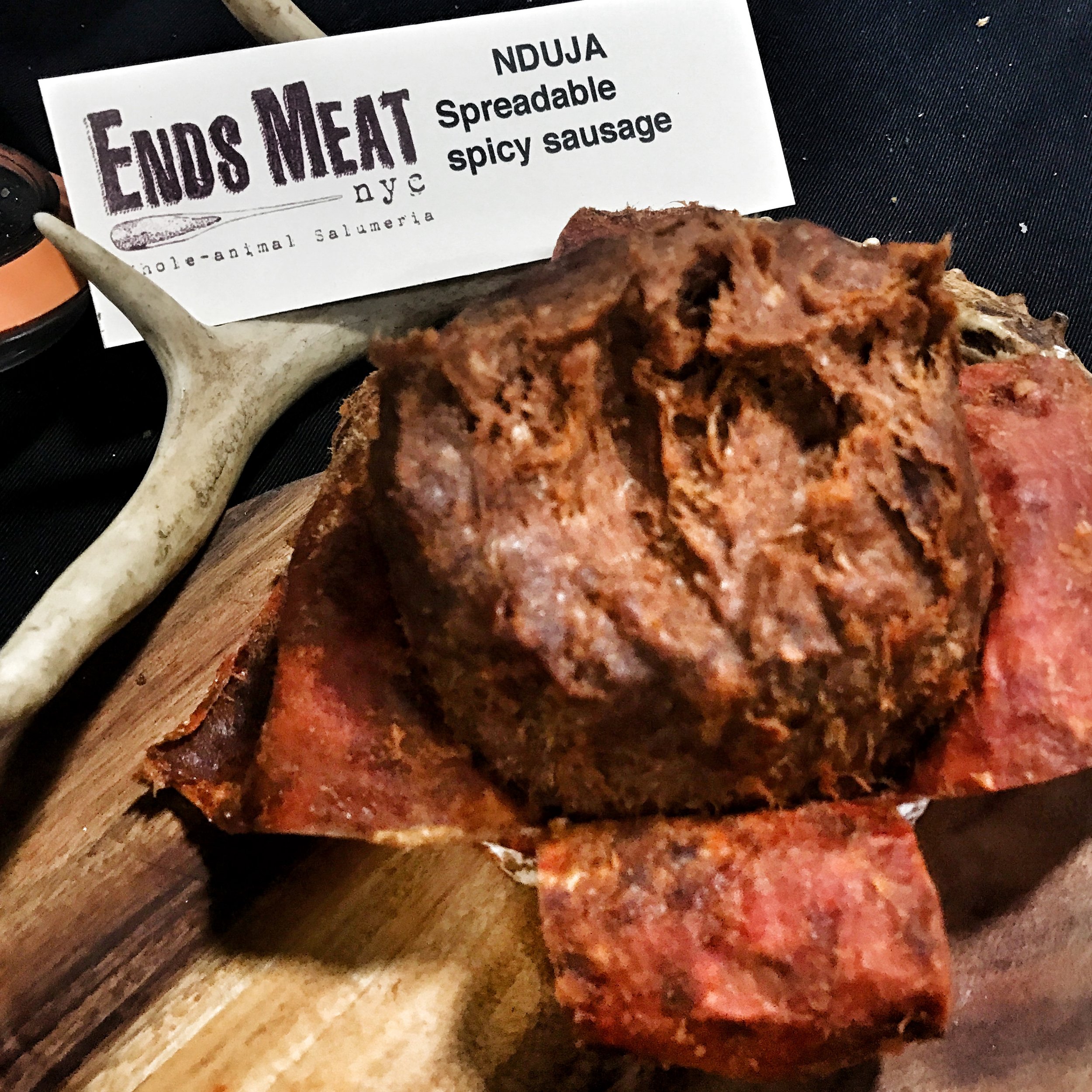
Ends Meat's Nduja - a spicy spreadable salami that will knock your socks off - its one of my personal favorites.

Six Point - the best craft brewery - besides Shiner Bock, of course. It had been awhile since I had tasted some of their hops.
That night, in the shadows of the Met’s baseball stadium, the great charcuterie gathering began. After a rather cramped subway ride, I stumbled into Flushing Town Hall and was immediately greeted with good food and libations. The hall was packed with people – all with one common interest – cured meat.
I’ve said it many times – the meat world is really small. Social media has allowed me to connect with many other butchers across the nation. I’m sure I wasn’t the only one having awkward first time encounters that evening.
Heeeeyyyyyy, (know the face but blanking on the name) there…… buddy! Nice to meet ya.
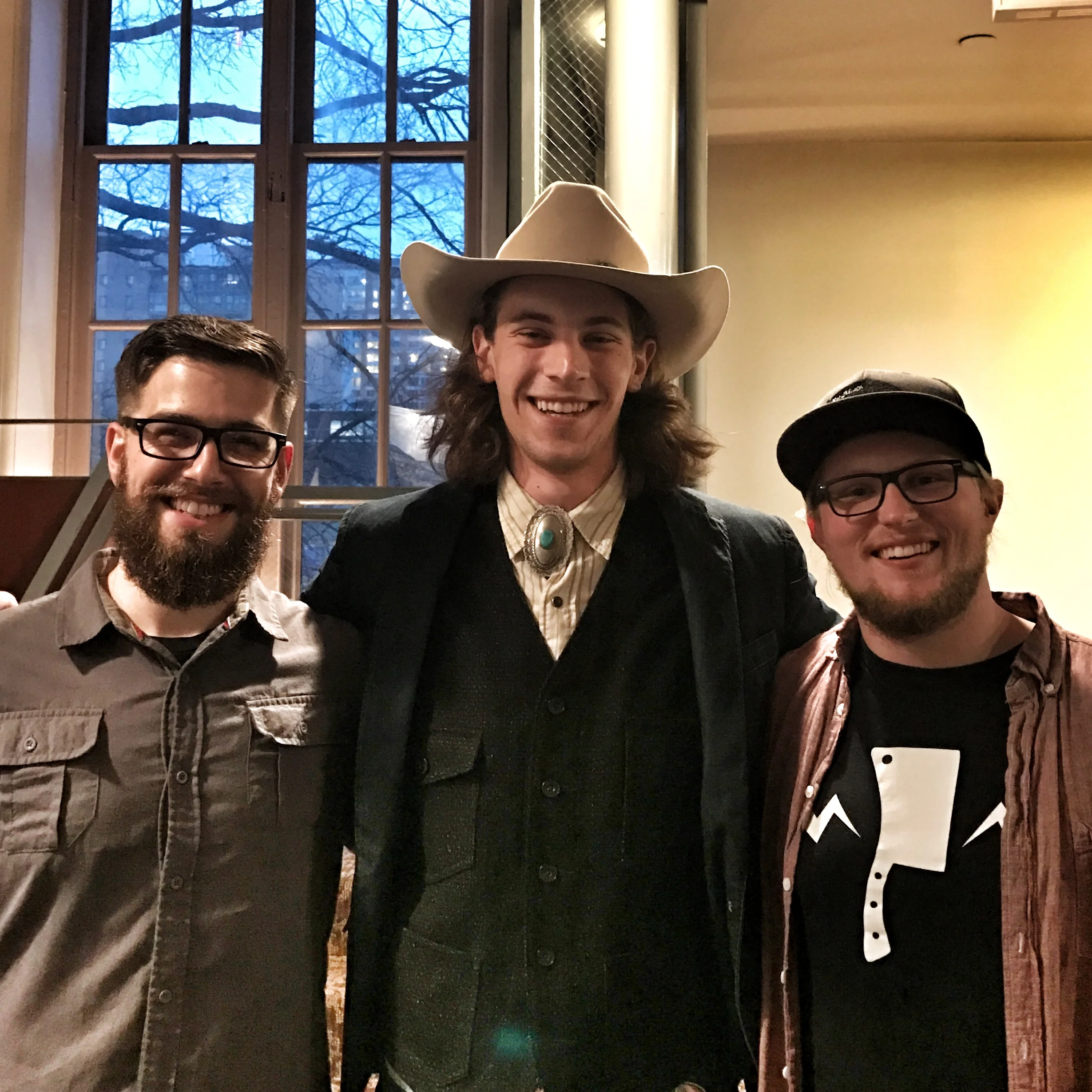
Matt Levere of Urban Butcher, George Turkette of Turchetti's Salumeria, and I at Charcuterie Masters 2017. These two guys are masters of their craft and leaders in the American charcuterie movement - I was honored at the chance to chat and get to know them.
Highlights of my night include:
- Prosciutto, cured six years without the use of artificial nitrates, by Rodrigo Duarte. His booth was layered with hams estimating almost $80,000 in total. His guys sliced on two legs of prosciutto for more than three hours that night. He ended up taking home a few prizes because of his outstanding products.

6 year old prosciutto - some of the best out there.
- Hure de Porc, a pork tongue and pistachio head cheese, from Smoking Goose Meatery. Another award winner.

Hure de Porc with pork tongue and pistachios - a no-doubt winner from Smoking Goose Meatery. This is another version of head cheese.
- Salami – there was plenty of it and various flavor combinations. I definitely left with some inspiration and I cannot wait to test out some flavor combos I picked up.

A variety of salami displayed at one of the booths at Charcuterie Masters 2017.

An amazing Molé salami from Elevation Charcuterie out of Denver, CO.

Francois Vecchio and I at Charcuterie Masters 2017.
- Francois Vecchio - Midway through the evening, I ran into Francois Vecchio Francois Vecchio, often dubbed the “Godfather of American Charcuterie.” Before immigrating from Switzerland, Francois studied and mastered German, Italian, French, Spanish meat craftsmanship (He is also fluent in all those languages in addition to English.) He is often credited for starting the cured meat movement in America back in the early 1980’s. We chatted for awhile about Europe and my travels and then the conversation naturally drifted to the state of charcuterie in the USA. Francois explained that Americans have now figured out how to produce cured meats, but the quality was still lacking. Francois urged me to get back to Europe as soon as possible and to keep learning. It was such an honor to meet such an important figure in the industry.
The last hour of the event was reserved for the presentation of awards. Submissions had been sent in from across the nation and judged the previous day. I’m sure the judges had their hands full! We watched and applauded as each categorical winner was announced.
By this time, the hall had begun to empty. I shook a few more hands, took a last few selfies with new friends, and hit the pavement and made my way back to the subway. Charcuterie Masters was an unforgettable experience – For the first time, I really got to connect with the “movers and shakers” in the American meat game. In conversation with them, I learned about obstacles and challenges some of them are dealing with in today’s culinary climate. I also picked up a lot of valuable tips and tricks that will further enhance my own products. I am happy to see this movement growing in America and I want to see it continue.
Congratulations to all the winners of Charcuterie Masters 2017.
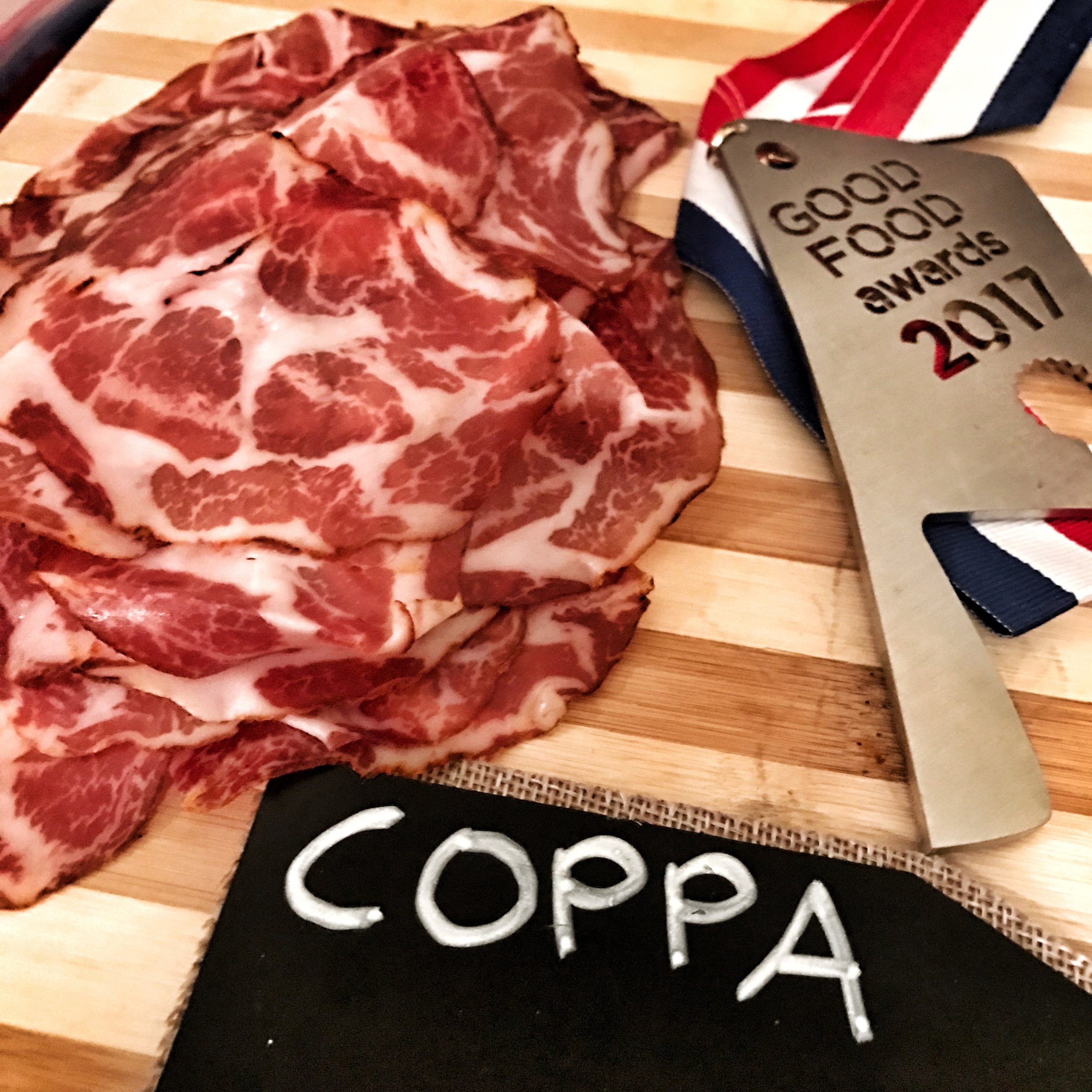
Some award winning cured coppa in the VIP section of Charcuterie Masters 2017.
Great Day Houston
In case you missed it, your favorite parapatdetic butcher made bacon on "Great Day Houston" with Debra Duncan. Check it out below.

Three, two, one and ACTION.
-
May 2022
- May 24, 2022 The Hand House May 24, 2022
-
May 2018
- May 16, 2018 Texas, Arizona, and Peru May 16, 2018
-
March 2018
- Mar 6, 2018 Bucket List Mar 6, 2018
-
February 2018
- Feb 19, 2018 OSSO Feb 19, 2018
- Feb 7, 2018 Pass the Cheese, Please. Feb 7, 2018
-
January 2018
- Jan 7, 2018 The Unofficial World Hot Dog Championship Jan 7, 2018
- Jan 2, 2018 Haven Festival Jan 2, 2018
-
November 2017
- Nov 20, 2017 We Are What We Eat Nov 20, 2017
- Nov 1, 2017 License to Kill - a Way of Art Nov 1, 2017
-
October 2017
- Oct 21, 2017 Fleischer-Handwerk Oct 21, 2017
- Oct 18, 2017 Mad Food with Mads Cortsen Oct 18, 2017
-
August 2017
- Aug 14, 2017 Roskilde Festival Aug 14, 2017
- Aug 2, 2017 The Proof That Even Slaughterers Can Become Pop Stars Today Aug 2, 2017
-
June 2017
- Jun 6, 2017 Where to Find Pig Ear Terrines, Spicy Nduja and Other Adventurous Charcuterie in Dallas Jun 6, 2017
- Jun 5, 2017 Cochon555 Houston Jun 5, 2017
-
May 2017
- May 23, 2017 Charcuterie Masters 2017 May 23, 2017
- May 18, 2017 Dirty Steaks May 18, 2017
- May 16, 2017 Dîner en Blanc May 16, 2017
- May 10, 2017 Steensgaard May 10, 2017
-
April 2017
- Apr 4, 2017 Gascon Fricandeaux Apr 4, 2017
- Apr 3, 2017 American Kid Apr 3, 2017
-
March 2017
- Mar 27, 2017 Folkets Madhus Mar 27, 2017
- Mar 23, 2017 Another Open Door Mar 23, 2017
- Mar 13, 2017 Yoakum Man Learns Old World Butchery Mar 13, 2017
-
February 2017
- Feb 20, 2017 Great Day Houston Feb 20, 2017
-
December 2016
- Dec 4, 2016 Creating the Manifesto Dec 4, 2016
- Dec 4, 2016 Meating Fellow Revolutionaries Dec 4, 2016
- Dec 4, 2016 The Butchers' Manifesto Origins Dec 4, 2016
-
November 2016
- Nov 10, 2016 The Sausage Man Never Sleeps Nov 10, 2016
-
October 2016
- Oct 19, 2016 Road Trippin' Across Europe Oct 19, 2016
- Oct 2, 2016 Vide Greniers: the French Garage Sale Oct 2, 2016
-
September 2016
- Sep 20, 2016 Je N'ai Plus Faim Sep 20, 2016
- Sep 13, 2016 Noix de Jambon Sep 13, 2016
-
August 2016
- Aug 28, 2016 The Chapolard Family of Gascony Aug 28, 2016
- Aug 7, 2016 The Cowboy, the Expat, and the Englishman Aug 7, 2016
-
July 2016
- Jul 31, 2016 France - Right Where I Need to Be Jul 31, 2016
- Jul 25, 2016 Fambam in Italy Jul 25, 2016
- Jul 11, 2016 Red is His Signature Color Jul 11, 2016
- Jul 4, 2016 Doin' It Like Dario Jul 4, 2016
-
June 2016
- Jun 19, 2016 Trouble in Paradise Jun 19, 2016
- Jun 8, 2016 Tex-Mex Night in Italy Jun 8, 2016
-
May 2016
- May 29, 2016 The King of Beef Does Porchetta May 29, 2016
- May 12, 2016 It's a Long Way to the Top May 12, 2016
- May 10, 2016 Viva La Cicca! May 10, 2016
- May 1, 2016 It’s Crazy What Can Happen in a Year May 1, 2016
-
April 2016
- Apr 26, 2016 The Kitchen at Camont and the Art of Charcuterie Apr 26, 2016
- Apr 12, 2016 Keeping It Under My Hat Apr 12, 2016
- Apr 3, 2016 Let Them Eat Cake Apr 3, 2016
-
March 2016
- Mar 22, 2016 Kolaches versus Klobasniky Mar 22, 2016
- Mar 3, 2016 The Queue for some sweet 'Cue Mar 3, 2016
-
February 2016
- Feb 21, 2016 POS Meat Grinders Feb 21, 2016
-
January 2016
- Jan 21, 2016 Earth Oven Tragedy Jan 21, 2016
- Jan 17, 2016 This ‘ol Gal is Smoking Hot Jan 17, 2016
- Jan 12, 2016 The Gringo and la Reina Tamal Jan 12, 2016
- Jan 7, 2016 Packin' Pork Jan 7, 2016
-
December 2015
- Dec 23, 2015 Empire State of Mind Dec 23, 2015
- Dec 10, 2015 Meat Monger Dec 10, 2015
-
November 2015
- Nov 23, 2015 Jerky Game Strong Nov 23, 2015
- Nov 11, 2015 Breaking Lamb Nov 11, 2015
- Nov 1, 2015 Breaking Pork Nov 1, 2015
-
October 2015
- Oct 26, 2015 Like Cocaine in the '80's Oct 26, 2015
- Oct 21, 2015 Fleishers Craft Butchery: Day 1 Oct 21, 2015
- Oct 11, 2015 Year of the Cow Oct 11, 2015
- Oct 4, 2015 13th Step to Manhattan Oct 4, 2015
-
September 2015
- Sep 27, 2015 Brooklyn Cowboy Sep 27, 2015
- Sep 27, 2015 Vaya con Dios Sep 27, 2015
- Sep 14, 2015 Mystic Goat Roper Sep 14, 2015
- Sep 10, 2015 Green-hand Gringo Sep 10, 2015
- Sep 10, 2015 Shell Station Burgers Sep 10, 2015
- Sep 10, 2015 Butter 'Em Up Sep 10, 2015
- Sep 10, 2015 Why The Hell Not? Sep 10, 2015