
Your Custom Text Here
The Unofficial World Hot Dog Championship
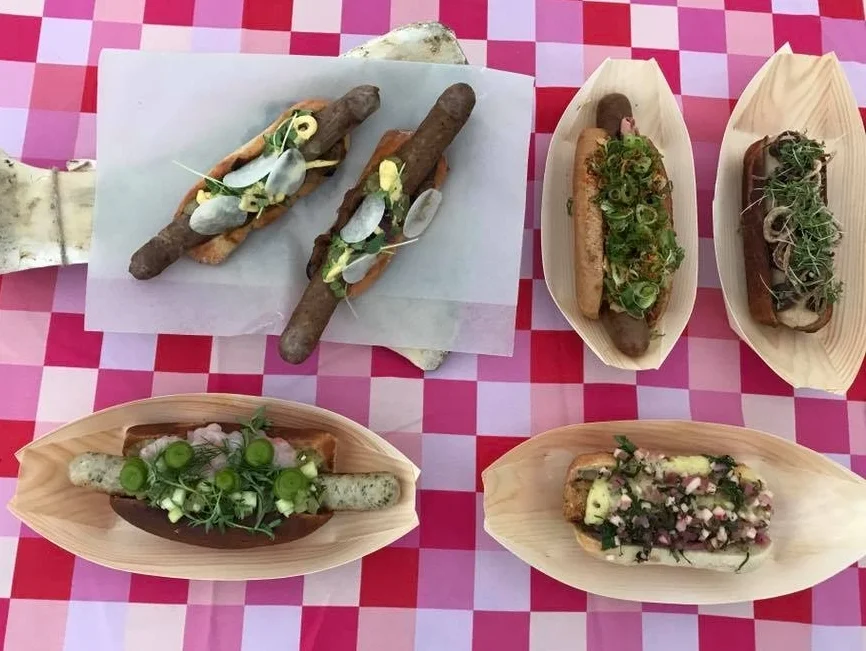
I'll be the first to tell you; I was playing out of my league.
The six-team contest had some big names:
Team Sweden: Brothers Ebbe Vollmer and Mats Thulin Vollmer from Restaurang Vollmer (2 Michelin Stars) in Malmø. The duo is known for straightforward, down-to-earth cooking using their exquisite home-grown produce.
Team South Africa: Korbus van der Merwe from Wolfgat in Paternoster. Korbus's mission is to cook sustainably while using super-local produce and ingredients.
Team Japan: Hideto Takeda, Mads Battlefield, and Henrik Levinsen from Ichimatsu and Restaurant Hjemme, respectively.
Team Denmark: Jonas Boelt, executive chef at Great Northern Food Hall in New York. There, he created a hot dog the NY Post claimed to be the top dog in New York.
Team Spain: Juan Antonio Vargas, head chef of Mugaritz - 9th best restaurant in the world and owner of three Michelin stars.
Oh, and a butcher from Texas...
In the months before the competition, the Folkets Madhus team and I tried to scheme up the ultimate butcher's hotdog - for awhile; there was talk of all the toppings being made from offal with a touch of fresh blood foam. I decided to compete with a more traditional dog rather than blow everyone away with a butcher's hot dog that would horrify some and cause others to turn vegan. The key word here is more traditional - I still wanted to play around with this dog. For a few weeks, I tested hot dog bun recipes, trying to make something unique. I'm not sure where the idea came from, but I decided to add some dehydrated prosciutto to my dough - a recipe that I will come back to and tweak one day. It definitely has some potential!
In place of a Texas-styled sausage, I opted for a traditional Danish grillepølse that highlights Nordic spices and seasonings. I thought this selection exemplified the spirit of the Butchers' Manifesto - the passage of the craft from one generation to the next. With the help of Mads Cortsen, I topped the dog with caramelized onions, pickled green tomatoes, thinly slice glass kale, a mayonnaise, and watercress.
The day of competition, Michael, Gustav, and I gathered at Torvehallerne. After we had assembled our station in our little hotdog trailer, we pulled out a bottle of Michael's famous Bacon Snaps and went to meet our competition.
Initially, the idea was to take the other teams off their "game" with a few swigs, but after hitting five trailers, we agreed our plan had somewhat backfired!
At last, the competition started: we had to serve 100 identical hotdogs to festival goers and an additional six for the judges. I came a little over-prepared, and we pushed out over 150 dogs. We quickly became the crowd favorite.
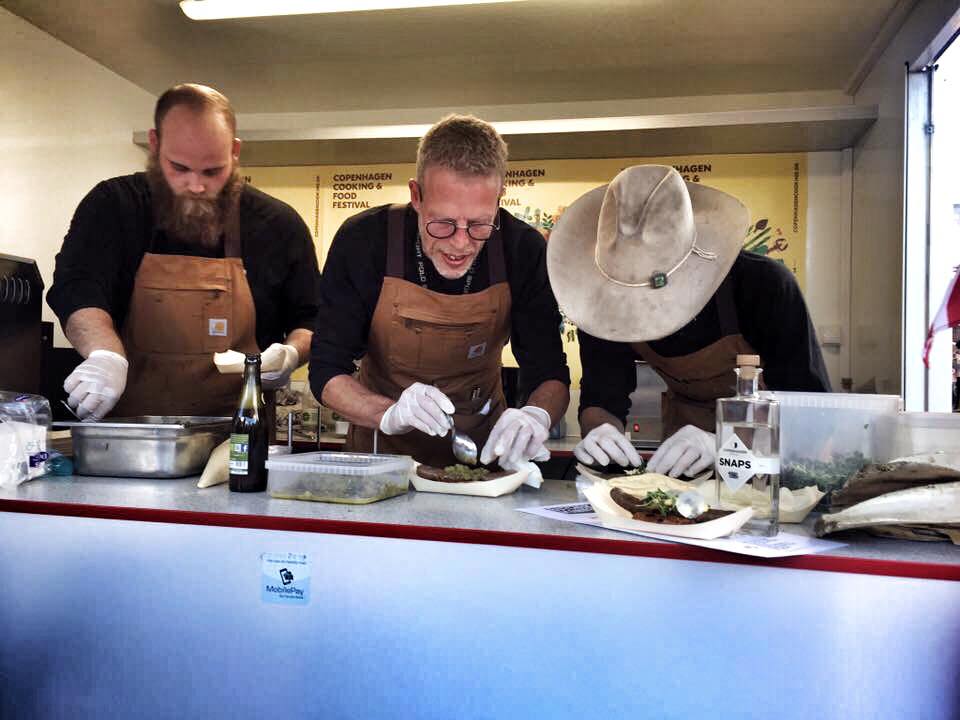
Gustav, Michael, and I busy at work in our small hot dog trailer. Here, Gustav took our wieners out of hot water, placing it in our fresh toasted buns. Michael came along with the caramelized onions and green tomatoes and I finished them off with the mayo, glass kale, and garnish.
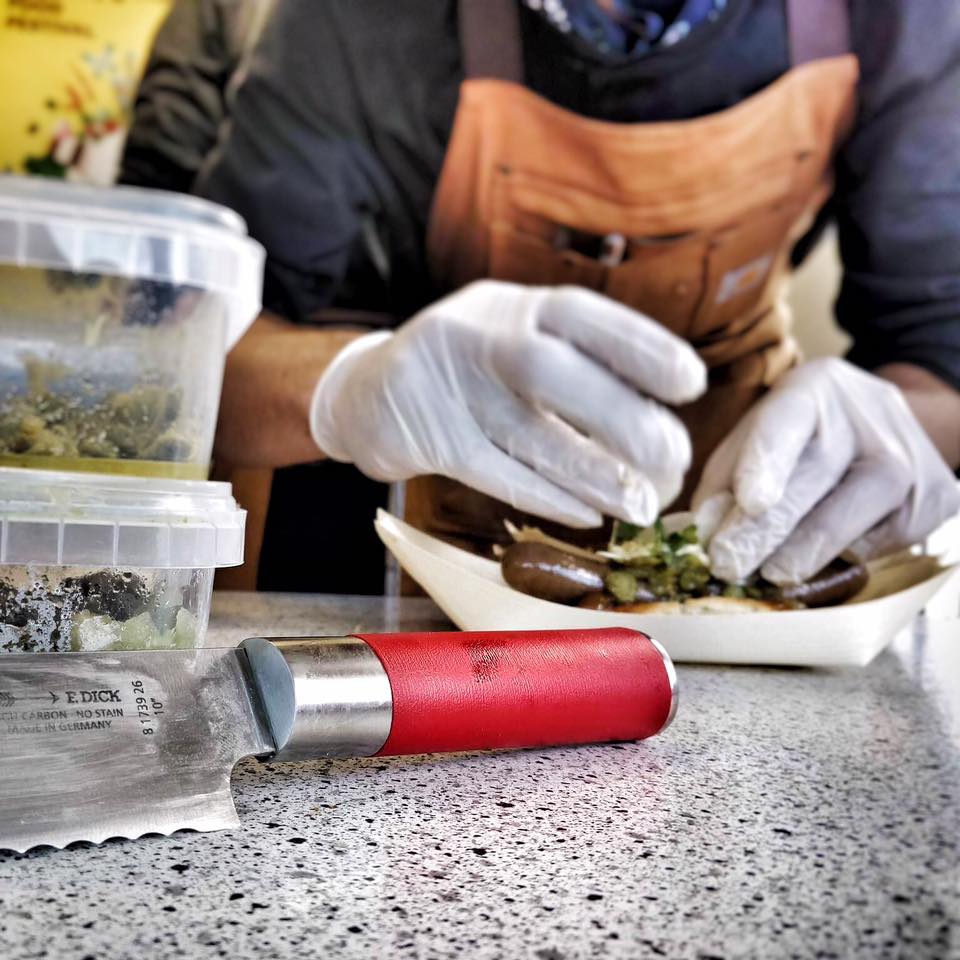
I relied heavily on all my F. Dick equipment for this contest - the bread knife was a work horse for those home-made buns!
Finally, the Master of Ceremonies called for all the chefs to come to the stage for the winning announcement. As I began to make my way out of the trailer, Michael he grabbed me by the shoulder.
"No, screw that! We don't move until they call for the butchers!"
He was right. This was our fight and that of the Butchers' Manifesto:
We are not chefs.
We are butchers.
In order to BRING BUTCHER BACK, we had to be recognized.
We held our ground. Shouts of "Vi Slagter!" ('We are butchers' in Danish) started to ring out from the crowd until finally, the "butchers" were called to the stage.
In the end, the top prize went to Team Japan, and rightfully so - their dog was killer. They loved Michael's Bacon Snaps so much that we gave them the rest of the bottle as an additional prize. You can see them celebrating with it on stage.

Team Japan taking the stage as the winning team of the Top Dog Charity contest - Congrats guys! Photo Credit: Copenhagen Food Festival.
,This was a great experience with lots of wonderful memories - we competed against some talented chefs. and were judged by some of the top chefs in the world. After the competition, I snuck over to the judge's table to get a picture with Ramus Kofoed, winner of the 2012 Bocuse d'Or - essentially, the Olympics of fine dining. Ramus also owns and operates Geranium, a three-star Michelin resturant in Copenhagen.
The experience was made possible by Michael Museth. It technically was a Butchers' Manifesto event, but he pushed for me to be on stage. For this, and all the other incredible opportunities he has given me, I am deeply appreciative.


SIDENOTE: A few weeks after the hotdog competition, Mads Cortsen competed in the Danish National Hotdog competition. His setup was hospital themed - he looked like a bloody surgeon while serving up his hotdogs and guess who got to make the buns?

Where to Find Pig Ear Terrines, Spicy Nduja and Other Adventurous Charcuterie in Dallas
from Dallas Morning News / June 6, 2017 / Coryanne Ettiene, Special Contributor
If you haven't already, it's time to get on board the charcuterie craze sweeping Dallas. Not too long ago you needed a vacation to Europe or some hidden neighborhood in New York City to find mouth-watering charcuterie. But now, thanks to a growing number of butchers and chefs with a culinary curiosity for this time-honored technique, it is not hard to find a shop or restaurant featuring charcuterie with enthusiasm.
Jack Matusek, 25, of Raw Republic Meats is a native Texan from Yoakum who spent the last year studying the art of butchery and charcuterie from some of the biggest names in the industry. He is now completing his butcher training in Europe with the aim of returning to Texas to open his own shop in Fort Worth and a wholesale charcuterie program on his family farm in Yoakum.

Butcher Jack Matusek of Raw Republic Meats (Raw Republic Meats)
"A big difference between Europe and the United States when you start talking charcuterie is prevalence," Matusek says. "Europeans initially preserved their meat using these methods before the invention of refrigeration. You can find some form of charcuterie or cured meat on just about every lunch table in France or Italy. Charcuterie is a staple in the European diet while it is emerging as a specialty item here in the states."
For him, charcuterie is "just like wine, certain tastes or hints in charcuterie develop because of the weather, protein source, or storage and curing conditions."
From spicy, tangy salamis to full-bodied, nutty pates, charcuterie embodies a wide-reaching plethora of incredible flavors and textures that whisper tasting notes specific to the terrain and environment it is produced in.

Speck Alto Adige dry-cured smoked prosciutto from Jimmy's Food Store in Dallas.
(Ben Torres/Special Contributor)
Branching out
With so many old-world favorites and emerging flavors to choose from, Matusek says you can't go wrong with a quality prosciutto or culatello, both products from the ham that get aged for two or more years.
"With a curing cycle that long, some incredible flavors develop that aren't found in other types of short-term cured meats," he says.
If you are looking for something that will add a kick to your board, Matusek is in love with nduja, a spicy, spreadable salami. He recently dined at Knife Dallas and highly recommends their nduja and other charcuterie.
And for the adventurous eater, Matusek suggests lardo, a cured and seasoned back fat sliced paper thin.
"It's a delicious addition to a charcuterie board made from a part of the pig that usually gets overlooked," he says.
Experimental Chefs
The rising popularity of charcuterie in Dallas is due in great part to an emerging number of local chefs who are experimenting with curing meats. Start at Lucia in the Bishop Arts District and order their salumi misti — a tasting of house-made cured meats such as lardo, nduja and rabbit terrine.

Pig ear terrine is cut at Blind Butcher by chef Oliver Sitrin. (Tom Fox/Staff Photographer)
Pop over to The Blind Butcher in Lower Greenville for another take on in-house cured meats. Chef Oliver Sitrin's menu is what he calls "worldly local," adapting with the seasons and sourcing local to match his global palate.
For Sitrin, the charcuterie trend appeals to the artisan, small-batch consumer that is gaining momentum. It's thanks to the "animal movement that is helping people become aware of waste, but also moving them to try different parts of the animal they may not have been willing to try before," he says.

Blind Butcher chef Oliver Sitrin prepared a charcuterie board full of (clockwise from lower left) pork rillette, pork rinds, carrot chutney, head cheese, lost ruby ranch (fresh goat cheeses), pig ear terrine, duck-chicken-duck pate, pickled green beans, lardo, candied pecans, beef-pork-duck pate, pacha, and bacon bratwurst and mustard. (Tom Fox/Staff Photographer)
"Recently we have had more people asking for fun things like head cheese, rillettes and anything pastrami," he adds. "We do a few different types of bacon, and people seem to really enjoy anything you can turn into bacon these days."
His menu reads like a love letter to cured meats. It's reminiscent of old world flavors but with a contemporary flair that draws you in and sparks a hungry meat-eater to try everything.
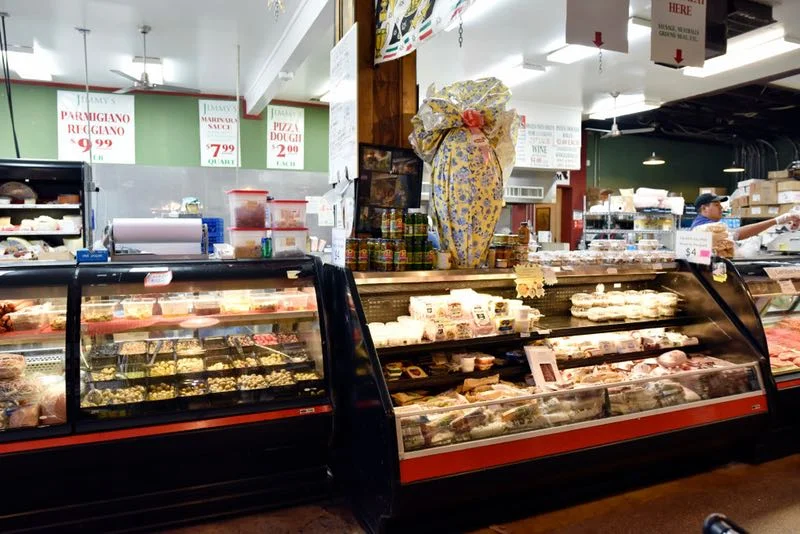
The charcuterie case at Jimmy's Food Store in Dallas. (Ben Torres/Special Contributor)
Try it at home
For those looking to embrace charcuterie at home, Jimmy's Fine Food Store in East Dallas has been dishing up charcuterie long before it was a buzzword on the tip of every foodie's tongue.
Visit on a Saturday afternoon and you will find yourself sharing a line with locals hungry for smoked prosciutto or Beretta spicy salami. Their old-fashioned deli counter packed with a huge selection of charcuterie, cheese and Italian delicacies is a must for those looking to create the perfect board.
Local butchers such as Deep Cuts in North Dallas and others also carry a wide range of dried and cured meats, as do cheese shops such as Scardello.

Beretta spicy sausage from Jimmy's Food Store. (Ben Torres/Special Contributor)
A learning environment
You can always try your hand at curing your own meats. There is an emerging number of home cooks and hobby butchers that are learning the art of charcuterie with the hope of crafting their own spin on traditional cured meats inspired by restaurant boards and deli counter finds.
Matusek isn't the only chef passionate about educating consumers and chefs on the art of charcuterie. A variety of workshops by trained chefs and butchers are appearing across the country. You don't have to attend full-blown culinary school to get a taste of the cure.
Cuisine University held a charcuterie and salumi workshop in Dallas in April taught by chef Brian Polcyn, author of Charcuterie: The Craft of Salting, Smoking, and Curing.
"The recent popularity for charcuterie has been going on for about seven years, maybe a little longer," says Vic Rose of Cuisine University. "Chef Polcyn's book was the one book that really got many of the young chefs interested in charcuterie."
You could also head to Austin and visit Salt & Time, a butcher shop and restaurant, for classes on meat curing basics and sausage-making.
Coryanne Ettiene is a McKinney freelance writer. / Dallas Morning News / June 6, 2017
Charcuterie Masters 2017

View of the Empire State Building on my cab ride in.
DAY 1:
In late February, I ventured back to the tri-state area for Charcuterie Masters 2017 and a chance to rub elbows with the finest purveyors of cured meat in America. As I rambled through the city I once called home for a couple of months, my mind was caught in a stampede of good memories - apprenticing with Fleishers Craft butchery, Yankee games on crisp autumn nights, and all the good food...
Yeah, I kinda missed it.
Since I was back in the Big City, I decided to check out what the trendsetters were laying down in terms of charcuterie. Bar Boulud was heavily recommended – so it was Bar Boulud for lunch.
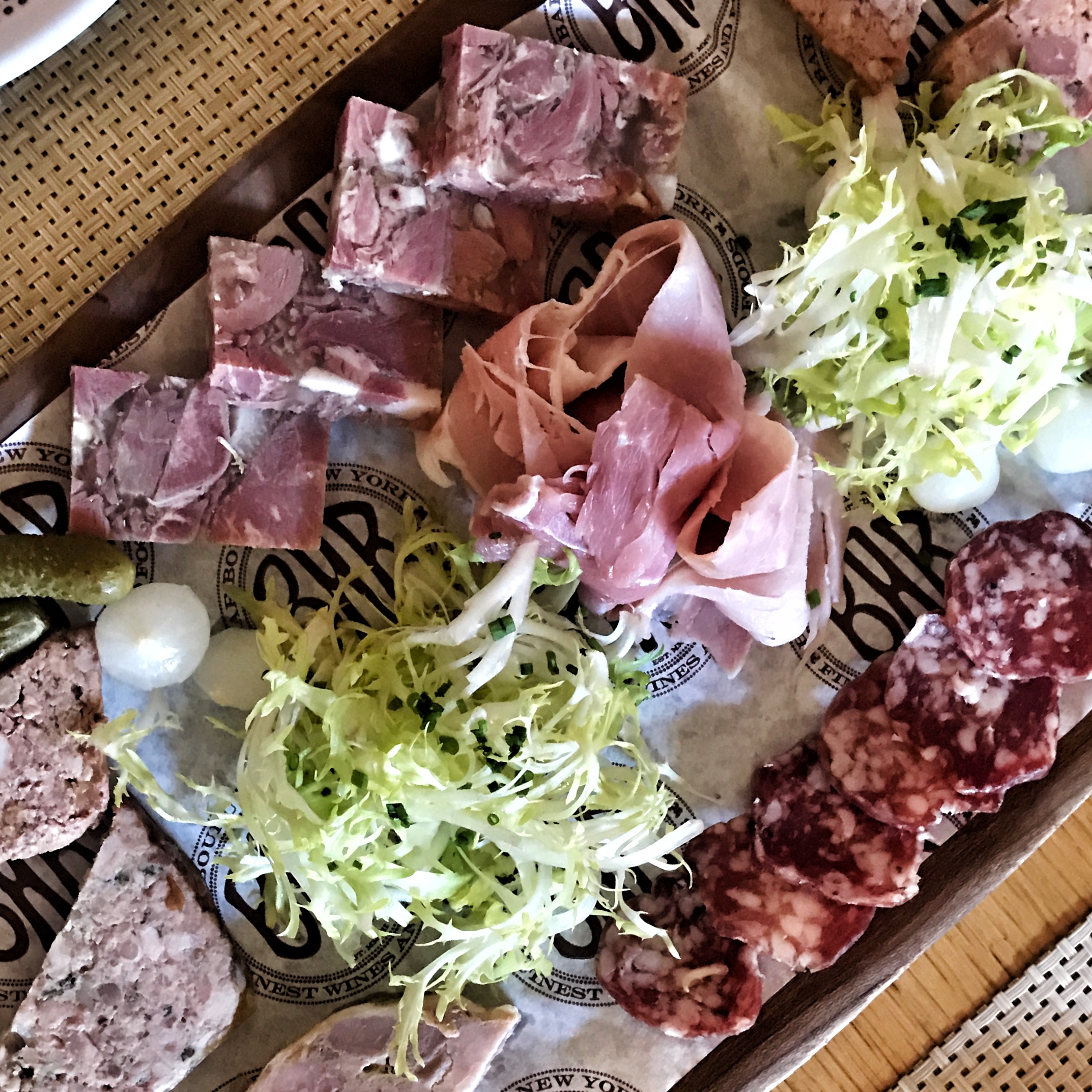
The charcuterie board at Bar Boulud - pâtés on pâtés on pâtés
It didn’t take long for me to order.
In a few minutes, I had a glass of one of their red wines, a massive board of pâtés, and a colorful assortment of condiments. The Pâté Grand-Père was simply fantastic – it probably had something to do with the foie gras and truffles inside. The rest of the pates and terrines were interesting, but didn’t compare to the Pâté Grand-Père. Surprisingly, only one other form of charcuterie made the board, a French Saucisse seche.
It was a nice change in cuisine.

Chelsea Market - one of my favorite spots in Manhattan.
I wandered around Manhattan the rest of the afternoon, exploring places like White Gold Butchers and Chelsea Market. I was killing time until my dinner reservations at Agern.

I had to go check out White & Gold Butchers and see what all the buzz was about. It's all true.
Agern is a season-driven restaurant developed by Chef Claus Meyer, who, for the last thirty years has been reinstating quality and unlocking the potential of the Danish food culture. It was an incredible meal that transplanted me back to my Nordic adventures in Copenhagen.

The opening course at Agern - oyster on ice.

A combination of fresh fish and preserved vegetables in broth.
The next morning I dedicated to the NYC Fermentation Festival held at the Brooklyn Expo Center. I made my way down the rows, tasting craft brews, kombucha, and kimchi. Brooklyn Brine, one of my favorite pickle companies was in attendance along with Six Point Brewery - one of the best damn craft beers out there. I also ran into the Ends Meat booth, owned by friend John Ratliff. John wasn’t there that day, but a lot of his cured meat was and as always, it was top notch.

Brooklyn Brine has the best pickles out there!
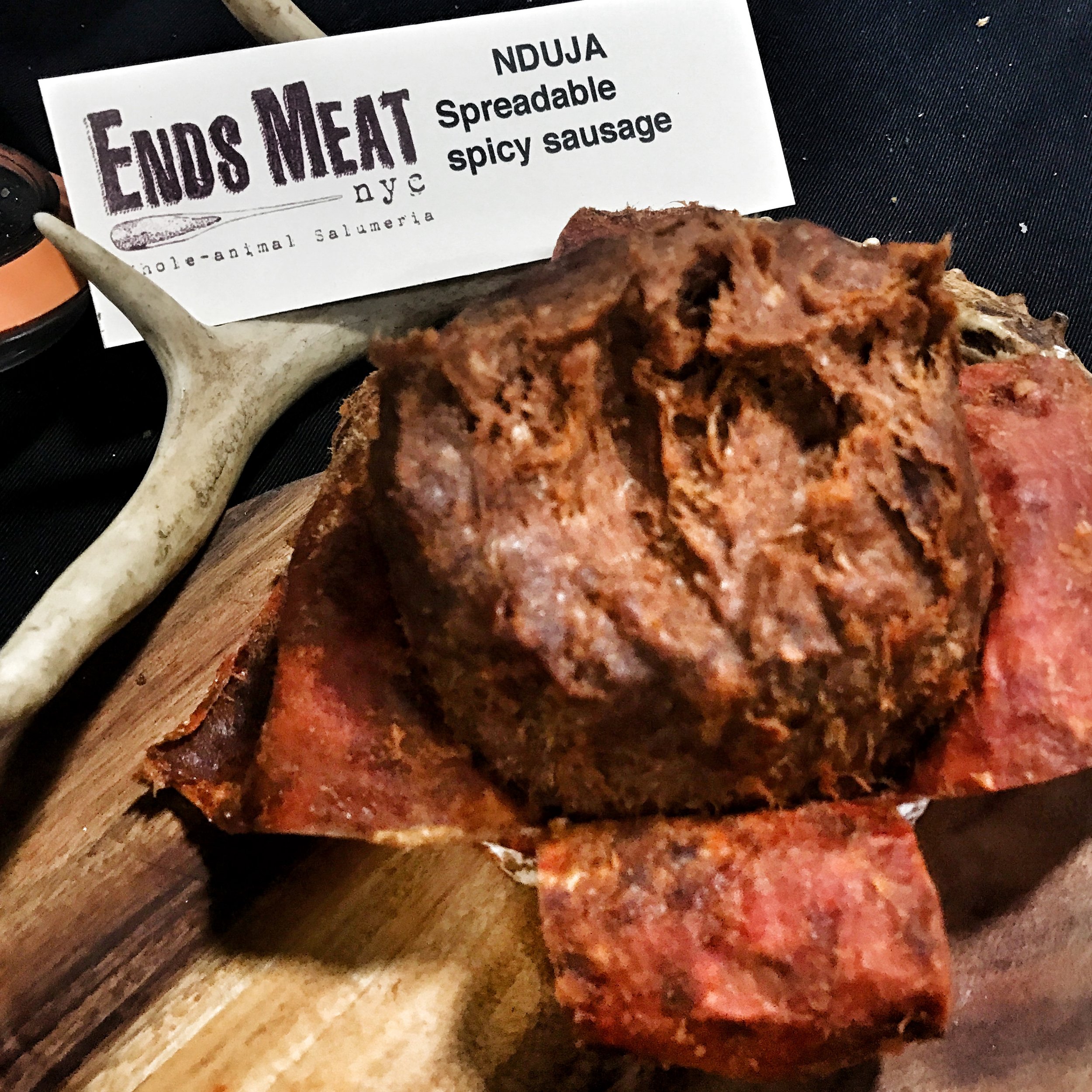
Ends Meat's Nduja - a spicy spreadable salami that will knock your socks off - its one of my personal favorites.

Six Point - the best craft brewery - besides Shiner Bock, of course. It had been awhile since I had tasted some of their hops.
That night, in the shadows of the Met’s baseball stadium, the great charcuterie gathering began. After a rather cramped subway ride, I stumbled into Flushing Town Hall and was immediately greeted with good food and libations. The hall was packed with people – all with one common interest – cured meat.
I’ve said it many times – the meat world is really small. Social media has allowed me to connect with many other butchers across the nation. I’m sure I wasn’t the only one having awkward first time encounters that evening.
Heeeeyyyyyy, (know the face but blanking on the name) there…… buddy! Nice to meet ya.
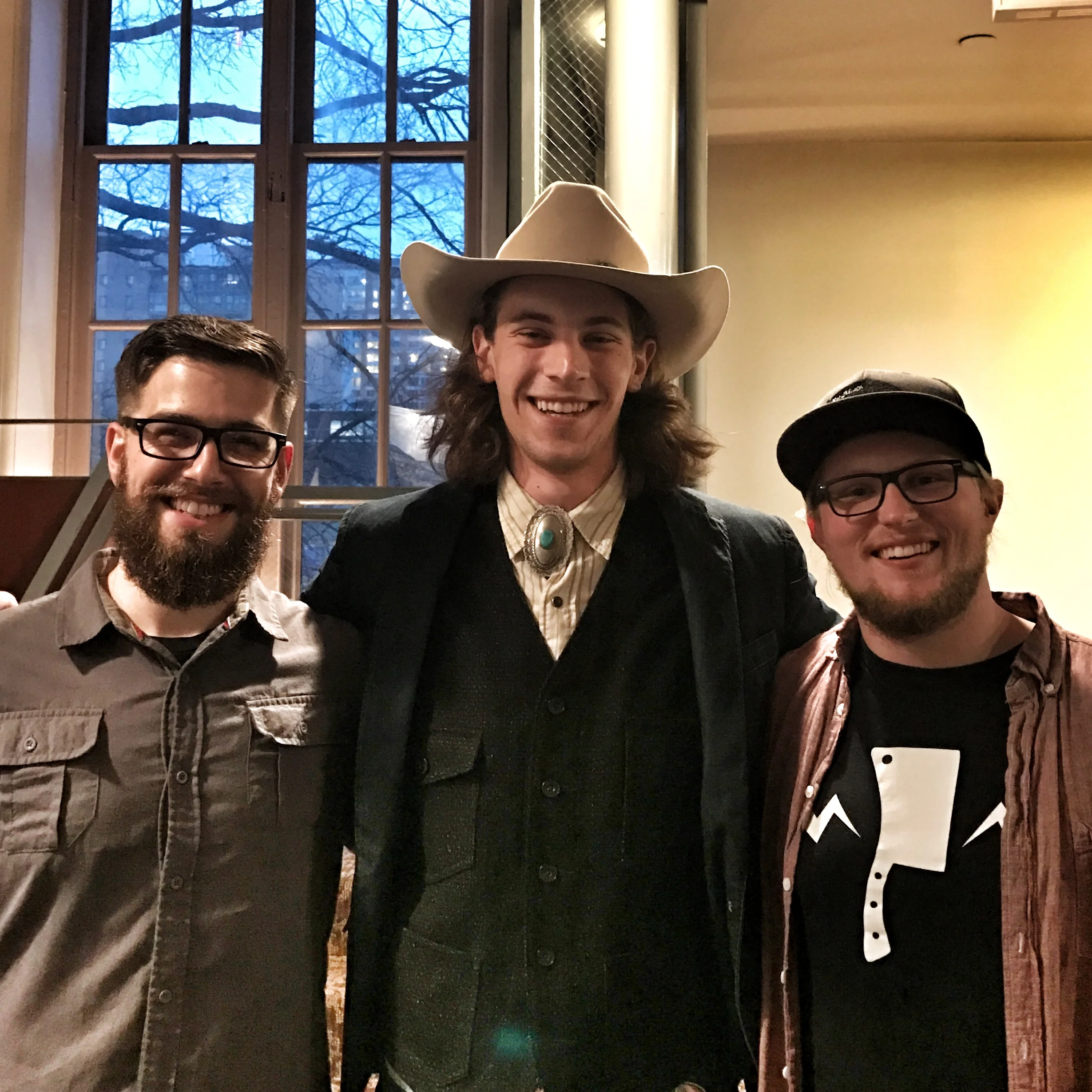
Matt Levere of Urban Butcher, George Turkette of Turchetti's Salumeria, and I at Charcuterie Masters 2017. These two guys are masters of their craft and leaders in the American charcuterie movement - I was honored at the chance to chat and get to know them.
Highlights of my night include:
- Prosciutto, cured six years without the use of artificial nitrates, by Rodrigo Duarte. His booth was layered with hams estimating almost $80,000 in total. His guys sliced on two legs of prosciutto for more than three hours that night. He ended up taking home a few prizes because of his outstanding products.

6 year old prosciutto - some of the best out there.
- Hure de Porc, a pork tongue and pistachio head cheese, from Smoking Goose Meatery. Another award winner.

Hure de Porc with pork tongue and pistachios - a no-doubt winner from Smoking Goose Meatery. This is another version of head cheese.
- Salami – there was plenty of it and various flavor combinations. I definitely left with some inspiration and I cannot wait to test out some flavor combos I picked up.

A variety of salami displayed at one of the booths at Charcuterie Masters 2017.

An amazing Molé salami from Elevation Charcuterie out of Denver, CO.

Francois Vecchio and I at Charcuterie Masters 2017.
- Francois Vecchio - Midway through the evening, I ran into Francois Vecchio Francois Vecchio, often dubbed the “Godfather of American Charcuterie.” Before immigrating from Switzerland, Francois studied and mastered German, Italian, French, Spanish meat craftsmanship (He is also fluent in all those languages in addition to English.) He is often credited for starting the cured meat movement in America back in the early 1980’s. We chatted for awhile about Europe and my travels and then the conversation naturally drifted to the state of charcuterie in the USA. Francois explained that Americans have now figured out how to produce cured meats, but the quality was still lacking. Francois urged me to get back to Europe as soon as possible and to keep learning. It was such an honor to meet such an important figure in the industry.
The last hour of the event was reserved for the presentation of awards. Submissions had been sent in from across the nation and judged the previous day. I’m sure the judges had their hands full! We watched and applauded as each categorical winner was announced.
By this time, the hall had begun to empty. I shook a few more hands, took a last few selfies with new friends, and hit the pavement and made my way back to the subway. Charcuterie Masters was an unforgettable experience – For the first time, I really got to connect with the “movers and shakers” in the American meat game. In conversation with them, I learned about obstacles and challenges some of them are dealing with in today’s culinary climate. I also picked up a lot of valuable tips and tricks that will further enhance my own products. I am happy to see this movement growing in America and I want to see it continue.
Congratulations to all the winners of Charcuterie Masters 2017.
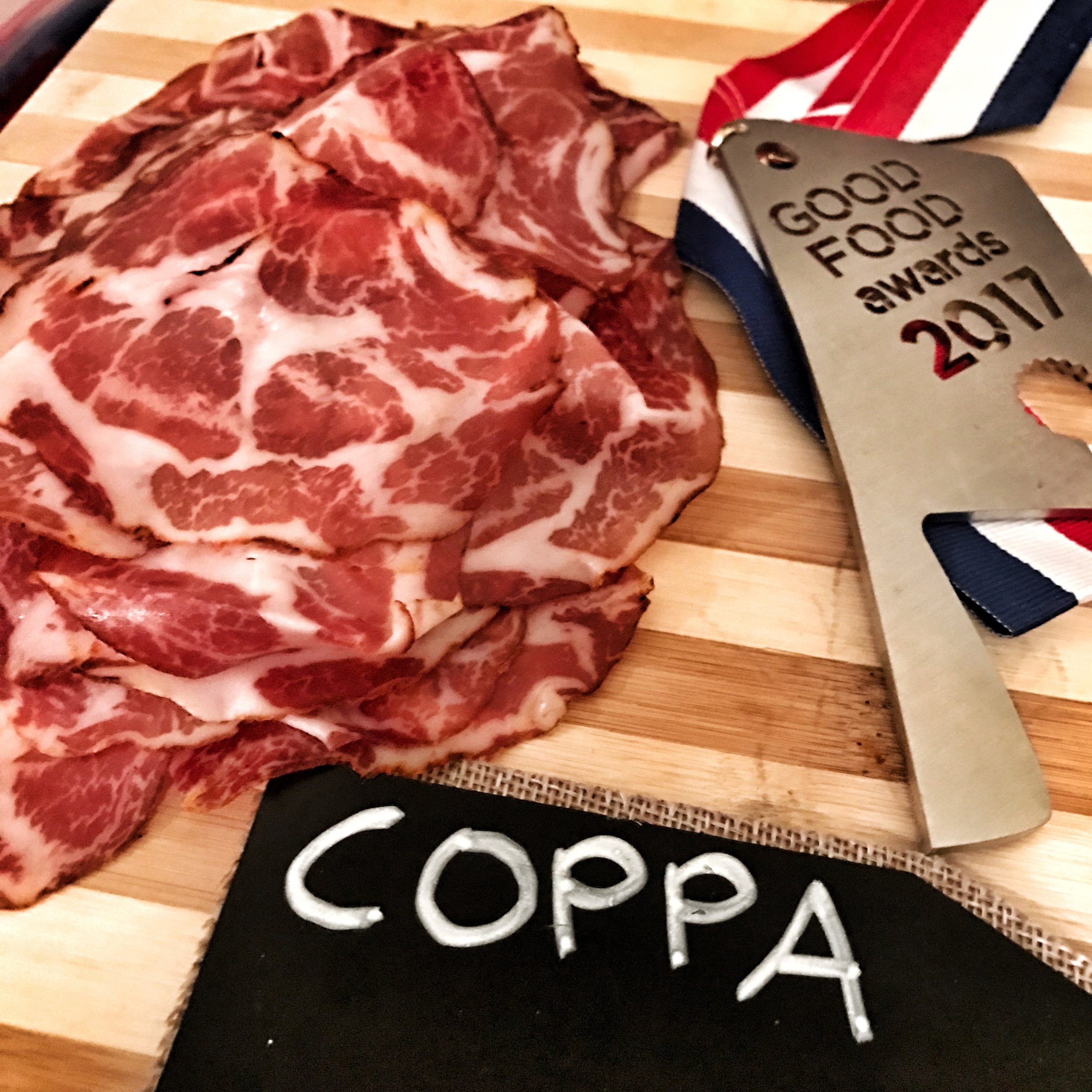
Some award winning cured coppa in the VIP section of Charcuterie Masters 2017.
The Chapolard Family of Gascony
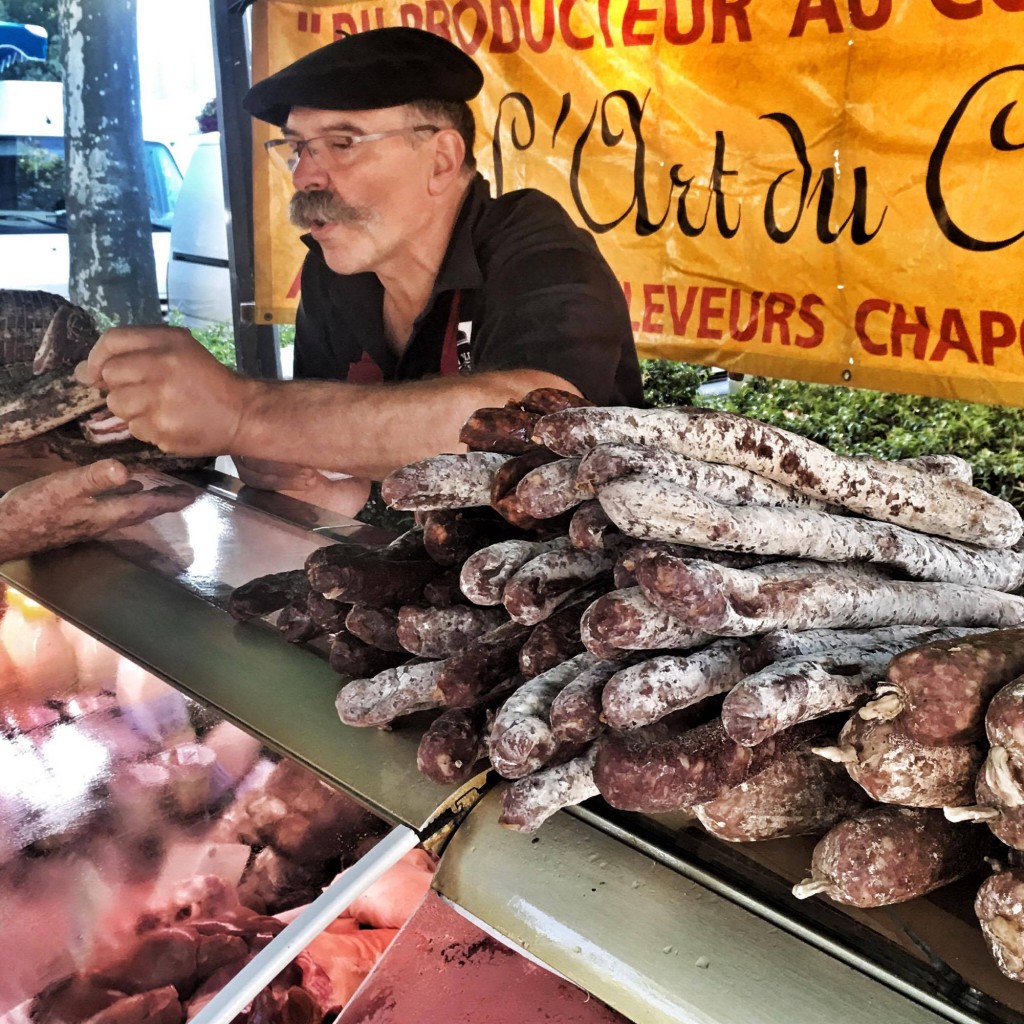
Dominique Chapolard working his stand at one of the various farmers' markets in Gascony.
Round Two in Gascony was meant to give me a thorough knowledge of traditional French charcuterie and luckily I scored a two-month apprenticeship with one of the best charcutiers in the country - Dominique Chapolard.
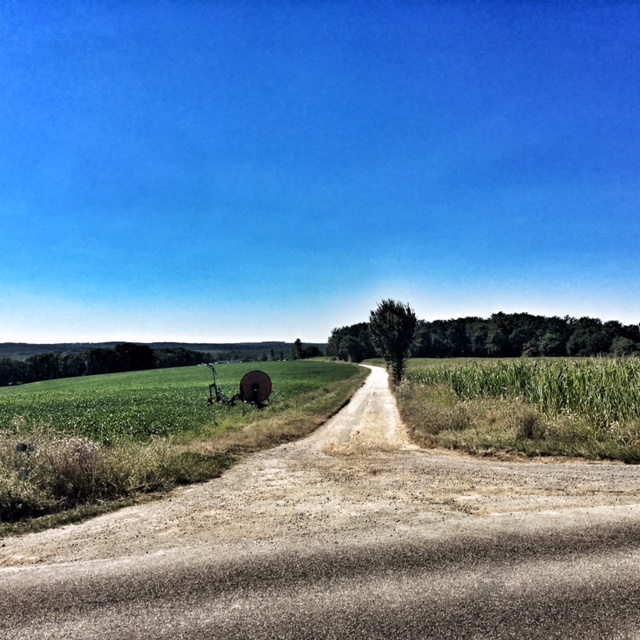
The drive into the Chapolard's farm.
Dominique’s family owns a 50-hectare farm just between Nerac and Mézin. His grandfather originally purchased the farm from a dying winemaker after the Great War. He and his wife began raising dairy cows on the property and added apple, peach, and prune orchards until a large storm in 1968 destroyed much of the fruit trees. By this time, Dominique’s father and uncle had taken on the bulk of the responsibility of the farm. The second generation decided to try their hand growing melons, cucumbers, and tomatoes.

Eventually, Dominique's father gave up on the fruit and vegetables and invested in Blonde Aquitaine cattle known for their delicious beef. Like most French families, he always bought two piglets every year for his family’s personal consumption. When the region’s pig farmer passed away, Dominique’s father seized the chance to move into pork – he bought two sows, built a small farm laboratory and became a pig farmer and charcutier.
As a child, Dominique worked on the farm and watched as his family labored over fruits and vegetables for such a meager living. So when the time came, Dominique chose to pursue a life in academia instead of agriculture. He didn't stray far from the farm, though. After he married his wife Christiane, he took a position teaching Forestry at the Université Toulouse. From there he accepted a position as headmaster at another agricultural school before finally returning to the family farm to help his three brothers, Mark, Bruno, and Jacque, with the pork operation.
Today, each brother pitches in around the farm, but each has his own specific role to play. Dominique concentrates on the walk-in cooler and turning half carcasses into various forms of charcuterie. He also mans the family stand at the Lavardac and Nérac farmer’s markets.
Jacque raises the pigs and looks after the crops. Bruno and Mark help with the crops, the butchery, and additional farmer's markets. And then there is a wide assortment of spouses and children that fill in to help the farm turn a profit. As if grain crops, pigs, and charcuterie weren't enough, two of Jacque’s sons have started a dairy operation.
Flots Blancs is hands down the best milk and yogurt I’ve ever tasted.
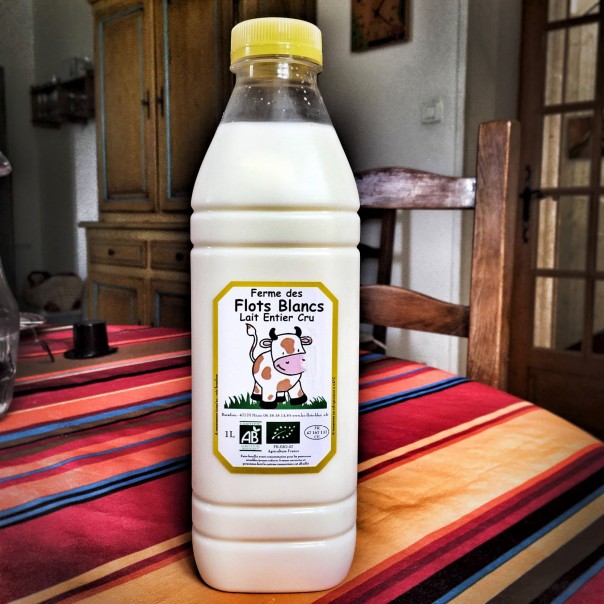
The best milk I've ever had.
The Chapolard family was gracious enough to take me in and teach me their family recipes and way of life. Under Dominique’s careful watch, I have gained a firmer grasp on this component of craft butchery. Hopefully, by the time I leave, I will be able to call myself a charcutier.
-
May 2022
- May 24, 2022 The Hand House May 24, 2022
-
May 2018
- May 16, 2018 Texas, Arizona, and Peru May 16, 2018
-
March 2018
- Mar 6, 2018 Bucket List Mar 6, 2018
-
February 2018
- Feb 19, 2018 OSSO Feb 19, 2018
- Feb 7, 2018 Pass the Cheese, Please. Feb 7, 2018
-
January 2018
- Jan 7, 2018 The Unofficial World Hot Dog Championship Jan 7, 2018
- Jan 2, 2018 Haven Festival Jan 2, 2018
-
November 2017
- Nov 20, 2017 We Are What We Eat Nov 20, 2017
- Nov 1, 2017 License to Kill - a Way of Art Nov 1, 2017
-
October 2017
- Oct 21, 2017 Fleischer-Handwerk Oct 21, 2017
- Oct 18, 2017 Mad Food with Mads Cortsen Oct 18, 2017
-
August 2017
- Aug 14, 2017 Roskilde Festival Aug 14, 2017
- Aug 2, 2017 The Proof That Even Slaughterers Can Become Pop Stars Today Aug 2, 2017
-
June 2017
- Jun 6, 2017 Where to Find Pig Ear Terrines, Spicy Nduja and Other Adventurous Charcuterie in Dallas Jun 6, 2017
- Jun 5, 2017 Cochon555 Houston Jun 5, 2017
-
May 2017
- May 23, 2017 Charcuterie Masters 2017 May 23, 2017
- May 18, 2017 Dirty Steaks May 18, 2017
- May 16, 2017 Dîner en Blanc May 16, 2017
- May 10, 2017 Steensgaard May 10, 2017
-
April 2017
- Apr 4, 2017 Gascon Fricandeaux Apr 4, 2017
- Apr 3, 2017 American Kid Apr 3, 2017
-
March 2017
- Mar 27, 2017 Folkets Madhus Mar 27, 2017
- Mar 23, 2017 Another Open Door Mar 23, 2017
- Mar 13, 2017 Yoakum Man Learns Old World Butchery Mar 13, 2017
-
February 2017
- Feb 20, 2017 Great Day Houston Feb 20, 2017
-
December 2016
- Dec 4, 2016 Creating the Manifesto Dec 4, 2016
- Dec 4, 2016 Meating Fellow Revolutionaries Dec 4, 2016
- Dec 4, 2016 The Butchers' Manifesto Origins Dec 4, 2016
-
November 2016
- Nov 10, 2016 The Sausage Man Never Sleeps Nov 10, 2016
-
October 2016
- Oct 19, 2016 Road Trippin' Across Europe Oct 19, 2016
- Oct 2, 2016 Vide Greniers: the French Garage Sale Oct 2, 2016
-
September 2016
- Sep 20, 2016 Je N'ai Plus Faim Sep 20, 2016
- Sep 13, 2016 Noix de Jambon Sep 13, 2016
-
August 2016
- Aug 28, 2016 The Chapolard Family of Gascony Aug 28, 2016
- Aug 7, 2016 The Cowboy, the Expat, and the Englishman Aug 7, 2016
-
July 2016
- Jul 31, 2016 France - Right Where I Need to Be Jul 31, 2016
- Jul 25, 2016 Fambam in Italy Jul 25, 2016
- Jul 11, 2016 Red is His Signature Color Jul 11, 2016
- Jul 4, 2016 Doin' It Like Dario Jul 4, 2016
-
June 2016
- Jun 19, 2016 Trouble in Paradise Jun 19, 2016
- Jun 8, 2016 Tex-Mex Night in Italy Jun 8, 2016
-
May 2016
- May 29, 2016 The King of Beef Does Porchetta May 29, 2016
- May 12, 2016 It's a Long Way to the Top May 12, 2016
- May 10, 2016 Viva La Cicca! May 10, 2016
- May 1, 2016 It’s Crazy What Can Happen in a Year May 1, 2016
-
April 2016
- Apr 26, 2016 The Kitchen at Camont and the Art of Charcuterie Apr 26, 2016
- Apr 12, 2016 Keeping It Under My Hat Apr 12, 2016
- Apr 3, 2016 Let Them Eat Cake Apr 3, 2016
-
March 2016
- Mar 22, 2016 Kolaches versus Klobasniky Mar 22, 2016
- Mar 3, 2016 The Queue for some sweet 'Cue Mar 3, 2016
-
February 2016
- Feb 21, 2016 POS Meat Grinders Feb 21, 2016
-
January 2016
- Jan 21, 2016 Earth Oven Tragedy Jan 21, 2016
- Jan 17, 2016 This ‘ol Gal is Smoking Hot Jan 17, 2016
- Jan 12, 2016 The Gringo and la Reina Tamal Jan 12, 2016
- Jan 7, 2016 Packin' Pork Jan 7, 2016
-
December 2015
- Dec 23, 2015 Empire State of Mind Dec 23, 2015
- Dec 10, 2015 Meat Monger Dec 10, 2015
-
November 2015
- Nov 23, 2015 Jerky Game Strong Nov 23, 2015
- Nov 11, 2015 Breaking Lamb Nov 11, 2015
- Nov 1, 2015 Breaking Pork Nov 1, 2015
-
October 2015
- Oct 26, 2015 Like Cocaine in the '80's Oct 26, 2015
- Oct 21, 2015 Fleishers Craft Butchery: Day 1 Oct 21, 2015
- Oct 11, 2015 Year of the Cow Oct 11, 2015
- Oct 4, 2015 13th Step to Manhattan Oct 4, 2015
-
September 2015
- Sep 27, 2015 Brooklyn Cowboy Sep 27, 2015
- Sep 27, 2015 Vaya con Dios Sep 27, 2015
- Sep 14, 2015 Mystic Goat Roper Sep 14, 2015
- Sep 10, 2015 Green-hand Gringo Sep 10, 2015
- Sep 10, 2015 Shell Station Burgers Sep 10, 2015
- Sep 10, 2015 Butter 'Em Up Sep 10, 2015
- Sep 10, 2015 Why The Hell Not? Sep 10, 2015