
Your Custom Text Here
Mad Food with Mads Cortsen
Everyone always asks how I can afford to travel and live in Europe.
The simple answer?
I work my ass off.
Even on my off days.
To keep the travel funds at a safe balance, I am always on the lookout for a side gig.
Enter Mads Cortsen - Mads (say, "Mess") has been in the kitchen since the age of six. Instead of the traditional cooking school, he purchased cookbooks from celebrity chefs and tore through them, page by page. At the age of 16, he debuted on Denmark’s most famous cooking program, Masterchef, eventually placing second and capturing the hearts of his native land.
As a rising star in the emerging Neo-Nordic cuisine, the culinary world opened itself to Mads. He received tons of offers before deciding to join the team at Kokkeriet; a Michelin starred restaurant in Copenhagen. After a few years on the fine dining scene, Mads decided it was time for a change: He walked out of the commercial kitchen and opened his own catering company, Cortsen Dining.

Cortsen Dining is like no catering company you have ever seen – Mads comes to your house, in a car loaded down with food, equipment, and a vast array of magnificent plates and dishes. As his guests relax in the comfort of their own home and even yachts, Mads owns the kitchen, producing phenomenal meals ranging from five to twenty-five courses.
The ‘in-home Michelin catering” concept caught on quite well – to the point where Mads was booking three to four parties each weekend.
You do the math:
One crazy, talented chef and four dining’s in a weekend – the guy is always on the go.
Did I mention he is only 21 years old?
So in late August when Mads had an especially difficult week, he came to Folkets Madhus looking for a sous chef – somehow I landed the gig. For the next 72 hours, Mads and I worked like madmen. The first night, we hopped on a harbor tour and served six courses to over 60 patrons. We improvised on a small sinkless countertop in a packed cabin working shoulder to shoulder. Plating was a task with the rolling waves making a steady hand near impossible, but all the same, we cranked out six beautiful dishes and still had time to take in a quick scenic view and a few cold libations.

Prep work done - off to the location.

Our kitchen and dining hall for the first evening with Mads.

A glance at our cramped prep station aboard the Copenhagen Harbor tour boat.


Mads trusted me enough to make all the sausages for the evening.

Smoked Reindeer kabobs....

Baby Shrimp, toast points, and aoili.

Snogbrød (snake bread) wrapped with two year old prosciutto.

Mads is always so calm in the kitchen.
The following night was typical for Mads – a sixteen-course meal for eight in a beautiful downtown apartment. As Mads “created,” I kept busy around the kitchen – warming plates, knocking out dishes, and prepping ingredients. We came together to plate – Mads, precisely plating with tweezers, and Me, following with additional garnish and a vodka-soaked towel to tidy up any small spills.

Lobster with fresh tomatoes.

Pickled Japanese Nashi - incredible!

Pickled strawberries piled atop monk fish.
The last event was the grand finale – twenty courses for eight people, one of which happened to be one of the most respected “foodies” in Copenhagen. Upon Mads arrival, he informed me that his refrigerator had broken the previous evening and all the prepped food had spoiled – things were about to get very interesting!
So we busted our tails that morning to recreate the twenty five-course meal then packed everything to the location only to unload and carry everything up seven flights of stairs (read no elevator). I made numerous trips up and down the stairs, arms burdened with expensive plates, food, and a large container of liquid nitrogen that more closely resembled a bomb.
That night, Mads went all out – caviar, lobster, quail, reindeer, and perhaps my favorite Cortsen dish – the Sugar Orb. Mads commanded everyone’s attention as he created hollow globes of sugar which he then filled with several kinds of sorbet – it was quite a show!

The sugar orb...

Oysters, Mexican cucumbers and caviar.

Another take on beef tartar from Mads.


Mads putting the liquid nitrogen to work - dinning with his really is an experience!
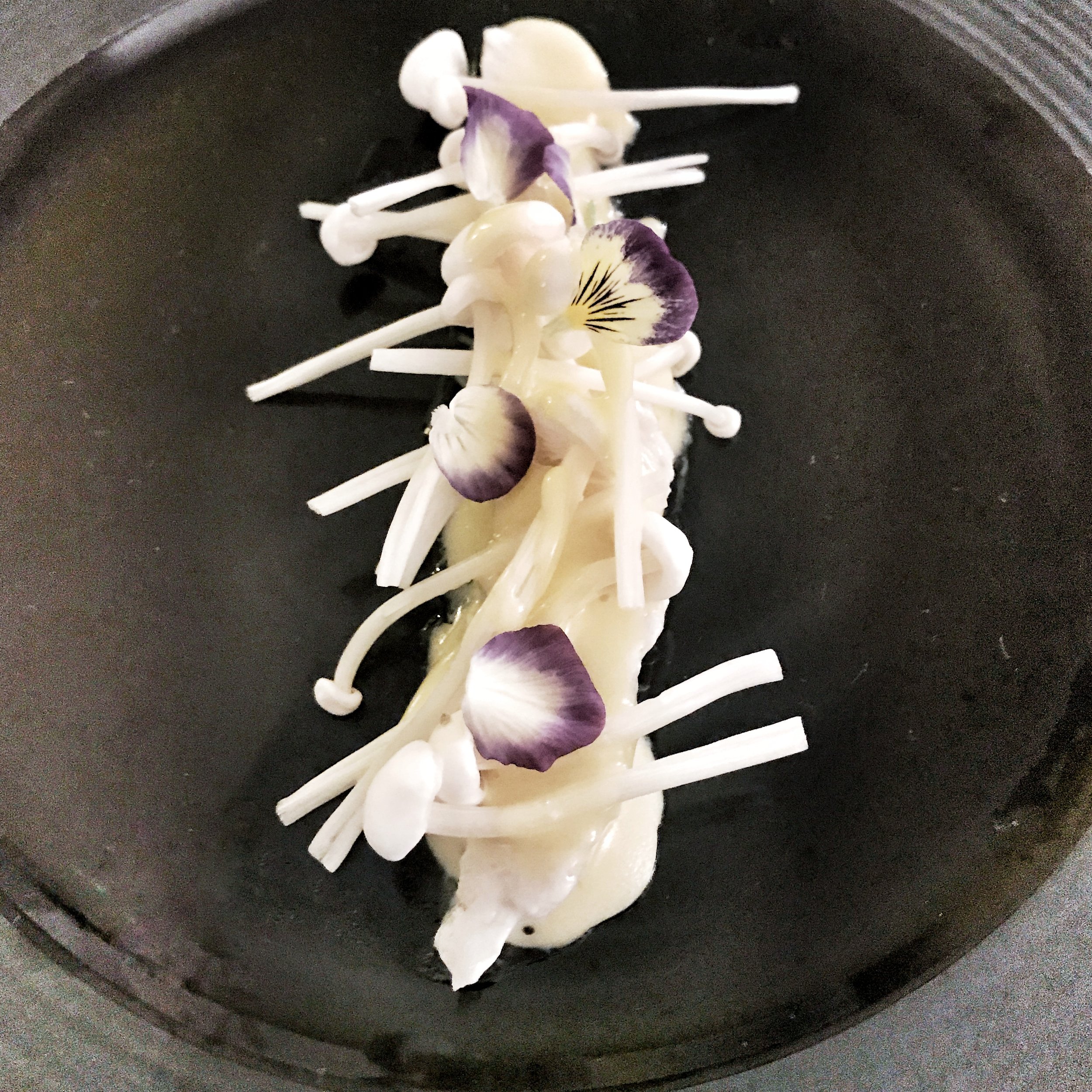
Mads Corsten is a talented one – It was an honor to work beside him. For three days, I felt like I had been thrown into an episode of The Chef’s Table. Thank you, Mads for allowing me the privilege. Watch out world; this Danish kid is gonna tear the food world up!

Roskilde Festival

The Orange Stage, the center of Roskilde Festival a few days before opening.
I didn’t know what I was getting into. I first heard about Roskilde festival on my first trek into Denmark. From what I could gather from my Viking friends, it sounded like a pretty wild music festival where people dressed Amish-ish. Roskilde is, in fact, the largest annual music festival in Europe. Over 135,000 people travel to the old capital of Denmark for a week long non-profit festival dedicated to celebrating music, culture, and humanism. It spans over 8,000 acres, so that means an endless sea of tents, people, food, and music.
About a month ago, Michael Museth, owner of Folkets Madhus gave me a call. For the past five years, Folkets Madhus had been a food vendor at Roskilde Festival and this year he was short on volunteers. That's all I needed to hear. Within a week, my Old Gringo boots touched down in Copenhagen.
I didn’t have much time to catch my breath or unpack my backpack – my second day was spent in the kitchen preparing for a separate catering event for 250 people. In between, my good buddy Gustav and I finished prepping everything for the festival: over 100 kilos of minced meat for the famous “He-Man Chili" and another 100 kilos of Danish BBQ.
As far as Danish BBQ, remember, we aren’t in the Lone Star state.

Danish BBQ hanging in the cold smoker.
Danish BBQ is different from traditional Texas BBQ. Michael and Gustav had started on a test batch before I arrived - beef short ribs were salted with copious amounts of paprika, chili powder, and other spices then cold smoked for days. The final product was slow-cooked in the oven.
Not "Aaron Franklin style" but surprisingly was pretty damn good.
SUNDAY - DAY 1
Sunday was officially the first day of Roskilde Festival. Campers who numbered in the thousands and had been waiting for days to score the perfect site to pitch their tents were turned loose. Food vendors were given the green-light too, so the Folkets Madhus team moved in our equipment and setup our tents. Gustav and I broke away to the Northern countryside to pickup his "camplet" which proved to be a lifesaver. Rain was forecasted, and I had heard countless tales of “Roskilde 2007" - the year, Roskilde received over 4 inches of rain, and the festival turned into a mud-bowl.

One of the many campsites at Roskilde - over 130,00 campers!
MONDAY - TUESDAY
As a volunteer, I was required to work a minimum of 6 hours a day. In return, I was given a free pass to the festival's musical acts. So everyday after our shift was over, we meandered over to the small stages to catch shows. I ended up seeing Foo Fighters, Ice Cube, and Justice, and to my surprise, a band called CcSquele. As it turned out, one of Folkets Madhus's own food runners was "secretly" in the band.
He "forgot to mention it," but he is a pretty big deal. He plays a total of six instruments, and he rocked the drums that night.

One of the smaller stages at Roskilde festival.

WEDNESDAY - Day 4
On Wednesday, the inner circle which included the Orange Stage and the main food court opened. I got into the kitchen for the second shift of the day and was tasked with making an atrocious amount rice and potatoes. Rico held down the other end of the kitchen by making He-Man Chili and doing great impersonations of Salt Bae. That night, the Orange Stage opened up with The Weeknd.

The main food hall where we were stationed.
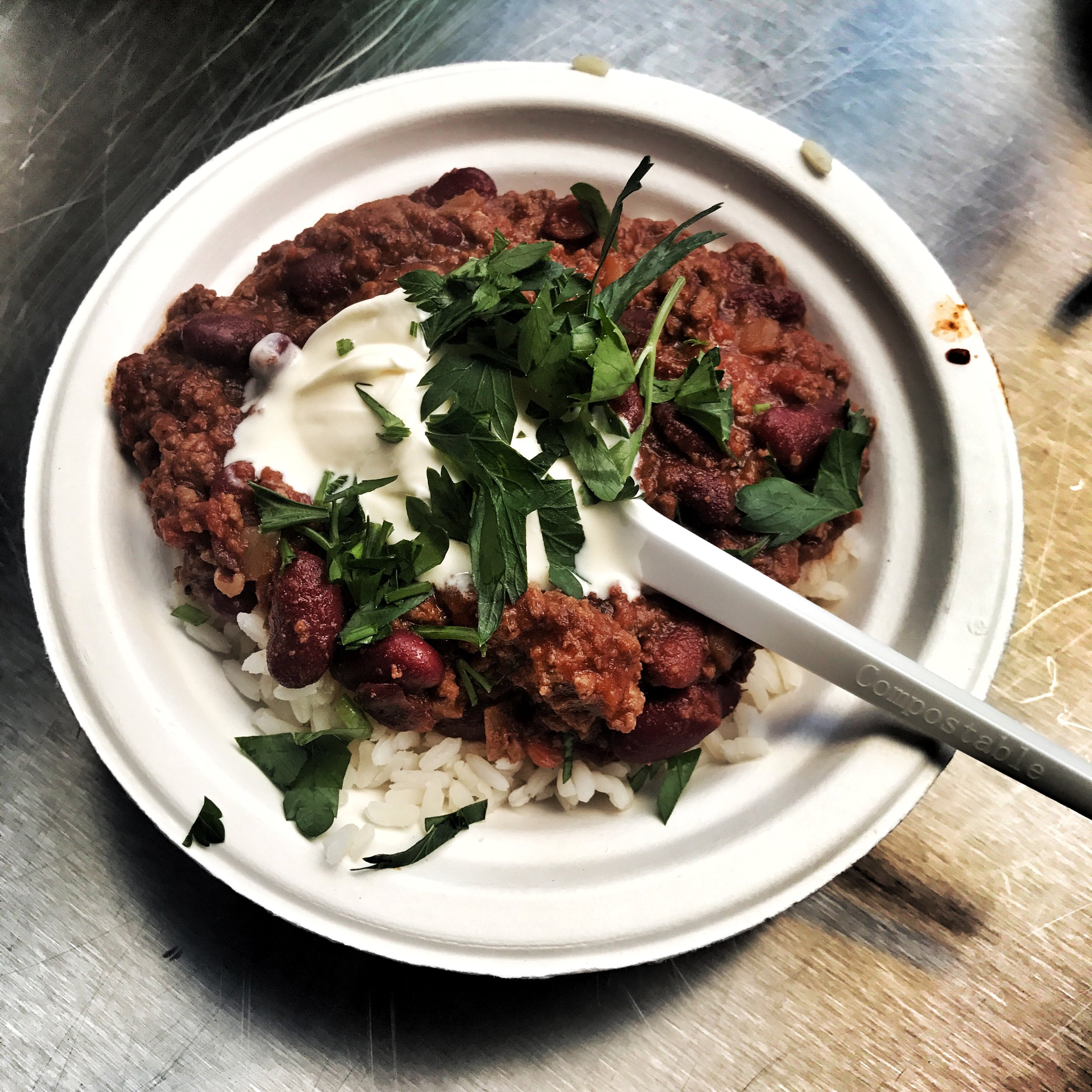
The famous "He-Man Chili" of Folkets Madhus.

Clever, huh?

Flæskestegssandwich, a true Danish treat.
The history buff in me has to break out for a bit: The Orange Stage was originally part of the Rolling Stones 1976 European Tour. At one point, Queen used it until finally, the tent found its way to the Roskilde Festival. Its iconic color and shape have become the festival's logo ever since.

The Orange stage in action.
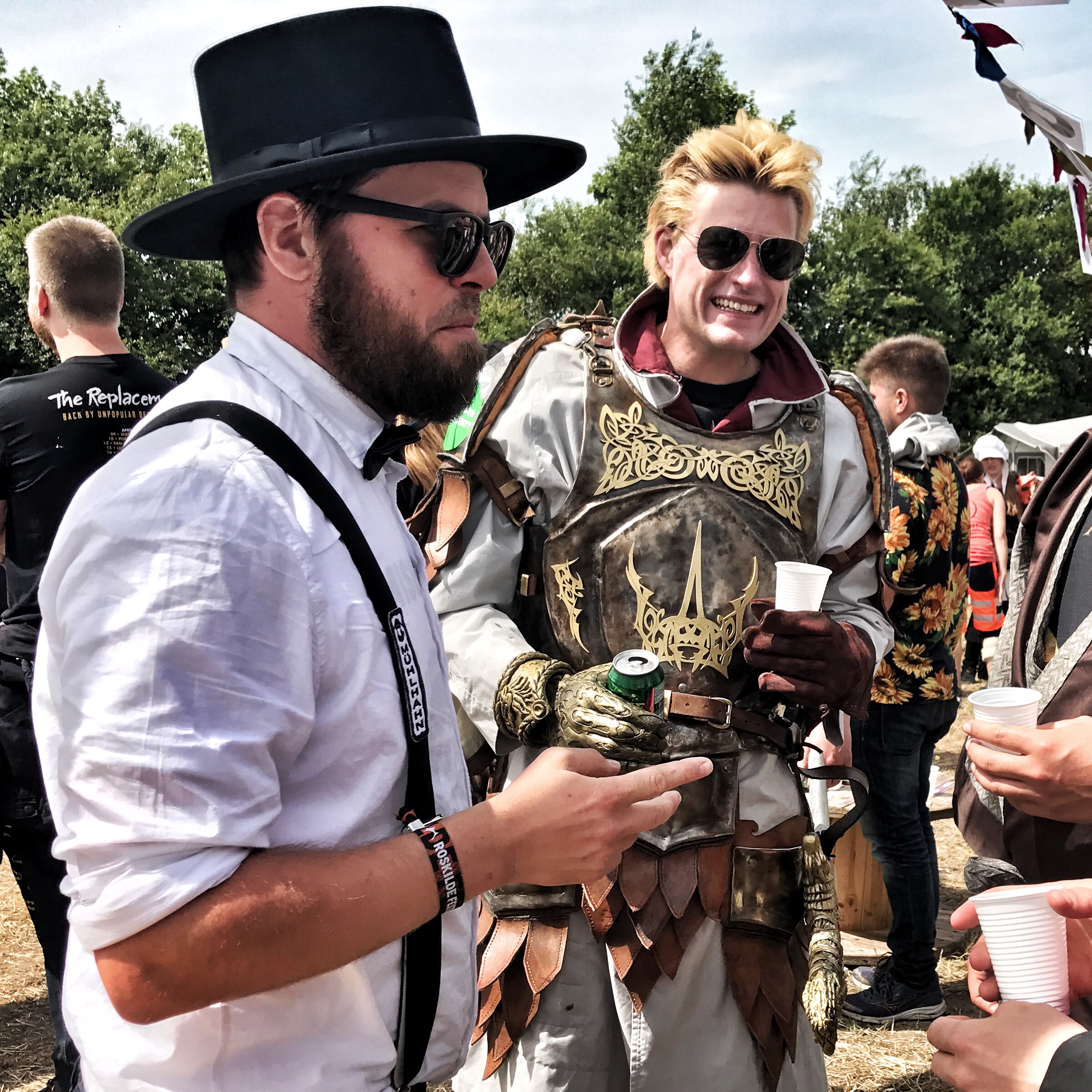
This is what it looks like when the Amish Camp meets Game of Thrones Camp.

By the end of the week, the fairgrounds were pretty muddy.


Tents for days!

Tent tearing down time.
That day, I worked the opening shift and just as I was scheduled to be relieved things got crazy busy and Michael asked me to stay for another shift. There was only one thing to say. This is the guy that has put a roof over my head and food in my mouth. He has done an incalculable amount for my career. Without a second thought, my apron remained on for another shift until festival goers started questioning if I ever left the stand!
Honestly, I didn’t mind. I was having fun and learning more about this side of the meat business.
It was a memorable week. We sold a bunch of He-Man Chili and BBQ, listened to some great music, and made memories that I will always keep with me. I am humbled by my Danish friends who allowed me to partake in this cultural experience with them. As always, they are the best of hosts. Check out my short Roskilde Festival video as well!

My Roksilde/Folkets Madhus crew - Thanks for the great festival guys!
The Proof That Even Slaughterers Can Become Pop Stars Today
By Laura Ewert | WELT Iconist | Berlin | August 2017 | © WorldN24 GmbH. All rights reserved.
The modern butcher blogs and goes on educational journey

At least as beautiful as the meat products from his hands: The blogging butcher Jack Matusek
(Translated from Deutsch)
The butcher is often thick in movies, a bit angry. Sometimes bald. Chabrol rather thick-haired. He is wearing a white apron or white rubber boots and has reddened skin. He saws animals apart and leaves them on large hooks through the slaughterhouse. A place for psychotherapists. Battles are not nice.
Jack Matusek is beautiful. He is wearing a cowboy hat, long brown hair, sometimes green cowboy boots, sometimes a jeans shirt. A soft face. There are many photos of him, because he is a blogging butcher, in English, it sounds as nice as it looks: blogging butcher. He has large pieces of meat in his hand, he shows swine-ear terrines, or how to rouse a whole animal. On his "Raw Republic Meats" page, he writes about his travels, where he wants to learn everything about the craft. The 26-year-old is the proof that even slaughterers can become pop stars today - it helps of course if they look like this.
The slaughterer's new star potential is well explained by the rules of modern gourmets, who eat his bread only artisan and carrots grow blue or crooked. For him, food must be fresh, easily prepared with effort, best self-cultivated. And, of course, ethically correct. This is a tedious business, particularly in meat. One that moves the minds tremendously, in the face of animal protection, in which cow eyes look sadly from truck slits. In the case of conscious eaters, it is, therefore, a good idea to try to find out whether you can kill your food yourself (see the book "Eating Animals"), or at least making a few sausages yourself.
This explains why the butcher is so interested.
“The humble craft of the butcher is definitely coming - worldwide”, says Jack Matusek, who has found his model in Italy. ”I’ve seen videos of Dario Cecchini cutting meat, while he heard AC / DC . I was excited. Then I understood that it was more than cutting meat. It was art. ”
Traveling around the world all over the world
This craftsmanship charmed Matusek. He is a Texan, seventh generation.
“If I could wear my hat in the bed, I would do it, he says. ”
Texas is known for one of the most important economic sectors in the country, the cattle breeding. In 2011 the US produced more than one billion kilos of beef . "I grew up on a ranch. As a child, I enjoyed playing in the kitchen and refined my childish cooking skills, says Matussek. Combining cooking and cattle seemed to me a suitable idea."
At first, he studied history and business administration, where he also developed a business plan for a delicacy butchery. This idea grew more and more in him. "So I canceled the job offers after my graduation and decided to learn everything about the butcher's trade." That was 2015. Since then, he has been on an educational journey with regard to meat.
Jack Matusek first researched, wrote e-mails, and asked at various companies if he could learn from them. He enrolled at the best Fleischer school in the USA, Fleishers Craft Butchery in Brooklyn, New York. Because there was no free place for him, he worked in the next slaughterhouse to learn the basics.
At the same time, he began writing his blog. "I wanted to create a way to teach people about good meat with recipes and video tutorials." That's how you see how he cooks his steak. Directly in the fire. He calls it "Dirty Steak", and the video, in which he explains that you have to leave it four minutes per side in the fire to enjoy it "medium rare" is underlined with action music.
Finally, he moved to Europe. "If you want to learn to surf, go to California, if you want to learn something about sausage, go to France," he had read somewhere. So he sold his car, grabbed his backpack and went to France together with a cowboy hat and a good finish.
Learn from the best butcher
There he worked at the slaughterhouse, on a farm, in a restaurant, ate a lot and learned a lot about French sausages. He spent his 25th birthday at the "Le St. James", a Michelin-starred restaurant in Bordeaux.
Then he went on to Panzano in the Chianti, where he worked with his hero Dario Cecchini, the most famous butcher of Italy. Bill Buford, a New York journalist, was already working as a butcher's assistant. Cecchini sells the self-cut meat in his restaurant "Officina della Bistecca" (Italian for steak workshop).
Matusek then went to France again. In the Gascogne, he was introduced to the secret of national sausage specialties such as Pâté de Tête. He learned how to make the boneless ham Noix de Jambon from a pig's leg, and that any excess blood can cause the meat to rot during drying.
He also studied in Peru, Argentina, and Mexico. "Each country has its own style, which depends above all on local products. But also the climate and the weather influence the way of preparation and storage." A bit like the wine. The Germans, he says, are very exact at slaughter. They would hardly leave meat on the bone. The French cut rather elegantly.

Jack Matusek: "What did the animal eat, how did it live, how was it slaughtered - all that counts for the taste"
Like a cook, a butcher always has his knives, he recommends that of F. Dick. Matusek's favorite sausage specialty is the Italian Coppa of the Schweinenacken. And he loves Hanger steak, the tail of a long bison loin. He likes to work, the boy from the cattle country, but now with pig. "I just know the most about it now." And his favorite vegetable? This is the potato: "So versatile!" The best sausage is made from fresh ingredients, he says. Naturally. He is enthusiastic about Chorizo: "With different types of peppers, smoked, spicy or bittersweet." In addition, only meat from animals, which had grown well.
“What did it eat, how it lived, how it was slaughtered - all that counts ultimately for the taste.”
With extreme vegetarians , he had so far no problems. "Vegetarians love the welfare of the animals, just like me. Animals have to live a happy life, and they have a right to pain-free and decent slaughter. "
Battles, Blogging, and Travel
Matusek is currently working in Denmark, where he is working for a few months. At the end of August, he will come to Germany and look at some pig farms and abattoirs. For the future, he has nothing less than to produce the best sausage specialties in the world. For this, he has to found a company in which he can control everything - from the breeding of the animals through their rearing to their slaughter. "I hope I will return to my ranch in Texas and build an ethically correct slaughter house, with pig farming. And a school for the butchers."
In the meantime, he wants to travel further, to continue writing, to continue learning, to continue, as in Copenhagen at the annual "Butcher's Manifesto Summit". There meet Fleischer from all over the world, to formulate goals for the craft and to exchange ideas about what the world's foodie now calls charcuterie : Superstar meat products.
Where to Find Pig Ear Terrines, Spicy Nduja and Other Adventurous Charcuterie in Dallas
from Dallas Morning News / June 6, 2017 / Coryanne Ettiene, Special Contributor
If you haven't already, it's time to get on board the charcuterie craze sweeping Dallas. Not too long ago you needed a vacation to Europe or some hidden neighborhood in New York City to find mouth-watering charcuterie. But now, thanks to a growing number of butchers and chefs with a culinary curiosity for this time-honored technique, it is not hard to find a shop or restaurant featuring charcuterie with enthusiasm.
Jack Matusek, 25, of Raw Republic Meats is a native Texan from Yoakum who spent the last year studying the art of butchery and charcuterie from some of the biggest names in the industry. He is now completing his butcher training in Europe with the aim of returning to Texas to open his own shop in Fort Worth and a wholesale charcuterie program on his family farm in Yoakum.

Butcher Jack Matusek of Raw Republic Meats (Raw Republic Meats)
"A big difference between Europe and the United States when you start talking charcuterie is prevalence," Matusek says. "Europeans initially preserved their meat using these methods before the invention of refrigeration. You can find some form of charcuterie or cured meat on just about every lunch table in France or Italy. Charcuterie is a staple in the European diet while it is emerging as a specialty item here in the states."
For him, charcuterie is "just like wine, certain tastes or hints in charcuterie develop because of the weather, protein source, or storage and curing conditions."
From spicy, tangy salamis to full-bodied, nutty pates, charcuterie embodies a wide-reaching plethora of incredible flavors and textures that whisper tasting notes specific to the terrain and environment it is produced in.

Speck Alto Adige dry-cured smoked prosciutto from Jimmy's Food Store in Dallas.
(Ben Torres/Special Contributor)
Branching out
With so many old-world favorites and emerging flavors to choose from, Matusek says you can't go wrong with a quality prosciutto or culatello, both products from the ham that get aged for two or more years.
"With a curing cycle that long, some incredible flavors develop that aren't found in other types of short-term cured meats," he says.
If you are looking for something that will add a kick to your board, Matusek is in love with nduja, a spicy, spreadable salami. He recently dined at Knife Dallas and highly recommends their nduja and other charcuterie.
And for the adventurous eater, Matusek suggests lardo, a cured and seasoned back fat sliced paper thin.
"It's a delicious addition to a charcuterie board made from a part of the pig that usually gets overlooked," he says.
Experimental Chefs
The rising popularity of charcuterie in Dallas is due in great part to an emerging number of local chefs who are experimenting with curing meats. Start at Lucia in the Bishop Arts District and order their salumi misti — a tasting of house-made cured meats such as lardo, nduja and rabbit terrine.

Pig ear terrine is cut at Blind Butcher by chef Oliver Sitrin. (Tom Fox/Staff Photographer)
Pop over to The Blind Butcher in Lower Greenville for another take on in-house cured meats. Chef Oliver Sitrin's menu is what he calls "worldly local," adapting with the seasons and sourcing local to match his global palate.
For Sitrin, the charcuterie trend appeals to the artisan, small-batch consumer that is gaining momentum. It's thanks to the "animal movement that is helping people become aware of waste, but also moving them to try different parts of the animal they may not have been willing to try before," he says.

Blind Butcher chef Oliver Sitrin prepared a charcuterie board full of (clockwise from lower left) pork rillette, pork rinds, carrot chutney, head cheese, lost ruby ranch (fresh goat cheeses), pig ear terrine, duck-chicken-duck pate, pickled green beans, lardo, candied pecans, beef-pork-duck pate, pacha, and bacon bratwurst and mustard. (Tom Fox/Staff Photographer)
"Recently we have had more people asking for fun things like head cheese, rillettes and anything pastrami," he adds. "We do a few different types of bacon, and people seem to really enjoy anything you can turn into bacon these days."
His menu reads like a love letter to cured meats. It's reminiscent of old world flavors but with a contemporary flair that draws you in and sparks a hungry meat-eater to try everything.
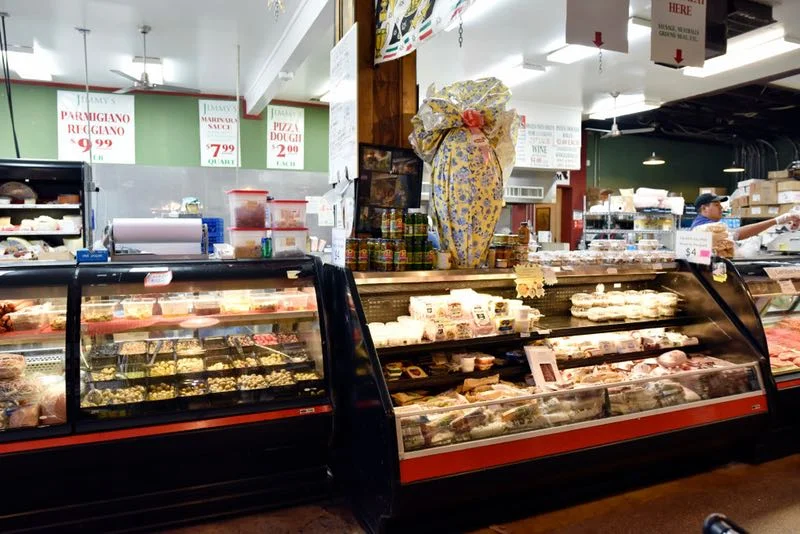
The charcuterie case at Jimmy's Food Store in Dallas. (Ben Torres/Special Contributor)
Try it at home
For those looking to embrace charcuterie at home, Jimmy's Fine Food Store in East Dallas has been dishing up charcuterie long before it was a buzzword on the tip of every foodie's tongue.
Visit on a Saturday afternoon and you will find yourself sharing a line with locals hungry for smoked prosciutto or Beretta spicy salami. Their old-fashioned deli counter packed with a huge selection of charcuterie, cheese and Italian delicacies is a must for those looking to create the perfect board.
Local butchers such as Deep Cuts in North Dallas and others also carry a wide range of dried and cured meats, as do cheese shops such as Scardello.

Beretta spicy sausage from Jimmy's Food Store. (Ben Torres/Special Contributor)
A learning environment
You can always try your hand at curing your own meats. There is an emerging number of home cooks and hobby butchers that are learning the art of charcuterie with the hope of crafting their own spin on traditional cured meats inspired by restaurant boards and deli counter finds.
Matusek isn't the only chef passionate about educating consumers and chefs on the art of charcuterie. A variety of workshops by trained chefs and butchers are appearing across the country. You don't have to attend full-blown culinary school to get a taste of the cure.
Cuisine University held a charcuterie and salumi workshop in Dallas in April taught by chef Brian Polcyn, author of Charcuterie: The Craft of Salting, Smoking, and Curing.
"The recent popularity for charcuterie has been going on for about seven years, maybe a little longer," says Vic Rose of Cuisine University. "Chef Polcyn's book was the one book that really got many of the young chefs interested in charcuterie."
You could also head to Austin and visit Salt & Time, a butcher shop and restaurant, for classes on meat curing basics and sausage-making.
Coryanne Ettiene is a McKinney freelance writer. / Dallas Morning News / June 6, 2017
Cochon555 Houston
We carried the full Swabian Hall on our shoulders into Hughes Manor where the pop-up butcher shop would take place. The Houston Cochon555 crowd had just finished the chefs' competition where Manabu Horiuchi from Kata Robata took home the "W" for his six-course presentation highlighting Chubby Dog Farm's Mangalista Red Wattle Cross.
For those of you not familiar with Cochon555, this is a movement to preserve and promote heritage breeds of pork and family farming by hosting culinary events and chef competitions in the major cities across the US.

Preparing for the demo - all knives got a new edge and the cleaver made an appearance.

Time to cut!
The pig was gently set down on the two joined Boos cutting tables which gave way to an eruption of iPhone cameras flashing and clicking - I’m sure not many of the onlookers had ever seen a full pig carcass before. To be honest, I’d never seen a pig carcass like this either so the first few cuts were a bit foreign to me. Most of the time, carcasses are split symmetrically down the backbone – making transport, storage, and butchery easier. To truly show the crowd of food enthusiasts what butchery is all about, I started with a complete eviscerated (minus the insides) pig carcass. I would also be without the use of a band saw – an extraordinarily precise tool when cutting through bones. In its place, a 27-inch bone saw would have to work through the bones manually. As a backup, I brought my vintage cleaver as well.
Brady Lowe, the founder of Cochon555, started the demo by telling a bit about the Piggy Bank, the focal point of all the fundraising that weekend. Piggy Bank has one simple goal in mind - helping family farmers. The organization is a dedicated to current or prospective farmers to help them get a kickstart: breeding stock, business plans, and other valuable business information - anything a pig farmer needs to get going.

After a quick summary of my travels, I handed the mic back over to Brady and started cutting.
Brady offered me the mic, I gave my short elevator pitch, and then dove in. Splitting a whole carcass manually wasn’t as difficult as I thought it would be – I took off the hind legs first, split them, then did the same with the shoulders. The loin gave me a bit of trouble – it was long, and my saw blade only gave me about three to four inches to move.
Let me stop here to tell you about Houston's climate. If you haven't been there in the summertime, believe me when I say the heat and humidity are unbearable. Just before I took the stage, Houston received a summer shower followed by intense sunshine. The humidity ramped up and was so thick; I could have cut it with my cleaver. I was soaked in sweat. My shirt was sticking to my body, and little sweat beads covered my face. I had to step away several times to wipe my brow and get a swig of water.
But, back to my story... I was relieved the carcass breakdown was behind me, but quickly realized I would need a lot more help to break the primals down into shop cuts in the allotted time. Luckily, good friends, Catherine and Tito Manterola were waiting and jumped right in to help. Over the next hour, we cut, wrapped, and tagged the entire Swabian Hall for retail sale. Everything was on display: bones for stock, ears for dog treats, skin for soups - even the brains were snapped up for a saute.

A big thanks to Catherine and Tito Manterola for setting up to the butcher's block and getting dirty with me. I couldn't have done it without y'all!

A bottom round roast just before being wrapped up and taken home.
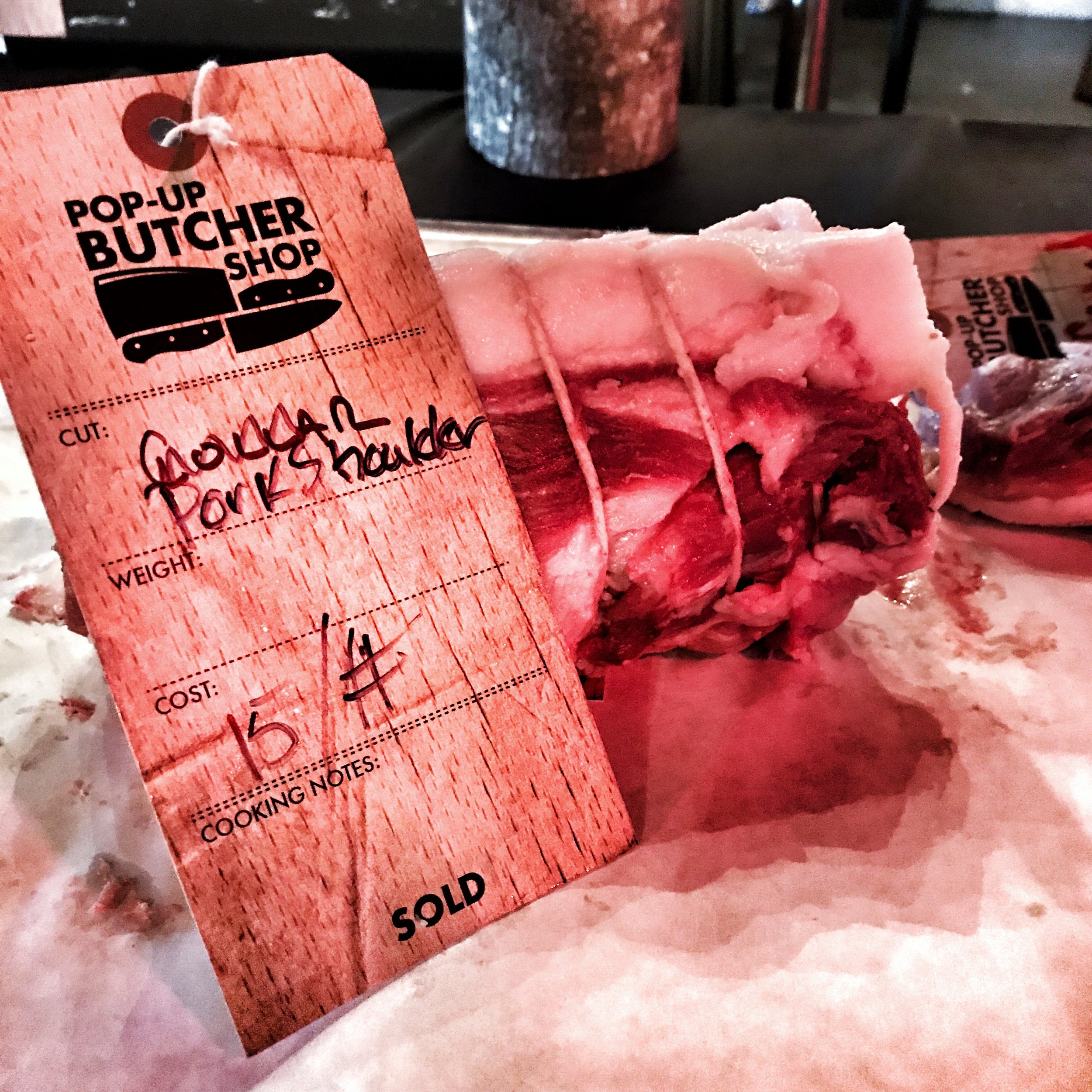
A sold pork coppa.
I’m honored to have been apart of this year’s Cochon555 Houston. Brady and his amazing staff created an enjoyable gastronomic gathering. A special shoutout to:
Allegra - who personally helped coordinate the pop-up butcher shop. She was on her A game, and everything ran flawlessly.
Calvin and Karyn Medders - owners of Chubby Dog Farm, a Mangalista-heritage cross pork farm in Grapeland, Texas. I always enjoy the opportunity to talk to producers and learn so much from their stories and their passion for providing excellent quality food.
Jeff Weinstock - owner of Cake & Bacon, a small wholesale bakehouse and butchery commissary that delivers no-less-than-perfect breads, pastries, pies, charcuterie, sausage, pasture-raised products to restaurants and retailers throughout Houston. His display was covered in a wide variety of cured meats - the spiced coppa being my favorite.
Geoffrey and Renee Barry - of The Barry Farm in Needville, Texas who raise heritage Red Wattle. It was my pleasure to have met another passionate farmer here in South Texas.
Catherine - my publicist, my partner in crime for any culinary adventure, and the ultimate networker. She knows everybody and if she doesn't she will before the day is done!
Morgan Weber - A BIG shout out to Morgan Webber of Agricole Hospitality who got me hooked up with this sweet gig. I also had the chance to check out one of his Houston establishments, Coltivare, and it was an absolute blast. If you live in Houston and haven't eaten here, you need to rethink your life.
-
May 2022
- May 24, 2022 The Hand House May 24, 2022
-
May 2018
- May 16, 2018 Texas, Arizona, and Peru May 16, 2018
-
March 2018
- Mar 6, 2018 Bucket List Mar 6, 2018
-
February 2018
- Feb 19, 2018 OSSO Feb 19, 2018
- Feb 7, 2018 Pass the Cheese, Please. Feb 7, 2018
-
January 2018
- Jan 7, 2018 The Unofficial World Hot Dog Championship Jan 7, 2018
- Jan 2, 2018 Haven Festival Jan 2, 2018
-
November 2017
- Nov 20, 2017 We Are What We Eat Nov 20, 2017
- Nov 1, 2017 License to Kill - a Way of Art Nov 1, 2017
-
October 2017
- Oct 21, 2017 Fleischer-Handwerk Oct 21, 2017
- Oct 18, 2017 Mad Food with Mads Cortsen Oct 18, 2017
-
August 2017
- Aug 14, 2017 Roskilde Festival Aug 14, 2017
- Aug 2, 2017 The Proof That Even Slaughterers Can Become Pop Stars Today Aug 2, 2017
-
June 2017
- Jun 6, 2017 Where to Find Pig Ear Terrines, Spicy Nduja and Other Adventurous Charcuterie in Dallas Jun 6, 2017
- Jun 5, 2017 Cochon555 Houston Jun 5, 2017
-
May 2017
- May 23, 2017 Charcuterie Masters 2017 May 23, 2017
- May 18, 2017 Dirty Steaks May 18, 2017
- May 16, 2017 Dîner en Blanc May 16, 2017
- May 10, 2017 Steensgaard May 10, 2017
-
April 2017
- Apr 4, 2017 Gascon Fricandeaux Apr 4, 2017
- Apr 3, 2017 American Kid Apr 3, 2017
-
March 2017
- Mar 27, 2017 Folkets Madhus Mar 27, 2017
- Mar 23, 2017 Another Open Door Mar 23, 2017
- Mar 13, 2017 Yoakum Man Learns Old World Butchery Mar 13, 2017
-
February 2017
- Feb 20, 2017 Great Day Houston Feb 20, 2017
-
December 2016
- Dec 4, 2016 Creating the Manifesto Dec 4, 2016
- Dec 4, 2016 Meating Fellow Revolutionaries Dec 4, 2016
- Dec 4, 2016 The Butchers' Manifesto Origins Dec 4, 2016
-
November 2016
- Nov 10, 2016 The Sausage Man Never Sleeps Nov 10, 2016
-
October 2016
- Oct 19, 2016 Road Trippin' Across Europe Oct 19, 2016
- Oct 2, 2016 Vide Greniers: the French Garage Sale Oct 2, 2016
-
September 2016
- Sep 20, 2016 Je N'ai Plus Faim Sep 20, 2016
- Sep 13, 2016 Noix de Jambon Sep 13, 2016
-
August 2016
- Aug 28, 2016 The Chapolard Family of Gascony Aug 28, 2016
- Aug 7, 2016 The Cowboy, the Expat, and the Englishman Aug 7, 2016
-
July 2016
- Jul 31, 2016 France - Right Where I Need to Be Jul 31, 2016
- Jul 25, 2016 Fambam in Italy Jul 25, 2016
- Jul 11, 2016 Red is His Signature Color Jul 11, 2016
- Jul 4, 2016 Doin' It Like Dario Jul 4, 2016
-
June 2016
- Jun 19, 2016 Trouble in Paradise Jun 19, 2016
- Jun 8, 2016 Tex-Mex Night in Italy Jun 8, 2016
-
May 2016
- May 29, 2016 The King of Beef Does Porchetta May 29, 2016
- May 12, 2016 It's a Long Way to the Top May 12, 2016
- May 10, 2016 Viva La Cicca! May 10, 2016
- May 1, 2016 It’s Crazy What Can Happen in a Year May 1, 2016
-
April 2016
- Apr 26, 2016 The Kitchen at Camont and the Art of Charcuterie Apr 26, 2016
- Apr 12, 2016 Keeping It Under My Hat Apr 12, 2016
- Apr 3, 2016 Let Them Eat Cake Apr 3, 2016
-
March 2016
- Mar 22, 2016 Kolaches versus Klobasniky Mar 22, 2016
- Mar 3, 2016 The Queue for some sweet 'Cue Mar 3, 2016
-
February 2016
- Feb 21, 2016 POS Meat Grinders Feb 21, 2016
-
January 2016
- Jan 21, 2016 Earth Oven Tragedy Jan 21, 2016
- Jan 17, 2016 This ‘ol Gal is Smoking Hot Jan 17, 2016
- Jan 12, 2016 The Gringo and la Reina Tamal Jan 12, 2016
- Jan 7, 2016 Packin' Pork Jan 7, 2016
-
December 2015
- Dec 23, 2015 Empire State of Mind Dec 23, 2015
- Dec 10, 2015 Meat Monger Dec 10, 2015
-
November 2015
- Nov 23, 2015 Jerky Game Strong Nov 23, 2015
- Nov 11, 2015 Breaking Lamb Nov 11, 2015
- Nov 1, 2015 Breaking Pork Nov 1, 2015
-
October 2015
- Oct 26, 2015 Like Cocaine in the '80's Oct 26, 2015
- Oct 21, 2015 Fleishers Craft Butchery: Day 1 Oct 21, 2015
- Oct 11, 2015 Year of the Cow Oct 11, 2015
- Oct 4, 2015 13th Step to Manhattan Oct 4, 2015
-
September 2015
- Sep 27, 2015 Brooklyn Cowboy Sep 27, 2015
- Sep 27, 2015 Vaya con Dios Sep 27, 2015
- Sep 14, 2015 Mystic Goat Roper Sep 14, 2015
- Sep 10, 2015 Green-hand Gringo Sep 10, 2015
- Sep 10, 2015 Shell Station Burgers Sep 10, 2015
- Sep 10, 2015 Butter 'Em Up Sep 10, 2015
- Sep 10, 2015 Why The Hell Not? Sep 10, 2015