
Your Custom Text Here
Charcuterie Masters 2017

View of the Empire State Building on my cab ride in.
DAY 1:
In late February, I ventured back to the tri-state area for Charcuterie Masters 2017 and a chance to rub elbows with the finest purveyors of cured meat in America. As I rambled through the city I once called home for a couple of months, my mind was caught in a stampede of good memories - apprenticing with Fleishers Craft butchery, Yankee games on crisp autumn nights, and all the good food...
Yeah, I kinda missed it.
Since I was back in the Big City, I decided to check out what the trendsetters were laying down in terms of charcuterie. Bar Boulud was heavily recommended – so it was Bar Boulud for lunch.
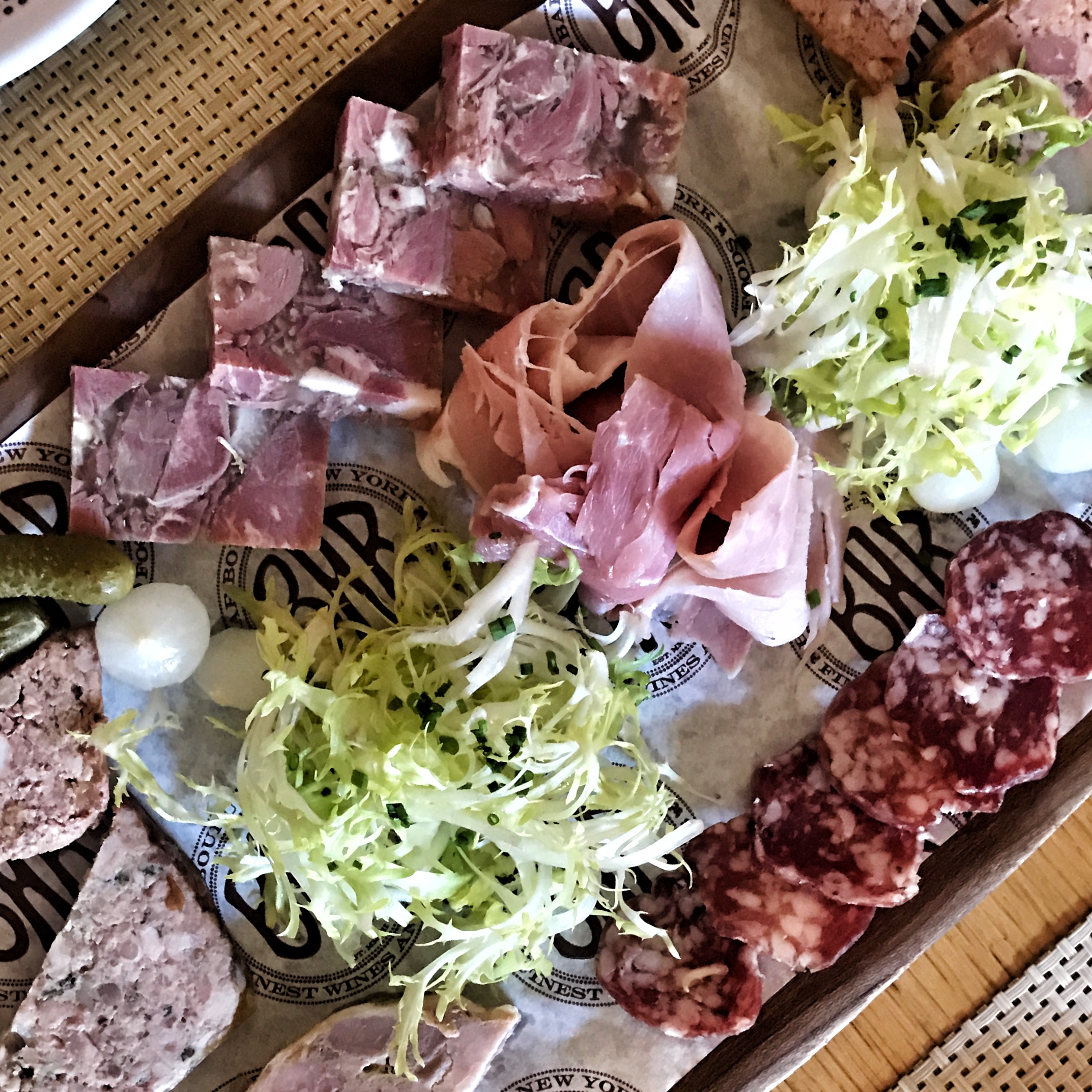
The charcuterie board at Bar Boulud - pâtés on pâtés on pâtés
It didn’t take long for me to order.
In a few minutes, I had a glass of one of their red wines, a massive board of pâtés, and a colorful assortment of condiments. The Pâté Grand-Père was simply fantastic – it probably had something to do with the foie gras and truffles inside. The rest of the pates and terrines were interesting, but didn’t compare to the Pâté Grand-Père. Surprisingly, only one other form of charcuterie made the board, a French Saucisse seche.
It was a nice change in cuisine.

Chelsea Market - one of my favorite spots in Manhattan.
I wandered around Manhattan the rest of the afternoon, exploring places like White Gold Butchers and Chelsea Market. I was killing time until my dinner reservations at Agern.

I had to go check out White & Gold Butchers and see what all the buzz was about. It's all true.
Agern is a season-driven restaurant developed by Chef Claus Meyer, who, for the last thirty years has been reinstating quality and unlocking the potential of the Danish food culture. It was an incredible meal that transplanted me back to my Nordic adventures in Copenhagen.

The opening course at Agern - oyster on ice.

A combination of fresh fish and preserved vegetables in broth.
The next morning I dedicated to the NYC Fermentation Festival held at the Brooklyn Expo Center. I made my way down the rows, tasting craft brews, kombucha, and kimchi. Brooklyn Brine, one of my favorite pickle companies was in attendance along with Six Point Brewery - one of the best damn craft beers out there. I also ran into the Ends Meat booth, owned by friend John Ratliff. John wasn’t there that day, but a lot of his cured meat was and as always, it was top notch.

Brooklyn Brine has the best pickles out there!
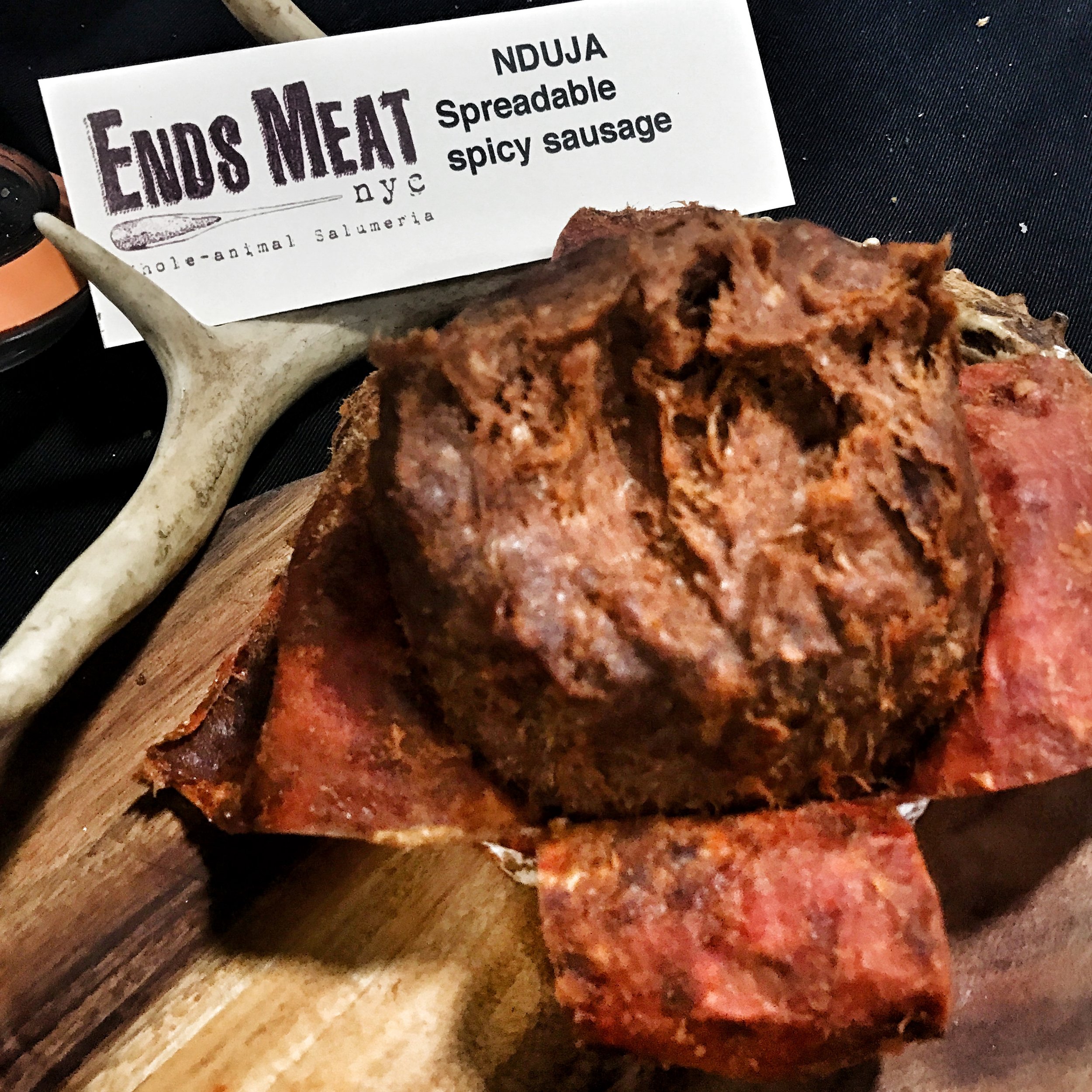
Ends Meat's Nduja - a spicy spreadable salami that will knock your socks off - its one of my personal favorites.

Six Point - the best craft brewery - besides Shiner Bock, of course. It had been awhile since I had tasted some of their hops.
That night, in the shadows of the Met’s baseball stadium, the great charcuterie gathering began. After a rather cramped subway ride, I stumbled into Flushing Town Hall and was immediately greeted with good food and libations. The hall was packed with people – all with one common interest – cured meat.
I’ve said it many times – the meat world is really small. Social media has allowed me to connect with many other butchers across the nation. I’m sure I wasn’t the only one having awkward first time encounters that evening.
Heeeeyyyyyy, (know the face but blanking on the name) there…… buddy! Nice to meet ya.
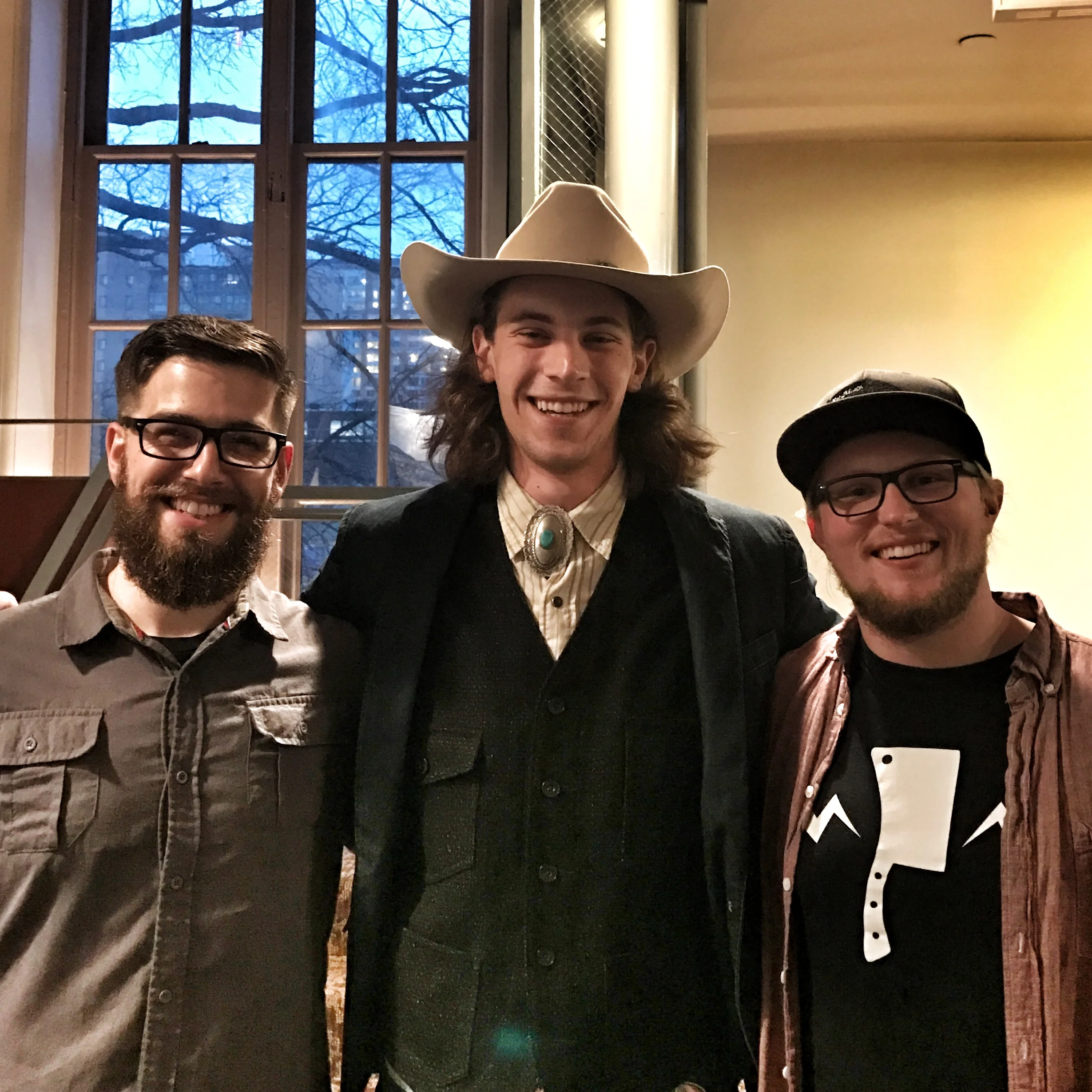
Matt Levere of Urban Butcher, George Turkette of Turchetti's Salumeria, and I at Charcuterie Masters 2017. These two guys are masters of their craft and leaders in the American charcuterie movement - I was honored at the chance to chat and get to know them.
Highlights of my night include:
- Prosciutto, cured six years without the use of artificial nitrates, by Rodrigo Duarte. His booth was layered with hams estimating almost $80,000 in total. His guys sliced on two legs of prosciutto for more than three hours that night. He ended up taking home a few prizes because of his outstanding products.

6 year old prosciutto - some of the best out there.
- Hure de Porc, a pork tongue and pistachio head cheese, from Smoking Goose Meatery. Another award winner.

Hure de Porc with pork tongue and pistachios - a no-doubt winner from Smoking Goose Meatery. This is another version of head cheese.
- Salami – there was plenty of it and various flavor combinations. I definitely left with some inspiration and I cannot wait to test out some flavor combos I picked up.

A variety of salami displayed at one of the booths at Charcuterie Masters 2017.

An amazing Molé salami from Elevation Charcuterie out of Denver, CO.

Francois Vecchio and I at Charcuterie Masters 2017.
- Francois Vecchio - Midway through the evening, I ran into Francois Vecchio Francois Vecchio, often dubbed the “Godfather of American Charcuterie.” Before immigrating from Switzerland, Francois studied and mastered German, Italian, French, Spanish meat craftsmanship (He is also fluent in all those languages in addition to English.) He is often credited for starting the cured meat movement in America back in the early 1980’s. We chatted for awhile about Europe and my travels and then the conversation naturally drifted to the state of charcuterie in the USA. Francois explained that Americans have now figured out how to produce cured meats, but the quality was still lacking. Francois urged me to get back to Europe as soon as possible and to keep learning. It was such an honor to meet such an important figure in the industry.
The last hour of the event was reserved for the presentation of awards. Submissions had been sent in from across the nation and judged the previous day. I’m sure the judges had their hands full! We watched and applauded as each categorical winner was announced.
By this time, the hall had begun to empty. I shook a few more hands, took a last few selfies with new friends, and hit the pavement and made my way back to the subway. Charcuterie Masters was an unforgettable experience – For the first time, I really got to connect with the “movers and shakers” in the American meat game. In conversation with them, I learned about obstacles and challenges some of them are dealing with in today’s culinary climate. I also picked up a lot of valuable tips and tricks that will further enhance my own products. I am happy to see this movement growing in America and I want to see it continue.
Congratulations to all the winners of Charcuterie Masters 2017.
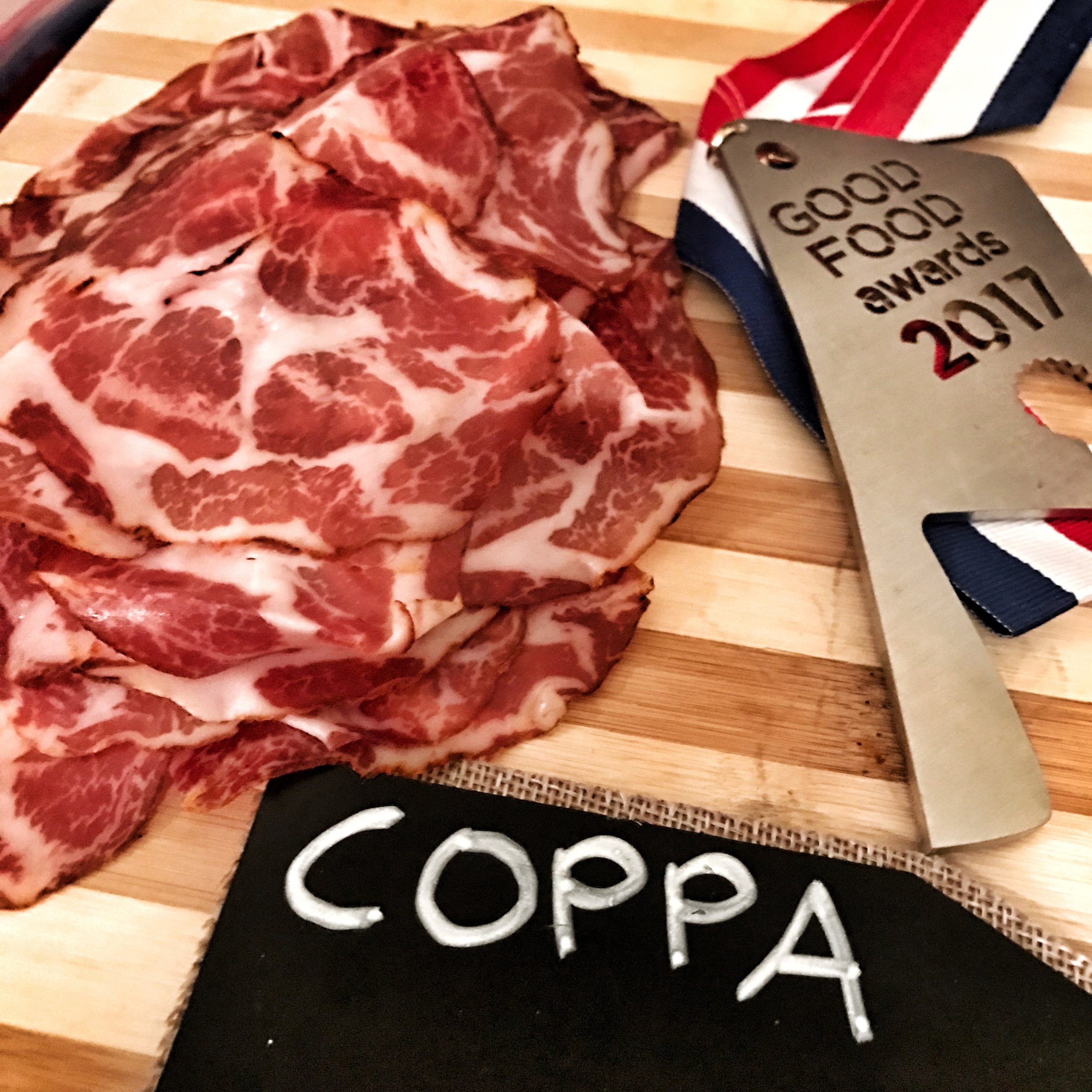
Some award winning cured coppa in the VIP section of Charcuterie Masters 2017.
Dirty Steaks
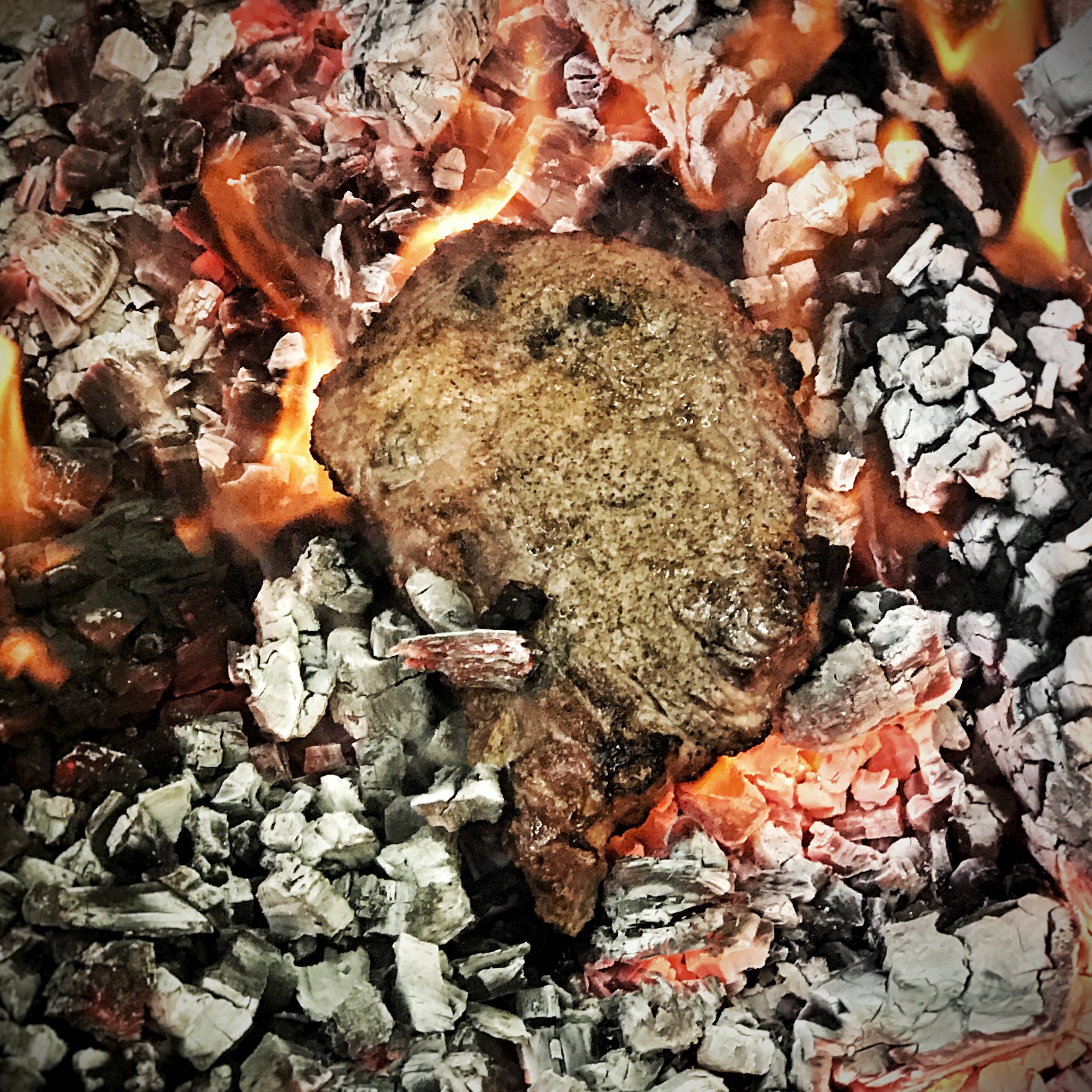
A dirty steak on the coals. (Salt and Pepper)
I’ve been a firebug from way back.
My love affair with fire began when I was about five-years-old under my grandfather’s "supervision." He wanted to do some "controlled" burns on the ranch, but he told me that setting the pasture on fire was top secret - it was just "somethin' for the guys to know." Thinking back, he must have been a firebug too.
When I got home later that night, the gig was up. Mom took one look at the bottoms of my rubber-soled work boots and knew what we had been up to all day.
A few years later, Mom put my brother, Sam and me in charge of burning some rose hedge that lined the upper pond’s bank. Another "controlled burn." Man, I can't tell you how fast that stuff will move - we burned about 200 acres of pasture plus another couple hundred of our neighbors.’ It took four different county fire departments to contain the blaze.


So when I got into butchery - fire became part of the game. Whether barbecuing, cold smoking, or grilling, those flames put a spell on me. I'm like one of those doomed sailors lured by the beautiful voices of the sirens from Greek mythology.
Once I got to France, I learned another way of melding meat and fire: steaks cooked directly on the coals – a trick of Kate Hill. She taught me to build an upside down fire – a fire construction method that bettered my own - in a wheelbarrow. Once the wood burned down in the wheelbarrow, I was able to pick out the red-hot coals to cook my steak on. Perfectly pink inside, lightly charred out and totally delicious.
Want to start up a fire and make your own charred steak? Here are a few important tips to keep in mind when cooking “Dirty Steaks:”
FIRE PREP
Start with small sticks in a square pattern. Start the fire and let it burn up the the wooden structure. Add larger logs once you have established a good fire.
HOT COALS
The coals need to be extremely hot. I like to use the coals at the center of the fire - the ones that glow red hot.
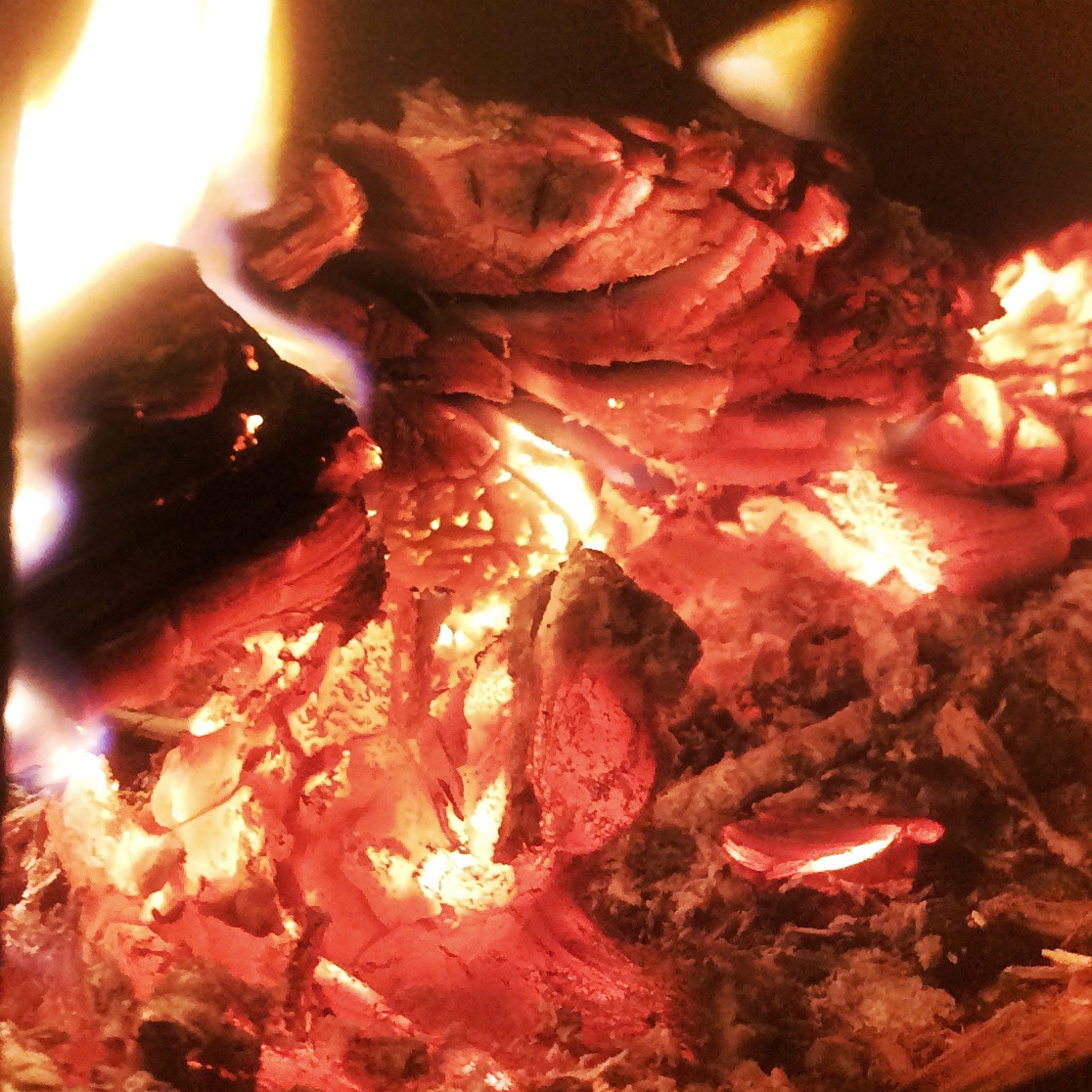
You need red hot coals like those shown above. Don't drop it on white coals covered in soot!
FAN SOOT
When you create your bed of coals, fan the coals to remove any loose soot. Then put your steaks on.
COAL BED
You need to have a large enough coal bed so that when you flip your steak, it has fresh hot coals to rest on. You don't want to flip the steak and place it in the same spot.
COOK TIME
For 1 inch thick steaks, cook 3 minutes per side for rare. Add an extra minute to each side for medium.
For 2 inch steaks, cook 7-8 minutes for rare. Add another 2 minutes to each side for medium.
REST
Letting the steak rest for 10 minutes after removing it from the coals. This is essential.
I know. You are still a little nervous about throwing that $15 dollar hunk of meat into the flames. Check out how I did it in this short tutorial video.
Looking for a little historical twist to the “Dirty Steak?”

Looks like Ike liked fire too.
President Dwight D. Eisenhower was notorious for hosting dinner parties where he would lather up large sirloin steaks with olive oil and garlic and, to everyone’s horror, casually throw the steaks into the nearby fire. In my experimentation, a dry rub of salt, pepper, and other dry spices allows very little soot to stick to the steak. When the steaks are moist, expect to pick up a little more soot.

Recipe testing at Raw Republic Meats World HQ. On the left is an Eisenhower marinade followed by the Royer's grilling butter. After all my recipe testing, I found that dry rubs work better over the coals. Wet marinades pick up a bit more soot.
Dîner en Blanc
Let's revisit France, because, well - it was awesome.
As I remember it...Maurine had prepared a wonderful salmon rillette, along with crusty bread and little bite-sized quiches, all of which she tucked away in a picnic basket in the backseat of the Volkswagen. I was in the driver’s seat and we were headed to a “diner en blanc” as invited guests of Kate Hill. As you remember, Maurine was my gracious host who I lived with in Nerac, a small French town located between Dominique’s farm and Kate’s house at Camont. She was an Arizona native but flourished as a real estate agent in California before retiring to Gascony. Since I had no idea where we were going, we were to follow Bill and Taff, two Canadian expats, who coincidentally had also retired to Gascony.
“Starting to see a retirement trend? ”
After an hour long drive, we began making our way up a massive hill, on top of which, laid an incredible vineyard and chateau owned by two wine-making sisters. As soon as we parked, I realized the view alone was worth the hour long drive. I also realized that not everyone followed the dress code – there were a few oddballs that didn’t wear all white – um... that would be me.

View to the East from atop the hill.

The Southern view from the hill.
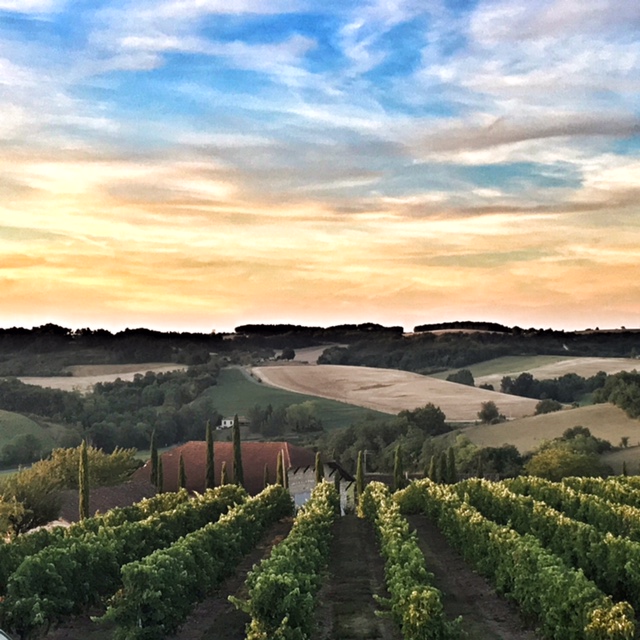
The hilltop view looking to the North over the grape vines.
Sorry, I had been living out of a backpack and a small leather duffel for the past five months. My white linen summer suit was the next outfit on the packing list, but I ran out of space for it in my pack.

All the old folks brought out their best whips - it was one hell of a car show!
Other than myself, everyone else was dressed to the nines in their best white linen. Some even cruised up in their old classic whips.

I had to circle back after appetizers for some close up pictures.
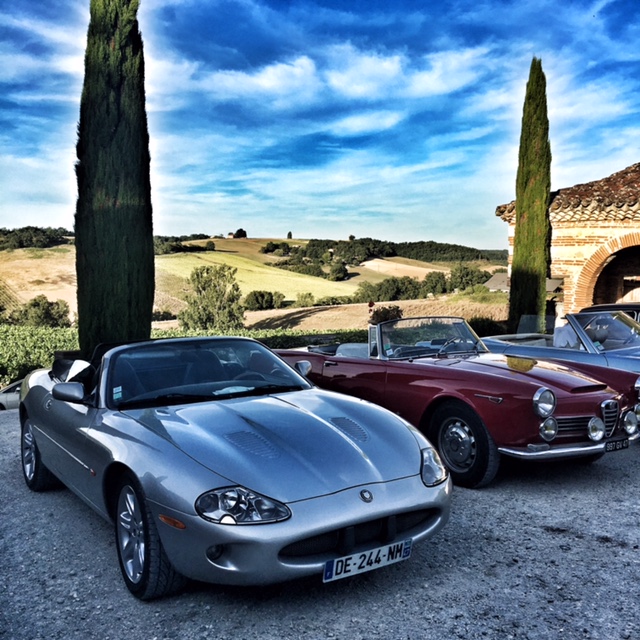
Not a shabby backdrop for a French auto show!
Just outside the chateau, was a large motte of shade trees underneath which most of the festivities lay: a makeshift stage harbored a couple of musicians, a small wine stand where the sisters had set up their wares, and tables, ladened with food, wine, and candles.
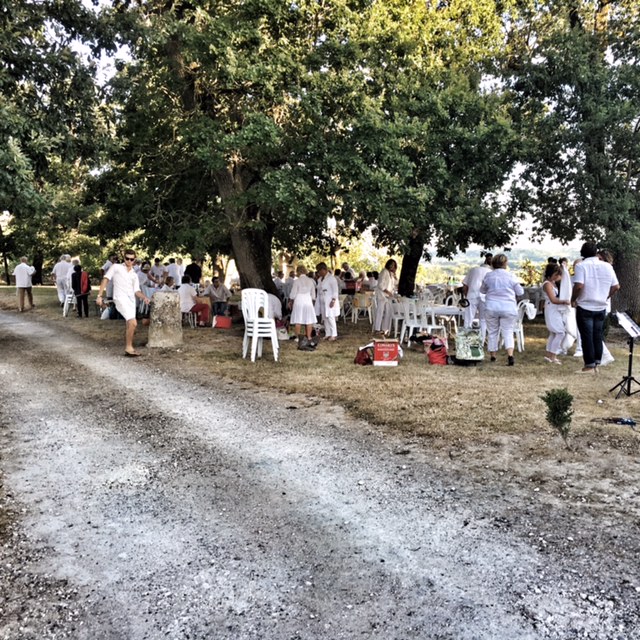
Everybody is busy setting up their dining areas and my buddy Dylan is posing for the camera.

Dylan and I looking like something the cat dragged in.

An old pigeonette converted into guest quarters.
Kate and more of the expat group had already arrived and had begun setting up our table. I added Maurine's picnic basket to the others just as the two sisters gave a welcome toast from the stage. The "diner en blanc" had officially started. It was so epically French and everything you would imagine it to be: good friends, great food, old wine, fairytale setting, and fresh white linen.

Time to feast!

Maurine's salmon.

The French version of the potluck dinner.

We watched these two couples all night - this seemed to be a regular affair for them.
It was quite the picturesque evening. The laid back casual elegance of it all was what France does best. I promised myself I would drag all of my Texan friends out to the ranch and do something like this.
Something tells me, it just won't be like France.
Steensgaard
The Danish sun was slowly fading towards the tree line that was interrupted by wind farms – there wouldn’t be enough light to see any of the farm tonight.
Henning, Ollie, and I continued our two-hour trek West from Copenhagen to the island of Funen to visit Steensgaard, an organic “seed-to-sausage” operation that I had heard about and had the butcher community buzzing. I had first met Henning, the owner of Steensgaard, at the Butcher’s Manifesto in Copenhagen. There, he had given a short presentation on the traditions of butchery, showcasing his establishment and explaining how his farm practiced stress-free slaughters and warm meat cutting. Both of these processes help to harvest the full integrity of the meat.

Steensgaard, an organic, self-sustainable farm on the island of Funen, Denmark.
Ollie and I were settled into a small flat in a long building bordering the gardens and the “Big House.” After showing us our living quarters, Henning retired for the evening, and we soon followed to rest up for our first day at Steensgaard.
Early the next morning, Ollie and I rumbled into the large building in the middle of the farm. It houses the retail shop, restaurant, and processing facility. Patrick, the head butcher we would be assisting, walked us through their state-of-the-art slaughter facility, processing room, and maturing chambers – the place was incredible! There were so many varieties of products – different kinds of casings, various salts, and some unique looking molds. There was also new assortment of charcuterie, and to be perfectly honest, I couldn’t identify most of them.

Prosciutto curing room at Steensgaard.

We visited the pig farm later that day, The Steensgaard pigs run free in the pastures - just like pigs should.

Ollie and Gustav searching through the massive organic garden for dinner.
Our morning's schedule had us to harvest four pigs. They had just been guided up from the pasture by their herdsman and were penned outside the slaughterhouse door. Normally, animals are transported to a slaughter facility by truck. The transportation alone causes stress, bruising, and trauma – all of which lessen the quality of the end product. Now, for the first time, I saw a more humane passage. The Steensgaard pigs never left the farm.
After prepping, Patrick cued us to begin – Ollie grabbed the electrical stunning claw and opened the door to four massive pigs, all weighing around 160 kilos each. After the stun, the pig was raised into the facility via a hydraulic lift and bled out. Not one squeal was heard. The pig never knew what happened. The perfect slaughter.
The carcass was then transferred into a tumbler filled with boiling water. This process removes the majority of hair follicles leaving our knives to remove the remaining stray hairs. Finally, we gave the carcass a light torching just to be sure all the hair was gone – lots of pathogens live in there.
Patrick took the first carcass into the adjoining room and began the process of removing the intestines. Ollie and I went to work on the next pig - another silent, perfect slaughter.

A split steer carcass coming into the processing facility.

Carcasses on the rail coming in from the harvest facility
In just a few short hours, we had eight, half carcasses lined up on the rails of the processing facility ready to begin the second unique process of Steensgaard – warm meat cutting. Immediately after slaughter, you have about three hours in which to do this process. Starting with the shoulders from each carcass, we deboned, ground, and salted the meat. This emulsified meat was then frozen to be used later in sausages or salami as a flavor kick.

Salami production in the processing facility.

Frozen cubes of beef bouillon.
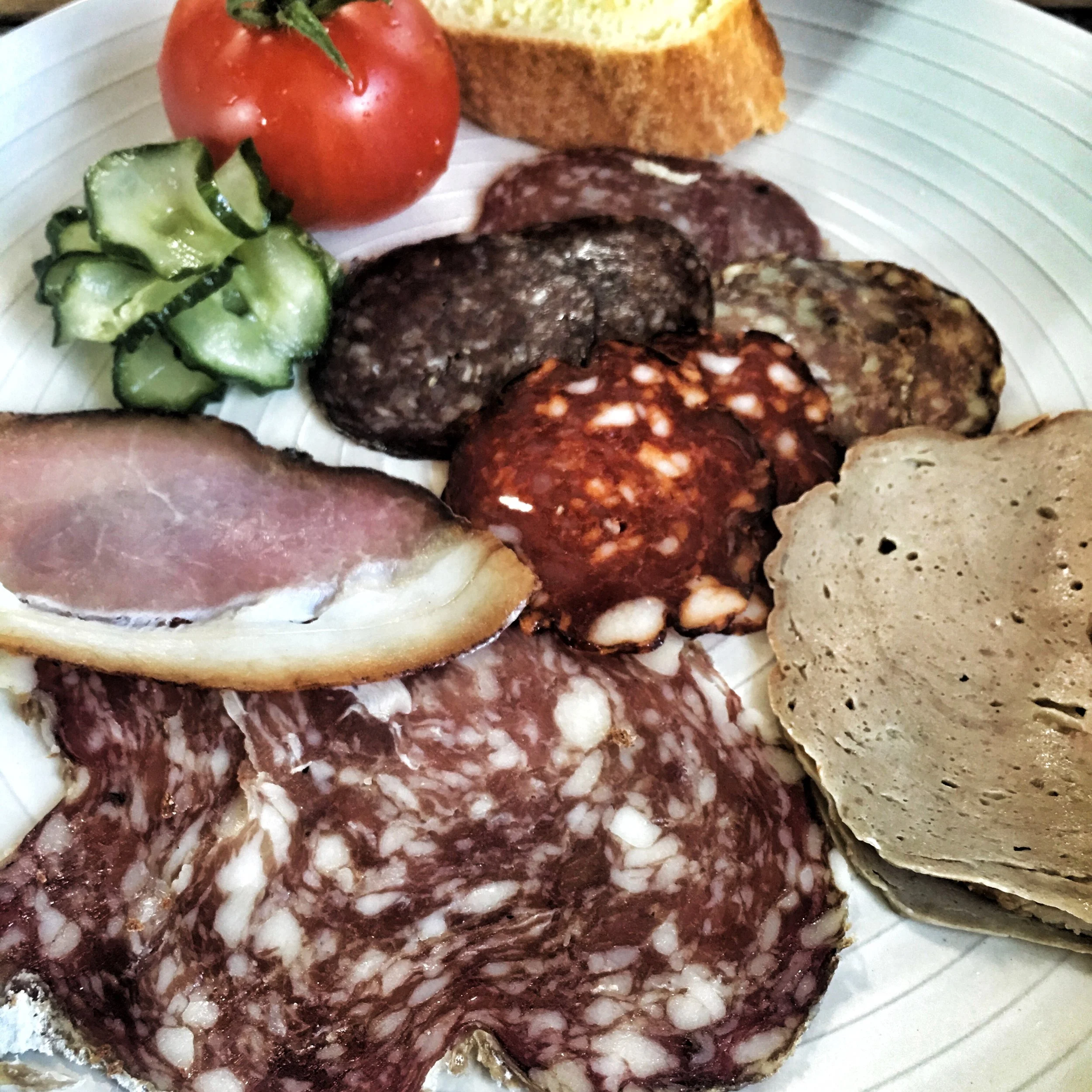
Typical butchers breakfast: salami, lomo, and leberwurst

The final stage in the "Seed to Sausage" cycle - the restaurant at Steensgaard.

An incredible butchers' breakfast consisting of head cheese, chorizo, lomo, coppa, and a liver pate.
We stopped around noon for a butcher’s breakfast – one of the best breakfasts I've ever had. As I ate, I realized Steengaard was revolutionizing my philosophies. I called myself into question.
Am I a true butcher?
I had just witnessed Ollie and Patrick take live animals and seamlessly transform them into carcasses and then into a diverse number of incredible products. Ollie does this same process in his home country of Germany out in the fields with just a handful of tools.
In my opinion, that is a true butcher.
Yes, I spent some time on a kill floor in Texas - mostly confined to one station where I skinned and assisted in splitting the cattle carcasses. This alinea left me with only one option – I needed to stay at Steensgaard to learn their processes.

Ollie, the German butcher holding a Coppa di Testa, an Italian version of headcheese.

Sliced salami for breakfast.
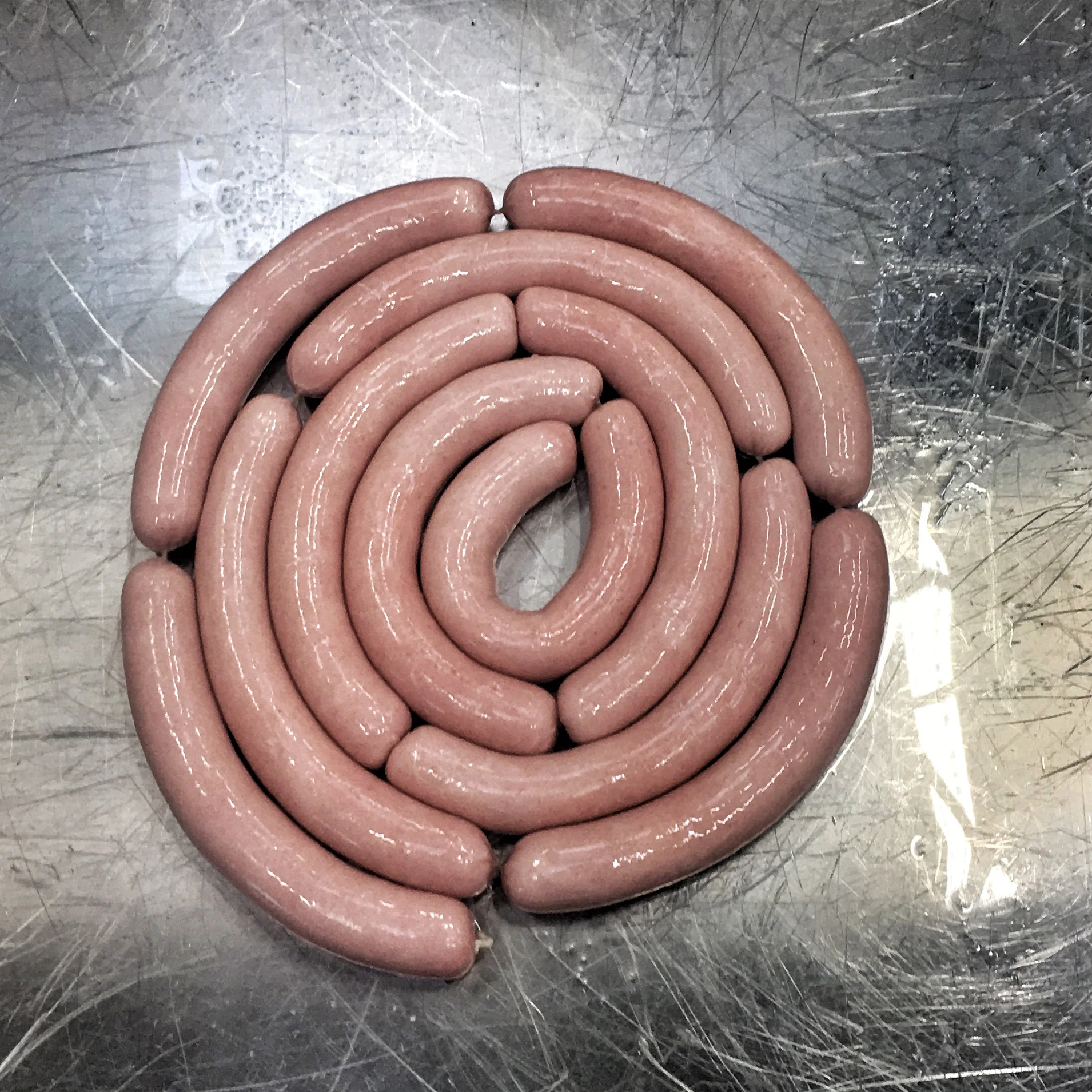
Craft hotdogs of Steensgaard.
Gascon Fricandeaux

Frícandeaux, sliced and served with cornichons, onions, and whole grain mustard.
Gascon Fricandeaux is a type of cooked meatball consisting of pork, potatoes, onions, and liver. I discovered this provincial French dish on my first culinary adventure across the pond. Somewhere between the Kitchen at Camont and the Chapolard farm, I learned to reproduce my own fricandeaux - I credit my wonderful teachers, Kate Hill and Christiane Chapolard
INGREDIENTS:
1 kilo - pork meat (shoulder, belly, or cheeks with a decent amount of fat)
100 grams - blanched pork liver
100 grams - peeled and cooked potatoes
100 grams - white onion
14 grams - salt
2 grams - black pepper
caul fat, soaked in warm water
NOTE: To procure some fresh caul fat, check with your local butcher shop or slaughterhouse. If you don't have a local butcher shop, quit your job and start one!

Caul fat soaking in warm water
DIRECTIONS:

1. Grind pork meat, cooked potatoes, onion, and blanched liver in a grinder. Mix thoroughly.
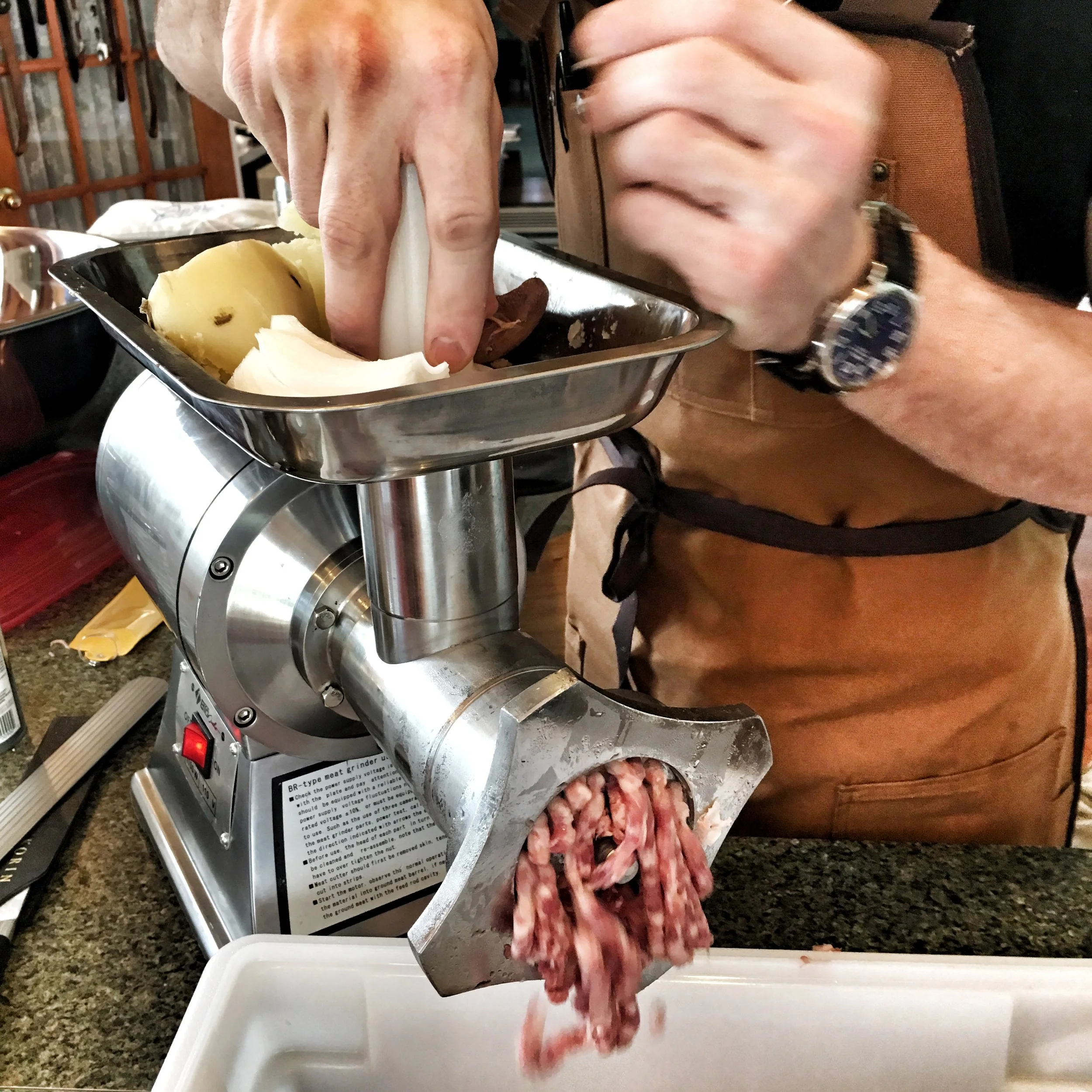
2. Add salt and pepper (14 grams of salt and 2 grams of pepper per kilo of meat).
3. Mix to homogenize. The farce (meat mixture) is ready when it becomes sticky.

4. Make a ball of the farce (meat mixture), roughly 250 grams and knead with your hands to extract any air pockets.
5. Dunk the meatball in a bowl of water to keep it moist.
6. Drape caul fat over the ball then trim. Tuck excess under the ball.

7. Place meatballs in a baking dish.
8. Place a water bath in a separate pan below the baking dish.
9. Cook at 450 degrees Fahrenheit for 2 hours

10. Cover in plastic wrap and refrigerate.
11. Serve chilled.
Still a little confused?
Check out the video below.
-
May 2022
- May 24, 2022 The Hand House May 24, 2022
-
May 2018
- May 16, 2018 Texas, Arizona, and Peru May 16, 2018
-
March 2018
- Mar 6, 2018 Bucket List Mar 6, 2018
-
February 2018
- Feb 19, 2018 OSSO Feb 19, 2018
- Feb 7, 2018 Pass the Cheese, Please. Feb 7, 2018
-
January 2018
- Jan 7, 2018 The Unofficial World Hot Dog Championship Jan 7, 2018
- Jan 2, 2018 Haven Festival Jan 2, 2018
-
November 2017
- Nov 20, 2017 We Are What We Eat Nov 20, 2017
- Nov 1, 2017 License to Kill - a Way of Art Nov 1, 2017
-
October 2017
- Oct 21, 2017 Fleischer-Handwerk Oct 21, 2017
- Oct 18, 2017 Mad Food with Mads Cortsen Oct 18, 2017
-
August 2017
- Aug 14, 2017 Roskilde Festival Aug 14, 2017
- Aug 2, 2017 The Proof That Even Slaughterers Can Become Pop Stars Today Aug 2, 2017
-
June 2017
- Jun 6, 2017 Where to Find Pig Ear Terrines, Spicy Nduja and Other Adventurous Charcuterie in Dallas Jun 6, 2017
- Jun 5, 2017 Cochon555 Houston Jun 5, 2017
-
May 2017
- May 23, 2017 Charcuterie Masters 2017 May 23, 2017
- May 18, 2017 Dirty Steaks May 18, 2017
- May 16, 2017 Dîner en Blanc May 16, 2017
- May 10, 2017 Steensgaard May 10, 2017
-
April 2017
- Apr 4, 2017 Gascon Fricandeaux Apr 4, 2017
- Apr 3, 2017 American Kid Apr 3, 2017
-
March 2017
- Mar 27, 2017 Folkets Madhus Mar 27, 2017
- Mar 23, 2017 Another Open Door Mar 23, 2017
- Mar 13, 2017 Yoakum Man Learns Old World Butchery Mar 13, 2017
-
February 2017
- Feb 20, 2017 Great Day Houston Feb 20, 2017
-
December 2016
- Dec 4, 2016 Creating the Manifesto Dec 4, 2016
- Dec 4, 2016 Meating Fellow Revolutionaries Dec 4, 2016
- Dec 4, 2016 The Butchers' Manifesto Origins Dec 4, 2016
-
November 2016
- Nov 10, 2016 The Sausage Man Never Sleeps Nov 10, 2016
-
October 2016
- Oct 19, 2016 Road Trippin' Across Europe Oct 19, 2016
- Oct 2, 2016 Vide Greniers: the French Garage Sale Oct 2, 2016
-
September 2016
- Sep 20, 2016 Je N'ai Plus Faim Sep 20, 2016
- Sep 13, 2016 Noix de Jambon Sep 13, 2016
-
August 2016
- Aug 28, 2016 The Chapolard Family of Gascony Aug 28, 2016
- Aug 7, 2016 The Cowboy, the Expat, and the Englishman Aug 7, 2016
-
July 2016
- Jul 31, 2016 France - Right Where I Need to Be Jul 31, 2016
- Jul 25, 2016 Fambam in Italy Jul 25, 2016
- Jul 11, 2016 Red is His Signature Color Jul 11, 2016
- Jul 4, 2016 Doin' It Like Dario Jul 4, 2016
-
June 2016
- Jun 19, 2016 Trouble in Paradise Jun 19, 2016
- Jun 8, 2016 Tex-Mex Night in Italy Jun 8, 2016
-
May 2016
- May 29, 2016 The King of Beef Does Porchetta May 29, 2016
- May 12, 2016 It's a Long Way to the Top May 12, 2016
- May 10, 2016 Viva La Cicca! May 10, 2016
- May 1, 2016 It’s Crazy What Can Happen in a Year May 1, 2016
-
April 2016
- Apr 26, 2016 The Kitchen at Camont and the Art of Charcuterie Apr 26, 2016
- Apr 12, 2016 Keeping It Under My Hat Apr 12, 2016
- Apr 3, 2016 Let Them Eat Cake Apr 3, 2016
-
March 2016
- Mar 22, 2016 Kolaches versus Klobasniky Mar 22, 2016
- Mar 3, 2016 The Queue for some sweet 'Cue Mar 3, 2016
-
February 2016
- Feb 21, 2016 POS Meat Grinders Feb 21, 2016
-
January 2016
- Jan 21, 2016 Earth Oven Tragedy Jan 21, 2016
- Jan 17, 2016 This ‘ol Gal is Smoking Hot Jan 17, 2016
- Jan 12, 2016 The Gringo and la Reina Tamal Jan 12, 2016
- Jan 7, 2016 Packin' Pork Jan 7, 2016
-
December 2015
- Dec 23, 2015 Empire State of Mind Dec 23, 2015
- Dec 10, 2015 Meat Monger Dec 10, 2015
-
November 2015
- Nov 23, 2015 Jerky Game Strong Nov 23, 2015
- Nov 11, 2015 Breaking Lamb Nov 11, 2015
- Nov 1, 2015 Breaking Pork Nov 1, 2015
-
October 2015
- Oct 26, 2015 Like Cocaine in the '80's Oct 26, 2015
- Oct 21, 2015 Fleishers Craft Butchery: Day 1 Oct 21, 2015
- Oct 11, 2015 Year of the Cow Oct 11, 2015
- Oct 4, 2015 13th Step to Manhattan Oct 4, 2015
-
September 2015
- Sep 27, 2015 Brooklyn Cowboy Sep 27, 2015
- Sep 27, 2015 Vaya con Dios Sep 27, 2015
- Sep 14, 2015 Mystic Goat Roper Sep 14, 2015
- Sep 10, 2015 Green-hand Gringo Sep 10, 2015
- Sep 10, 2015 Shell Station Burgers Sep 10, 2015
- Sep 10, 2015 Butter 'Em Up Sep 10, 2015
- Sep 10, 2015 Why The Hell Not? Sep 10, 2015