
Your Custom Text Here
Noix de Jambon

After working with Dominique and the Chapolards on the farm for a few weeks, I finally got their system down. On Monday, we would receive nine or ten pig carcasses, fresh from the abattoir. Each day of the week, we would break a couple carcasses and slowly deplete the pork supply hanging in the walk-in refrigerator. In their place, were our conversions of traditional French charcuterie offerings such as pâtés, blood puddings, paupiettes, graton, and fricandeaux. All of these products, along with fresh cuts like chops and roasts, would be sold at one of the four weekly markets the Chapolard family attends. By the end of each week, the walk-in refrigerator would set empty and delicious charcuterie would be on French tables all across the South of France.
That’s what I call nose-to-tail!
The Chapolards offerings can be sorted into four categories:
- Dried Products:Noix de Jambon, Coppa, and Filet sec
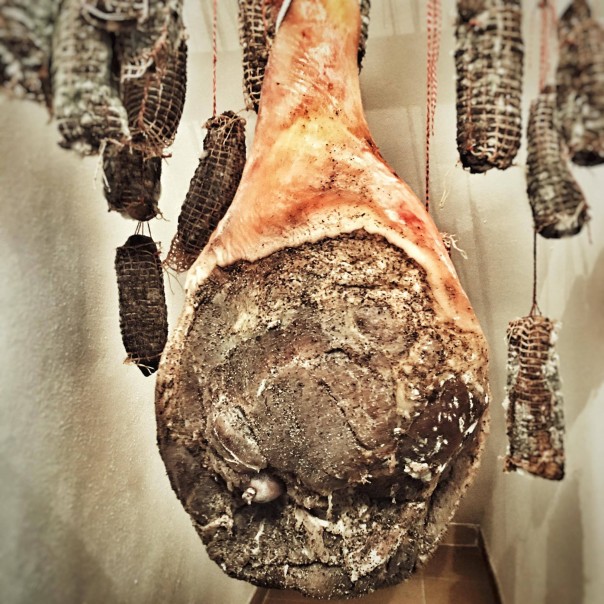
a ham hanging in Kate's closet.
- Fermented Sausages:Saucisson, Saucisse seche, and Chorizo

French Salami before hitting the fermentation cabinet.
- Cooked Products:Pâtes, head cheese, roasts, Graton, and blood pudding
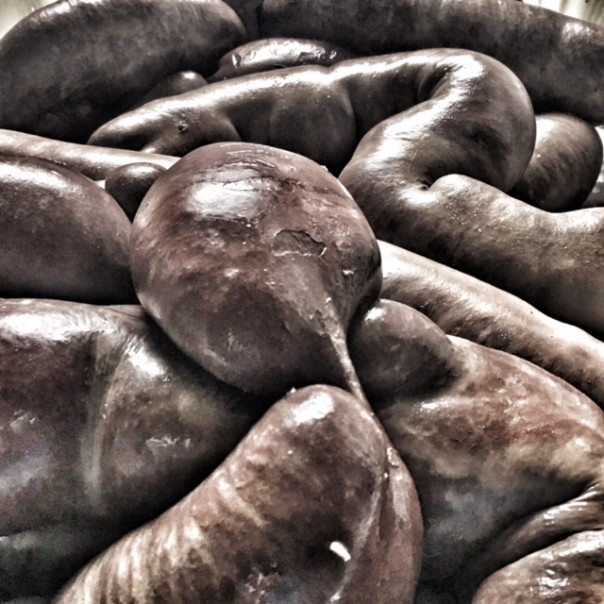
Cooked blood pudding.
- Fresh Products: various fresh sausages, roasts, ventreche roulee, and kabobs

- and of course, the breadwinner of any charcutier, the Jambon de Bayonne.
Here’s the problem – Jambon Bayonne is incredibly hard to produce on a large scale. The hams take up a lot of space and they occupy that space for a year or more. In addition, it's an absolute crapshoot every time you open one up. If any of the meat inside the ham, specifically next to the thighbone, is traumatized before or during slaughter, you have essentially created an 18-month-old stink bomb full of deadly bacteria. Any excess blood left in the ham can also lead to rotted flesh.
Being a charcuterie-making French family, the Chapolards naturally made Jambon Bayonne. Dominique estimated 20% of the Jambon Bayonne his family produced was inedible by the end of the 18-month drying period. He decided this spoilage had to end. After some research and experimentation, he discovered the family should cease making Jambon Bayonne and instead use those hams to make Noix de Jambon.

Noix de Jambon before the tying and smoking stages.
To create Noix de Jambon, Dominique isolates whole muscles from the ham and dries them individually. This reduces the hang time from 18-months to just six weeks. It also allows him to pick out traumatized protein and other unwanteds that could potentially be hazardous to preservation.
Noix de Jambon is one of Dominique’s best selling items at the farmer's markets. Sliced thin, it is perfect for aperitifs or as a substitute for ham in your favorite recipe.
The Chapolard Family of Gascony
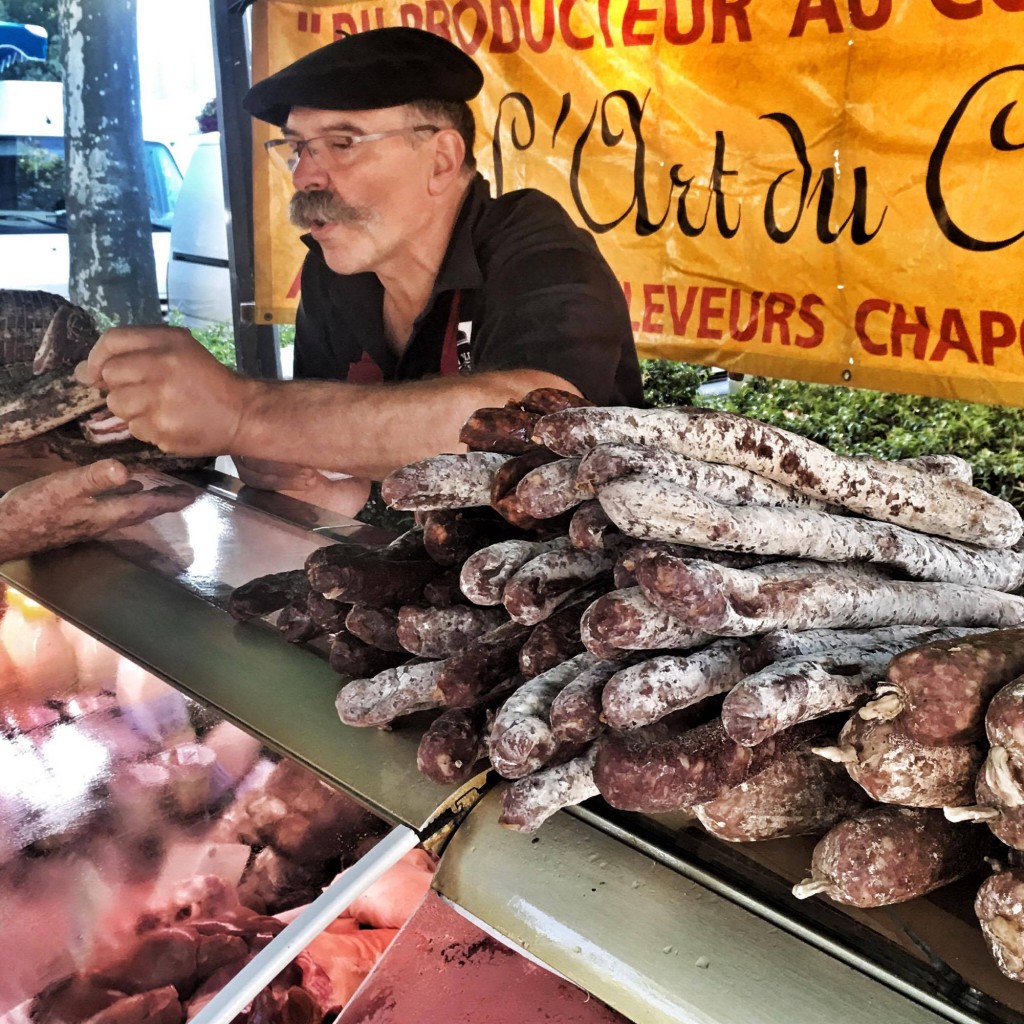
Dominique Chapolard working his stand at one of the various farmers' markets in Gascony.
Round Two in Gascony was meant to give me a thorough knowledge of traditional French charcuterie and luckily I scored a two-month apprenticeship with one of the best charcutiers in the country - Dominique Chapolard.
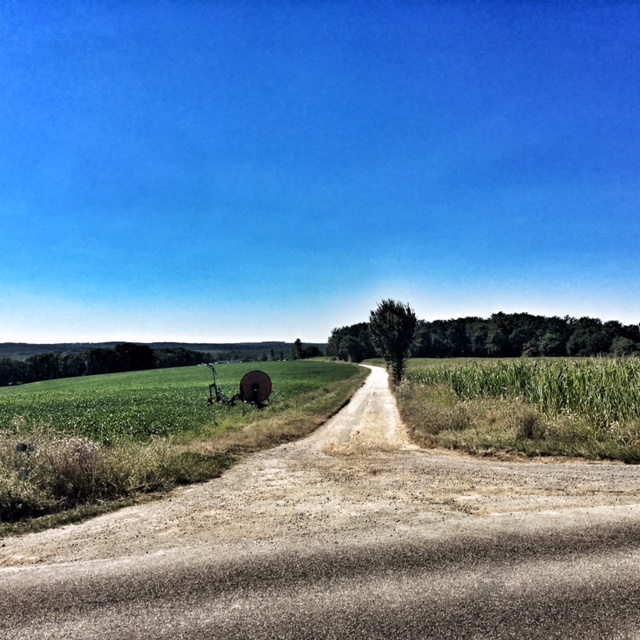
The drive into the Chapolard's farm.
Dominique’s family owns a 50-hectare farm just between Nerac and Mézin. His grandfather originally purchased the farm from a dying winemaker after the Great War. He and his wife began raising dairy cows on the property and added apple, peach, and prune orchards until a large storm in 1968 destroyed much of the fruit trees. By this time, Dominique’s father and uncle had taken on the bulk of the responsibility of the farm. The second generation decided to try their hand growing melons, cucumbers, and tomatoes.

Eventually, Dominique's father gave up on the fruit and vegetables and invested in Blonde Aquitaine cattle known for their delicious beef. Like most French families, he always bought two piglets every year for his family’s personal consumption. When the region’s pig farmer passed away, Dominique’s father seized the chance to move into pork – he bought two sows, built a small farm laboratory and became a pig farmer and charcutier.
As a child, Dominique worked on the farm and watched as his family labored over fruits and vegetables for such a meager living. So when the time came, Dominique chose to pursue a life in academia instead of agriculture. He didn't stray far from the farm, though. After he married his wife Christiane, he took a position teaching Forestry at the Université Toulouse. From there he accepted a position as headmaster at another agricultural school before finally returning to the family farm to help his three brothers, Mark, Bruno, and Jacque, with the pork operation.
Today, each brother pitches in around the farm, but each has his own specific role to play. Dominique concentrates on the walk-in cooler and turning half carcasses into various forms of charcuterie. He also mans the family stand at the Lavardac and Nérac farmer’s markets.
Jacque raises the pigs and looks after the crops. Bruno and Mark help with the crops, the butchery, and additional farmer's markets. And then there is a wide assortment of spouses and children that fill in to help the farm turn a profit. As if grain crops, pigs, and charcuterie weren't enough, two of Jacque’s sons have started a dairy operation.
Flots Blancs is hands down the best milk and yogurt I’ve ever tasted.
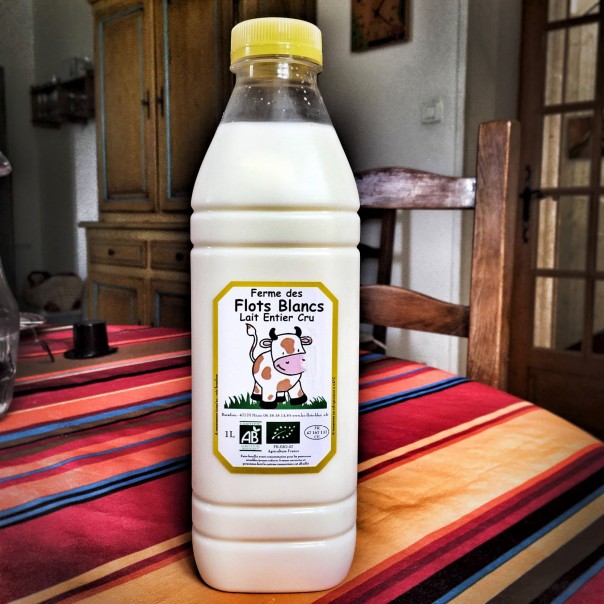
The best milk I've ever had.
The Chapolard family was gracious enough to take me in and teach me their family recipes and way of life. Under Dominique’s careful watch, I have gained a firmer grasp on this component of craft butchery. Hopefully, by the time I leave, I will be able to call myself a charcutier.
-
May 2022
- May 24, 2022 The Hand House May 24, 2022
-
May 2018
- May 16, 2018 Texas, Arizona, and Peru May 16, 2018
-
March 2018
- Mar 6, 2018 Bucket List Mar 6, 2018
-
February 2018
- Feb 19, 2018 OSSO Feb 19, 2018
- Feb 7, 2018 Pass the Cheese, Please. Feb 7, 2018
-
January 2018
- Jan 7, 2018 The Unofficial World Hot Dog Championship Jan 7, 2018
- Jan 2, 2018 Haven Festival Jan 2, 2018
-
November 2017
- Nov 20, 2017 We Are What We Eat Nov 20, 2017
- Nov 1, 2017 License to Kill - a Way of Art Nov 1, 2017
-
October 2017
- Oct 21, 2017 Fleischer-Handwerk Oct 21, 2017
- Oct 18, 2017 Mad Food with Mads Cortsen Oct 18, 2017
-
August 2017
- Aug 14, 2017 Roskilde Festival Aug 14, 2017
- Aug 2, 2017 The Proof That Even Slaughterers Can Become Pop Stars Today Aug 2, 2017
-
June 2017
- Jun 6, 2017 Where to Find Pig Ear Terrines, Spicy Nduja and Other Adventurous Charcuterie in Dallas Jun 6, 2017
- Jun 5, 2017 Cochon555 Houston Jun 5, 2017
-
May 2017
- May 23, 2017 Charcuterie Masters 2017 May 23, 2017
- May 18, 2017 Dirty Steaks May 18, 2017
- May 16, 2017 Dîner en Blanc May 16, 2017
- May 10, 2017 Steensgaard May 10, 2017
-
April 2017
- Apr 4, 2017 Gascon Fricandeaux Apr 4, 2017
- Apr 3, 2017 American Kid Apr 3, 2017
-
March 2017
- Mar 27, 2017 Folkets Madhus Mar 27, 2017
- Mar 23, 2017 Another Open Door Mar 23, 2017
- Mar 13, 2017 Yoakum Man Learns Old World Butchery Mar 13, 2017
-
February 2017
- Feb 20, 2017 Great Day Houston Feb 20, 2017
-
December 2016
- Dec 4, 2016 Creating the Manifesto Dec 4, 2016
- Dec 4, 2016 Meating Fellow Revolutionaries Dec 4, 2016
- Dec 4, 2016 The Butchers' Manifesto Origins Dec 4, 2016
-
November 2016
- Nov 10, 2016 The Sausage Man Never Sleeps Nov 10, 2016
-
October 2016
- Oct 19, 2016 Road Trippin' Across Europe Oct 19, 2016
- Oct 2, 2016 Vide Greniers: the French Garage Sale Oct 2, 2016
-
September 2016
- Sep 20, 2016 Je N'ai Plus Faim Sep 20, 2016
- Sep 13, 2016 Noix de Jambon Sep 13, 2016
-
August 2016
- Aug 28, 2016 The Chapolard Family of Gascony Aug 28, 2016
- Aug 7, 2016 The Cowboy, the Expat, and the Englishman Aug 7, 2016
-
July 2016
- Jul 31, 2016 France - Right Where I Need to Be Jul 31, 2016
- Jul 25, 2016 Fambam in Italy Jul 25, 2016
- Jul 11, 2016 Red is His Signature Color Jul 11, 2016
- Jul 4, 2016 Doin' It Like Dario Jul 4, 2016
-
June 2016
- Jun 19, 2016 Trouble in Paradise Jun 19, 2016
- Jun 8, 2016 Tex-Mex Night in Italy Jun 8, 2016
-
May 2016
- May 29, 2016 The King of Beef Does Porchetta May 29, 2016
- May 12, 2016 It's a Long Way to the Top May 12, 2016
- May 10, 2016 Viva La Cicca! May 10, 2016
- May 1, 2016 It’s Crazy What Can Happen in a Year May 1, 2016
-
April 2016
- Apr 26, 2016 The Kitchen at Camont and the Art of Charcuterie Apr 26, 2016
- Apr 12, 2016 Keeping It Under My Hat Apr 12, 2016
- Apr 3, 2016 Let Them Eat Cake Apr 3, 2016
-
March 2016
- Mar 22, 2016 Kolaches versus Klobasniky Mar 22, 2016
- Mar 3, 2016 The Queue for some sweet 'Cue Mar 3, 2016
-
February 2016
- Feb 21, 2016 POS Meat Grinders Feb 21, 2016
-
January 2016
- Jan 21, 2016 Earth Oven Tragedy Jan 21, 2016
- Jan 17, 2016 This ‘ol Gal is Smoking Hot Jan 17, 2016
- Jan 12, 2016 The Gringo and la Reina Tamal Jan 12, 2016
- Jan 7, 2016 Packin' Pork Jan 7, 2016
-
December 2015
- Dec 23, 2015 Empire State of Mind Dec 23, 2015
- Dec 10, 2015 Meat Monger Dec 10, 2015
-
November 2015
- Nov 23, 2015 Jerky Game Strong Nov 23, 2015
- Nov 11, 2015 Breaking Lamb Nov 11, 2015
- Nov 1, 2015 Breaking Pork Nov 1, 2015
-
October 2015
- Oct 26, 2015 Like Cocaine in the '80's Oct 26, 2015
- Oct 21, 2015 Fleishers Craft Butchery: Day 1 Oct 21, 2015
- Oct 11, 2015 Year of the Cow Oct 11, 2015
- Oct 4, 2015 13th Step to Manhattan Oct 4, 2015
-
September 2015
- Sep 27, 2015 Brooklyn Cowboy Sep 27, 2015
- Sep 27, 2015 Vaya con Dios Sep 27, 2015
- Sep 14, 2015 Mystic Goat Roper Sep 14, 2015
- Sep 10, 2015 Green-hand Gringo Sep 10, 2015
- Sep 10, 2015 Shell Station Burgers Sep 10, 2015
- Sep 10, 2015 Butter 'Em Up Sep 10, 2015
- Sep 10, 2015 Why The Hell Not? Sep 10, 2015